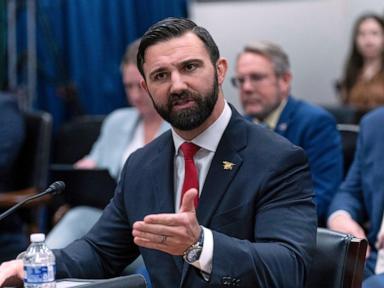
The media is choking on its own narrative. If you’ve spent the last twenty-four hours reading the pearl-clutching reports about Cameron Hamilton’s potential nomination to lead FEMA, you’ve been sold a cheap, two-dimensional story. The prevailing "lazy consensus" is simple: Trump is hiring a "fired" official out of spite to dismantle a crucial agency.
That narrative isn't just wrong. It’s boring.
Hamilton wasn’t fired because he was incompetent. He was pushed out because he represents the ultimate threat to the bloated, risk-averse bureaucracy that has turned FEMA into a sluggish checking-account for disaster victims rather than a rapid-response strike force. If you want to understand why Hamilton is being brought back, stop looking at his HR file and start looking at the structural rot of the Department of Homeland Security.
The Competency Trap
We have been conditioned to believe that "tenure" equals "talent." In the world of federal emergency management, the opposite is often true. The people who survive the longest in agencies like FEMA are those who have mastered the art of the "slow-no"—the ability to stall action until every possible liability has been mitigated.
Cameron Hamilton’s exit wasn't a failure of leadership; it was a rejection of the status quo. When the headlines scream about his "controversial" departure, they are actually describing a collision between a guy who wants to move fast and a system designed to move at the speed of glacial erosion.
In my years watching these agencies burn through billions, I’ve seen this play out a dozen times. A disruptor enters the room, points out that the paperwork is killing people on the ground, and the middle-management layer reacts like a white blood cell attacking a virus. They don't fire you for being bad at your job. They fire you for being too good at highlighting how bad they are at theirs.
FEMA is Not a Welfare Office
The most dangerous misconception in the current discourse is that FEMA’s primary job is to be a compassionate insurer of last resort. This "People Also Ask" obsession with "Why is FEMA's relief so slow?" ignores the brutal reality: FEMA was never meant to be your insurance company.
By turning FEMA into a massive administrative engine for processing small-dollar grants, we have gutted its ability to handle "Black Swan" events. We have traded logistical muscle for clerical bloat.
Hamilton understands the core principle of emergency response: Decentralization is the only way to survive. Imagine a scenario where a Category 5 hurricane wipes out the power grid across three states. In the current FEMA model, local directors are waiting for permission from regional offices, who are waiting for budget approval from D.C., who are checking with legal to ensure the phrasing of the emergency declaration doesn't violate a 1974 subsection of the Stafford Act.
Hamilton’s "disruption" is the realization that we need to push authority to the edge. If the nomination goes through, the goal won't be to "gut" FEMA. It will be to strip away the 40% of the agency that does nothing but generate reports about the other 60%.
The Myth of the "Non-Partisan" Professional
Critics argue that the FEMA Administrator should be a "career professional," not a political lightning rod. This is a fairy tale. Emergency management is, by its very nature, one of the most political acts a government performs.
When a governor begs for a disaster declaration, they aren't just asking for money; they are managing their political survival. When a President denies it, or fast-tracks it, they are playing the same game. Pretending that a career bureaucrat is "above" this is naive at best and dishonest at worst.
Hamilton is being brought in specifically because he is not part of the guild. He doesn't owe his career to the contractors who have turned disaster recovery into a multi-billion dollar subscription service.
Let's talk about the "Disaster Industrial Complex."
- The Grifters: Companies that charge $500 to tarp a roof that should cost $50.
- The Consultants: Firms that take a 15% cut of federal grants just to help cities fill out the forms required to get the grants.
- The Stagnants: Middle managers who prioritize "process compliance" over "lives saved."
If Hamilton’s nomination sends a shiver through these groups, it’s not because he’s unqualified. It’s because he knows where the bodies are buried.
Operational Friction vs. Bureaucratic Safety
The smartest people in logistics—the guys running global supply chains at companies like Maersk or FedEx—don't look at "safety" as the absence of risk. They look at "resilience."
FEMA is currently obsessed with "compliance," which is the opposite of resilience. Compliance is about following the rules even if the boat is sinking. Resilience is about breaking the rules to keep the boat afloat.
Hamilton’s detractors point to his "instability" or "clashes with leadership." In the high-stakes world of emergency logistics, "clashes with leadership" is often code for "refusing to accept a stupid plan."
I’ve sat in those rooms. I’ve seen millions of dollars in equipment sit in a parking lot in Georgia while people in North Carolina froze, all because the "proper" paperwork hadn't been signed by the "proper" authority. When you try to bypass that friction, the system labels you "difficult."
Why the "Firing" is a Strength, Not a Weakness
There is a profound irony in using Hamilton’s previous exit as a disqualifier. In any other high-performance industry—Silicon Valley, professional sports, special operations—being pushed out for being "too aggressive" or "too disruptive" is often a badge of honor. It means you’ve reached the limit of what the current infrastructure can handle.
If the goal of the next administration is to "drain the swamp," FEMA is the perfect place to start, not because of "deep state" conspiracies, but because of basic physics. The agency has become too heavy to move.
Hamilton represents a "return to kinetic action."
- Expect a massive reduction in the time between a disaster declaration and "boots on the ground."
- Expect a brutal audit of the Public Assistance program.
- Expect the termination of long-standing contracts with vendors who have underperformed for a decade.
The downside? It’s going to be messy. People who like their neat, orderly, slow-moving government will be horrified. There will be mistakes. When you move fast, you break things. But in a disaster, "staying whole" while people die is the ultimate failure.
The Stafford Act is a Straightjacket
If we’re being brutally honest, no FEMA Administrator can truly succeed without a complete overhaul of the Stafford Act. However, a leader like Hamilton won't wait for Congress to fix the law. He will find the seams.
Most people think of laws as walls. People like Hamilton think of them as suggestions with varying degrees of enforcement. This scares the hell out of the legal teams at DHS. It should. Their job is to minimize risk to the Department. Hamilton’s job—if he takes it—is to minimize risk to the American people. Those two goals are rarely aligned.
Stop Asking if He’s "Qualified"
The media keeps asking if Hamilton is "qualified" based on a checklist of administrative titles. That’s the wrong question.
The right question is: "Is he willing to be hated by the people who have made disaster management their private ATM?"
If the answer is yes, then he is the only person for the job.
We don't need a librarian to run FEMA. We need a demolition expert who knows how to build something functional out of the rubble. The fact that the establishment is already trying to disqualify him based on his refusal to play nice the first time around is the only proof you need that he’s the right choice.
The era of the "safe" FEMA Administrator gave us the response to Katrina and the paralysis of the early COVID days. Maybe it’s time to try someone who isn't afraid to get fired a second time.
Burn the manual. Move the assets. Stop asking for permission.