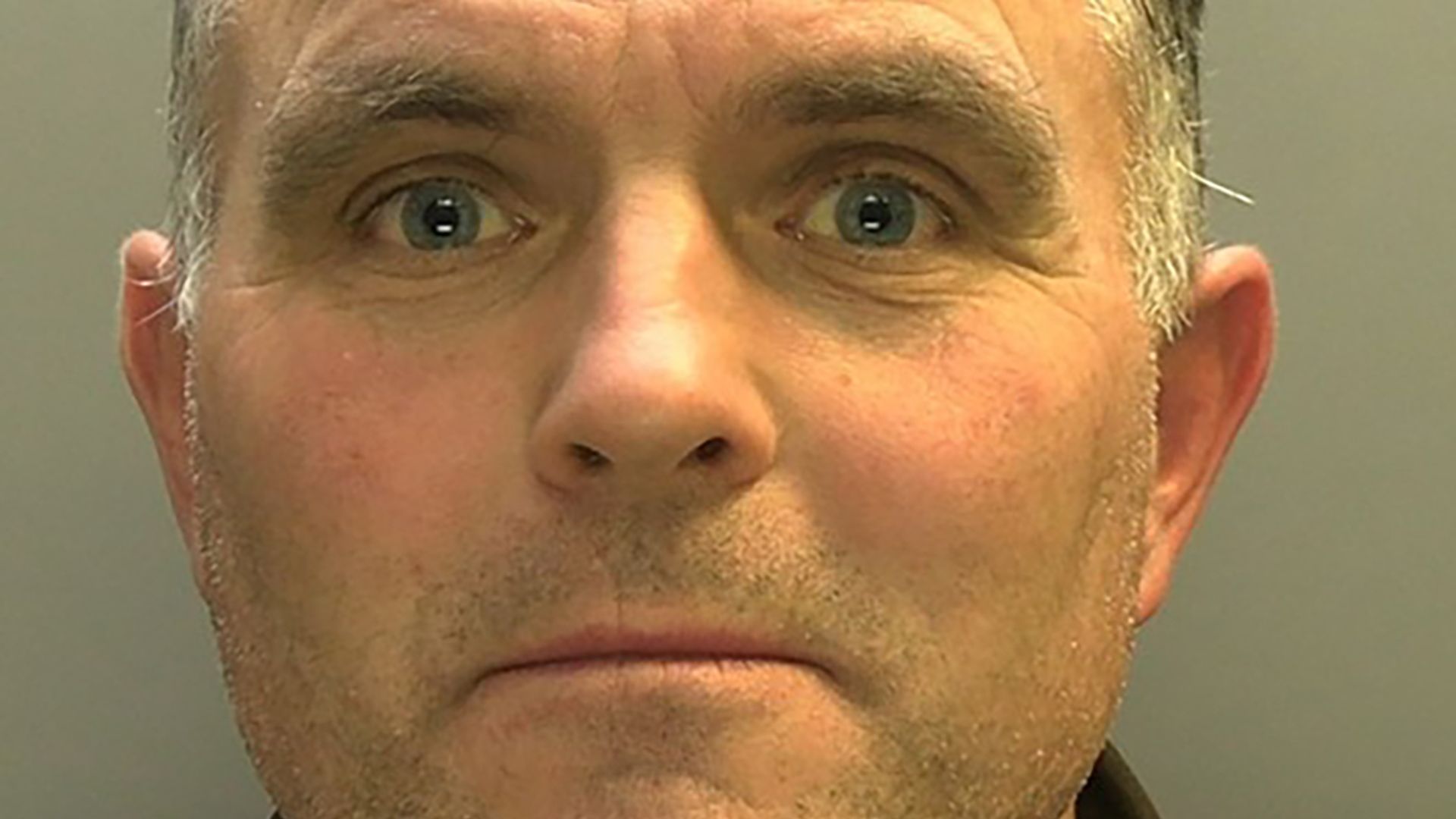
The air in the English countryside often carries a specific weight—a mix of damp earth, expensive leather, and the silent pressure of reputation. In the world of elite horse racing, reputation is the only currency that never devalues. For Jonathan "Jonjo" O’Neill Jr., that currency was inherited. To carry that name is to carry the expectations of a dynasty. It is to walk through the stables not just as a trainer, but as a scion of a sport that prides itself on discipline, grace, and an almost spiritual connection between man and beast.
But the veneer of the sporting elite is thinner than we like to admit. Behind the polished boots and the trophies lies the same raw, human volatility that haunts every other corner of society. Recently making waves in this space: The Night the Sky Turned Rust.
One afternoon, the quiet of a Cotswold lane was shattered. Not by the rhythmic gallop of a champion thoroughbred, but by the hollow, sickening thud of a hockey stick hitting human bone.
The Anatomy of an Outburst
Imagine a narrow road. It is a space where the modern world of impatient engines meets the ancient world of the equestrian. These lanes are often the site of quiet friction—drivers annoyed by the slow pace of horses, riders protective of their flighty charges. Usually, it ends with a frustrated sigh or a muttered word. Additional details into this topic are detailed by Associated Press.
This time, the friction ignited.
The victim was a man in his 70s. A pensioner. A grandfather. A man who, by all accounts, was simply going about his day when he crossed paths with the 33-year-old trainer. What followed was not a professional disagreement or a heated exchange of words. It was a physical unraveling. O’Neill Jr. did not just lose his temper; he lost his humanity for a period of minutes that will now define his life for years.
He used a hockey stick. He didn't swing it once in a moment of panicked defense. He struck the older man repeatedly.
The physical mechanics of such an act are jarring to contemplate. A hockey stick is a tool of precision and speed, weighted at the end to drive a ball across turf. When turned against a human body—especially one softened by seven decades of life—it becomes a terrifying blunt-force weapon. The fractures and the bruises left behind were the cold, hard evidence of a rage that had bypassed every social and moral circuit breaker.
The Weight of the Name
Why does this story resonate beyond the local police blotter? Why does it feel like a betrayal to the thousands of fans who follow the racing calendars?
It is because we want our heroes to be as disciplined as the animals they train. We project a certain nobility onto the "horseman." We assume that anyone capable of coaxing a thousand pounds of muscle and nerves into a winning sprint must possess a deep well of patience and self-control.
O’Neill Jr. was a man who lived at the pinnacle. His father is a legend, a man whose name is etched into the very stones of Cheltenham. Jonjo Jr. was the heir apparent, a trainer with "the touch." He moved in circles where decorum is expected and where the "gentleman" in "gentleman’s sport" is supposed to mean something.
When that image collapses, it leaves a vacuum. The shock felt by the racing community wasn't just about the violence itself, but about the cognitive dissonance of it. How does a man who understands the delicate temperament of a horse fail so catastrophically to manage his own?
The Courtroom and the Mirror
In the courtroom, the facts were laid out with the clinical detachment that the law requires. The defense likely spoke of stress, of a singular moment of madness, of a life otherwise dedicated to hard work. They may have pointed to the pressures of an industry that demands perfection seven days a week, 365 days a year.
The judge, however, saw the evidence of the strikes. He saw the age of the victim.
Justice, in this case, arrived with a prison sentence. For a man used to the wide-open spaces of the downs and the freedom of the gallops, the four walls of a cell will be a sensory deprivation chamber. But the physical incarceration is only half the story. The true prison for someone like O’Neill Jr. is the permanent stain on a legacy he spent thirty years building.
Consider the victim’s perspective. For a 70-year-old man, a random act of violence isn't just a physical injury; it is a theft of peace. It changes how you walk down your own street. It makes the world feel predatory. The recovery from a broken bone is measured in weeks, but the recovery from the realization that a young, fit man could decide to beat you with a stick for no reason—that takes much longer.
The Invisible Stakes of High Performance
This isn't just a story about a "bad apple." It is a cautionary tale about the pressure cookers we create in the worlds of high-stakes sports and inherited legacy.
When we celebrate the "obsessive" nature of winners, we rarely talk about the dark side of that coin: the inability to switch off, the hair-trigger frustration when things don't go according to plan, and the ego that feels every minor slight is a direct attack on their kingdom.
We see it in football, in tennis, and now, spectacularly and tragically, in racing.
The "invisible stakes" here were never about the traffic dispute on that lane. They were about a man who felt he was above the mundane frustrations of the common world. The hockey stick wasn't just a weapon; it was an expression of a total loss of perspective.
The Silence After the Verdict
As the gates of the prison closed, the racing world fell into an awkward silence. There will be those who try to separate the trainer from the man, arguing that his skill with horses remains unchanged. But that is a fallacy.
A trainer is a leader. They are responsible for the safety of animals and the young stable hands who look up to them. Leadership requires more than just technical expertise; it requires a temperament that can withstand the heat.
The image that remains isn't one of a trophy being held aloft in the winners' enclosure. It is the image of a quiet Cotswold road, a discarded hockey stick, and the realization that no matter how fast your horses run, you can never outrun your own character.
The name O’Neill will continue to be spoken in the betting rings and the grandstands. But from now on, it will be whispered with a different inflection. It will serve as a reminder that the most difficult animal any of us will ever have to break and train is the one staring back at us in the mirror every morning.
The shadow on the paddock has grown long, and for one former golden boy, the race has ended in the darkest possible way.