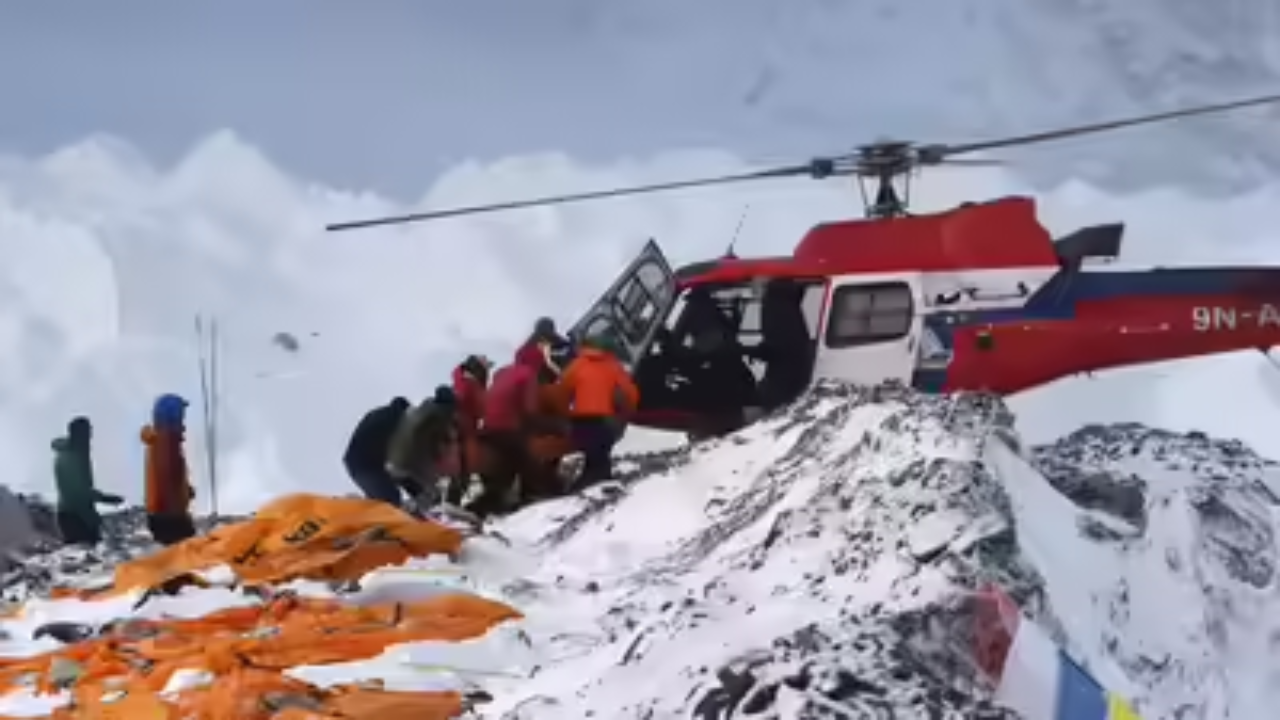
You’re gasping for air at 17,000 feet, your head is throbbing like a drum, and your guide is looking at you with genuine "concern." He tells you that if you don't get on a helicopter right now, you're going to die. You trust him. He’s the expert, right?
Wrong. In many cases lately, that guide isn't saving your life—he's cashing a paycheck.
The $20 million Everest rescue scam isn't just a rumor anymore; it’s a full-blown criminal investigation that’s rocked Nepal’s 2026 climbing season. We aren't talking about a few greedy individuals. We’re talking about a coordinated "chain" of corruption involving trekking agencies, helicopter pilots, and even hospital staff in Kathmandu who’ve turned the world’s highest peak into a high-altitude ATM.
If you’re planning to trek in the Himalayas this year, you need to know exactly how this racket works because you aren't just the customer—you’re the bait.
The Baking Soda Betrayal
The most gut-wrenching part of the Central Investigation Bureau (CIB) report isn't the financial fraud. It’s the physical sabotage. Investigators found that some guides were literally poisoning their clients to trigger insurance payouts.
They’d stir baking soda into a trekker's soup or tea. If you’ve never had high-altitude nausea, let me tell you: it feels exactly like the early stages of HACE (High-Altitude Cerebral Edema). The baking soda causes bloating and intense vomiting. Suddenly, you’re weak, terrified, and begging for a way off the mountain.
Other tactics included:
- Forced Over-hydration: Making you drink massive amounts of water while secretly doubling your dosage of Diamox. This mimics the disorientation and "brain fog" of severe altitude sickness.
- The "Mountain Taxi" Pressure: Guides telling perfectly healthy but exhausted trekkers that they can "skip the walk back" for free by faking a headache, knowing the insurance company will pick up the $5,000 to $10,000 tab.
- Staged Emergencies: Helicopters picking up three or four "sick" hikers at once, then billing four separate insurance companies for four private charter flights.
A $20 Million Web of Lies
This isn't a small-time grift. The CIB has identified nearly 300 fake rescues between 2022 and 2025 alone. They’ve already charged 32 people, including heavy hitters like the chairmen of Mountain Rescue Service and Nepal Charter Service.
Even the hospitals are in on it. Imagine being flown to Kathmandu, feeling better as soon as you hit lower oxygen, and then being told by a doctor at Shreedhi or Swacon Hospital that you need to stay for three days of "observation." While you’re eating a burger in the hospital cafeteria—which investigators actually caught people doing—the hospital is billing your insurer for "critical care" and forged medical tests.
The money then gets kicked back down the line. The hospital pays the rescue agency, the agency pays the helicopter company, and the guide gets a fat "commission" for delivering the victim. It’s a closed loop where the only loser is the person paying the insurance premium.
Why This Matters for Your 2026 Trek
You might think, "Who cares? The insurance company has plenty of money."
That’s a dangerous mindset. Because of this $19.7 million fraud, international insurers are losing patience. Some have already threatened to stop covering Nepal entirely. Others have hiked premiums so high that a standard trekking policy now costs triple what it did five years ago.
The real danger, though, is for the person who actually is dying. When helicopters are busy running "taxis" for tourists with baking-soda-induced stomach aches, they aren't available for the climber with a shattered leg or actual pulmonary edema. We’ve turned a life-saving tool into a luxury shuttle service, and that’s going to get someone killed.
How to Protect Yourself from the Scam
Don't let this scare you off the Everest Base Camp trek, but do let it make you smarter. You’ve got to be your own advocate when you’re five days away from the nearest road.
- Watch Your Food: This sounds paranoid, but if you’re on a budget trek with an unknown agency, keep an eye on how your meals are prepared. If your guide is "insisting" you eat or drink something specific to help with altitude, be wary.
- Know the Symptoms: Learn the difference between standard AMS (Acute Mountain Sickness) and life-threatening conditions. A headache doesn't always require a $10,000 flight. Often, just walking down 500 meters of elevation solves the problem.
- Check the "Hospit-al-ity": If a hospital keeps your passport "for safekeeping" or refuses to let you leave until insurance pays, you’re being held for ransom. Legitimate hospitals don't do that.
- Verify Your Agency: Stick with reputable, long-standing operators like Seven Summit Treks or Madison Mountaineering. These guys have too much to lose to play games with fake rescues.
The Nepalese government is finally cracking down after years of looking the other way, but the "gold rush" mentality on Everest hasn't disappeared. The mountain doesn't care about your insurance policy, and unfortunately, neither do some of the people you're paying to lead you up it.
Before you fly into Lukla, call your insurance provider. Ask them specifically if they have a "preferred" rescue coordinator in Nepal. If your guide tries to call a different company than the one your insurer recommends, that’s your red flag. Stand your ground. It’s your life and your health, not a commission check for a corrupt agency.