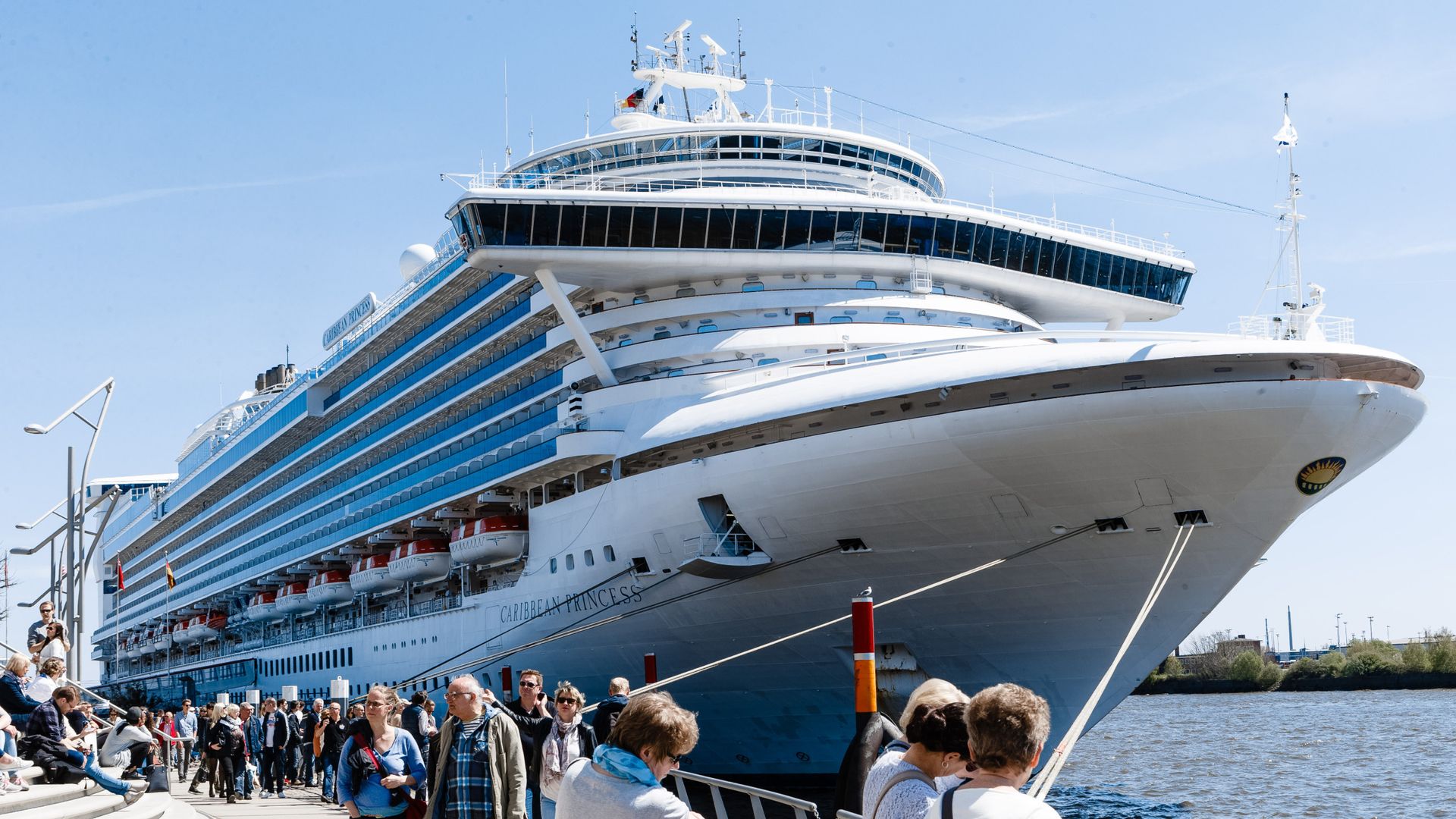
The recent infection of over 100 passengers aboard a Caribbean cruise vessel serves as a critical case study in the inherent fragility of high-density, closed-loop ecosystems. While mainstream reporting focuses on the immediate discomfort of the affected individuals, a rigorous analysis reveals a more complex intersection of viral kinetics, logistical bottlenecks, and the failure of current containment protocols. The core problem is not merely a "stomach bug" but a breakdown in the structural defense mechanisms designed to decouple human density from pathogenic spread.
The Kinematics of Onboard Viral Transmission
A cruise ship functions as a biological pressure cooker. Unlike land-based resorts, the spatial constraints and high-frequency interaction points create a high $R_0$ (basic reproduction number) environment. To understand the recent outbreak, one must examine the three primary vectors that facilitate these events:
- Fomite Persistence in High-Touch Corridors: Public surfaces—elevator buttons, handrails, and buffet utensils—act as reservoirs for norovirus, which is the most common culprit in these scenarios. Norovirus is notoriously resilient, capable of surviving for weeks on hard surfaces and resisting standard alcohol-based sanitizers.
- Aerosolized Transmission in Confined Dining: While norovirus is primarily fecal-oral, the act of vomiting can aerosolize particles. In a dining hall with centralized HVAC systems, a single emetic event can contaminate a radius far exceeding the immediate vicinity.
- The Asymptomatic Carrier Gap: The incubation period for most gastrointestinal pathogens ranges from 12 to 48 hours. This creates a "latency window" where passengers board the ship feeling healthy while actively shedding the virus, bypassing thermal scanners and health questionnaires which rely on self-reporting and active symptom manifestation.
The Economic and Operational Cost Function
When an outbreak exceeds the 3% threshold—the point at which the CDC typically requires official reporting—the vessel transitions from a hospitality asset to a liability. The costs are not linear; they are exponential based on the duration of the voyage and the timing of the spike.
The operational impact is measured through the Outbreak Mitigation Cost Function (OMCF):
$OMCF = (C_d + C_l) \times (P_i + S_r)$
Where:
- $C_d$: Direct costs (medical supplies, extra labor for deep cleaning).
- $C_l$: Lost revenue (refunds, future cruise credits, missed excursions).
- $P_i$: Perception index (brand damage and stock price volatility).
- $S_r$: Settlement risk (potential litigation and regulatory fines).
The second limitation of current industry standard responses is the reliance on "deep cleaning" after the fact. By the time a cleaning crew deploys high-grade disinfectants, the viral load in the population has usually already reached a tipping point, rendering the intervention reactive rather than preventive.
Structural Failures in Containment Protocol
The failure to contain the 100+ cases indicates a breakdown in the "Swiss Cheese Model" of accident prevention. Each layer of defense—pre-boarding screening, hand hygiene stations, and cabin isolation—failed simultaneously.
The Buffet Paradox
The self-service buffet remains the greatest vulnerability in maritime health security. Despite the presence of hand-washing stations, passenger compliance is rarely 100%. Even with 90% compliance, the remaining 10% of non-compliant passengers serve as "super-spreaders" by touching shared serving spoons. The shift to crew-served buffets during an outbreak is often a case of "too little, too late," implemented only after the infection count hits double digits.
Isolation Lag and Social Friction
Isolating passengers in their cabins is the primary method of breaking the chain of transmission. However, there is significant social friction involved. Passengers who have paid thousands of dollars for a vacation are incentivized to hide minor symptoms to avoid being confined to their rooms. This creates a "shadow population" of infected individuals who continue to move through the ship, shedding the virus in theaters, pools, and bars.
Environmental and Mechanical Vectors
Modern ships utilize advanced HVAC systems, but these are often optimized for thermal comfort rather than viral filtration. While HEPA filters are standard in hospitals, they are not universally applied to every cabin and public space on a ship due to the massive energy requirements for high-pressure air movement. This creates stagnant air pockets in lower-deck corridors and interior staterooms, which may contribute to the persistence of airborne or aerosolized pathogens.
The second mechanical failure point is the waste management system. While strictly regulated, the sheer volume of biological waste generated during an outbreak puts immense pressure on onboard sanitation systems. Any breach in the separation of potable water and greywater systems—however rare—would result in a catastrophic escalation of the event.
Regulatory Oversight and Data Transparency
The Vessel Sanitation Program (VSP) managed by the CDC provides a framework for inspections, but it is fundamentally a snapshot in time. A ship can score a 100 on an inspection in January and suffer a massive outbreak in February. The current reporting requirements are lagging indicators. They tell us how many people got sick, but they provide no real-time data on viral shedding rates within the ship’s wastewater or ambient air.
Real-time surveillance technology exists—such as PCR-based wastewater testing—but the cruise industry has been slow to adopt these methods due to cost and the fear of "false alarms" that could lead to unnecessary trip cancellations. This creates a data vacuum where the captain and medical staff are always fighting the virus of yesterday, not the infection of today.
Strategic Mitigation Framework
To move beyond the current cycle of outbreaks and apologies, the industry must shift from a reactive posture to an integrated, tech-driven defense strategy.
- Wastewater Surveillance: Implementing automated, real-time PCR testing of the ship's sewage can detect a spike in viral shedding up to 48 hours before the first passenger presents at the medical center. This allows for localized "micro-quarantines" rather than ship-wide shutdowns.
- Ultraviolet Germicidal Irradiation (UVGI): Installing UVC lights within the HVAC ducting and in high-traffic public areas during off-hours can provide continuous, non-chemical disinfection of both air and surfaces.
- The "Clean-Flow" Buffet Design: Redesigning dining areas to eliminate all common-touch surfaces. This includes sensor-activated beverage dispensers and a complete transition to plated service, removing the "buffet spoon" variable entirely from the equation.
- Dynamic Isolation Incentives: To combat the "shadow population" problem, cruise lines should offer significant financial or loyalty-based incentives for passengers who self-report symptoms early and adhere to isolation protocols. Turning a "punishment" (confinement) into a "premium service" (enhanced in-room dining, free future credits) aligns passenger behavior with public health goals.
The current incident in the Caribbean is not an isolated misfortune but a symptom of a systemic inability to manage biological risk in high-density environments. The transition from manual cleaning to automated, data-driven prevention is the only path toward stabilizing the operational volatility of the cruise sector. Operators who fail to integrate these structural changes will remain at the mercy of viral kinetics, facing not only health crises but the inevitable erosion of their brand's economic value.
The strategic play for the cruise industry is to stop treating hygiene as a janitorial task and start treating it as a core engineering and data science challenge. Until the "sanitation" department is integrated with the "digital systems" department, the 100-passenger outbreak will remain a recurring line item on the industry's balance sheet.
,jpeg/020/958/142/1280x720.4.jpg)