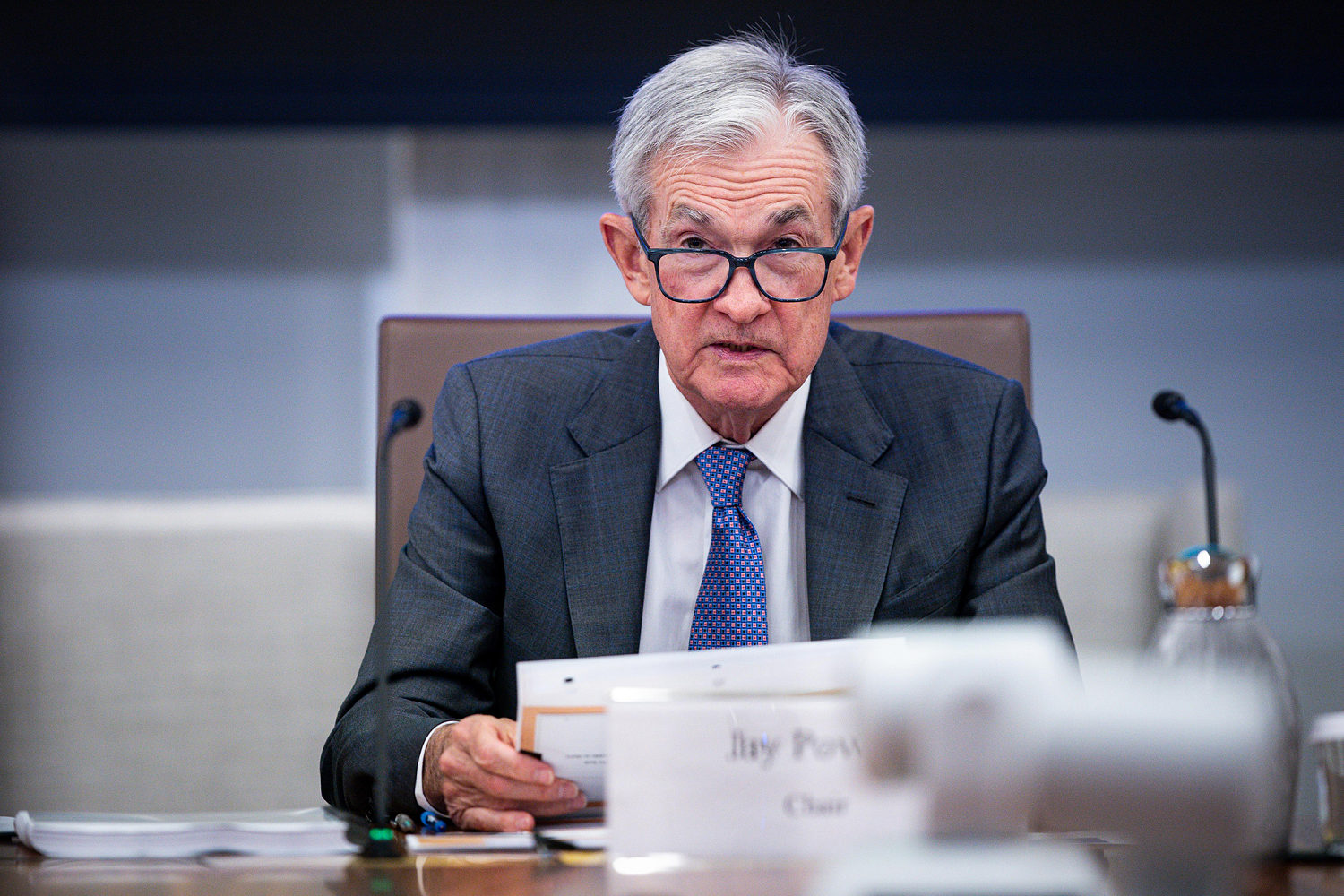
The Federal Reserve is currently staring down a mathematical nightmare that no amount of interest rate manipulation can fully solve. While the central bank remains publicly committed to its 2% inflation target, a sudden and aggressive spike in global oil and domestic gasoline prices has effectively paralyzed the Federal Open Market Committee. The math is simple, even if the politics are not. When fuel costs jump, the cost of moving every single physical good in the American economy follows. This isn't just about the price at the pump; it is about the structural integrity of a disinflationary trend that the Fed thought it had secured.
Jerome Powell and his colleagues are now forced to choose between two equally unappealing paths. They can hold rates steady, hoping the energy spike is a "transitory" fluke—a word that still haunts the halls of the Eccles Building—or they can hike rates further, risking a deep recession to offset price increases that they don't actually control. You cannot "interest rate" your way out of a supply-side energy crunch. If the oil isn't flowing, making a car loan more expensive doesn't fix the underlying scarcity. It just makes the consumer suffer twice.
The Crude Reality of Core Inflation
For months, the Fed has leaned on "Core CPI"—which excludes food and energy—to tell a story of progress. This is a convenient metric for a central bank because it filters out the volatility of the commodities market. However, the wall between energy and the rest of the economy is porous. When diesel prices climb, the cost of delivering a pallet of groceries to a warehouse in Ohio increases. The warehouse owner then raises fees for the retailer, who eventually passes that cost to the shopper.
This is known as "pass-through inflation." It is the process by which volatile energy prices eventually seep into the "core" goods and services the Fed watches so closely. By the time energy costs show up in the price of a haircut or a restaurant meal, the damage is already done. The Fed is essentially trying to steer a massive ship by looking at the wake it left behind two miles ago.
Current market data suggests that the recent surge in gasoline isn't just a seasonal hiccup. Refineries are aging, and the global supply chain for crude remains brittle due to geopolitical friction in Eastern Europe and the Middle East. If gas prices stay elevated through the next two quarters, the Fed’s projections for a "soft landing" will likely evaporate. They are trapped in a cycle where they must keep rates high enough to suppress demand, but not so high that they collapse the labor market while prices are still rising.
Why the Consumer is Breaking Sooner Than Expected
The American consumer has been remarkably resilient, fueled by excess savings from the pandemic era and a tight labor market. But that shield is thinning. We are seeing a divergence in spending habits that suggests the "wealth effect" is no longer protecting the middle class from the reality of $4.00 or $5.00 gasoline.
When a household spends an extra $100 a month on fuel, that money is directly cannibalized from discretionary spending. This creates a cooling effect on the economy that the Fed didn't have to engineer. In a strange twist, high gas prices do some of the Fed’s work for them by slowing down the economy. The danger is that this "natural" tightening happens too fast and in a way that targets the most vulnerable sectors of the workforce.
- Credit Card Delinquencies: Rates are climbing back to pre-2019 levels as consumers use plastic to bridge the gap between their stagnant wages and rising pump prices.
- The Commuter Tax: Unlike a luxury purchase, gasoline is a non-discretionary expense for the majority of the American workforce. You can’t choose not to drive to work when the bus doesn't run to your office park.
- Manufacturing Drag: High energy costs act as a tax on production, forcing domestic factories to scale back shifts or delay equipment upgrades.
The Fed knows this. They see the data in real-time. Their hesitation to cut rates stems from a fear that if they blink now, and energy prices continue to climb, they will lose all credibility with the markets. They are waiting for a signal that isn't coming: a world where energy prices are stable and predictable.
The Geopolitical Wildcard the Fed Cannot Model
Central bankers love models. They use sophisticated algorithms to predict how a 25-basis-point move will ripple through the mortgage market. What they cannot model is the intent of foreign oil cartels. We are currently living through a period where energy production is being used as a primary tool of foreign policy.
When major exporters decide to trim production, they are effectively setting US monetary policy from thousands of miles away. If the Fed keeps rates "higher for longer" to fight inflation caused by these production cuts, they are essentially punishing American borrowers for the decisions of foreign ministers. It is a frustrating lack of agency for the world's most powerful financial institution.
The Refinery Bottleneck
Beyond the price of a barrel of oil lies the problem of refining capacity. The United States has not built a major new refinery with significant capacity since the 1970s. We are running a 21st-century economy on mid-20th-century infrastructure. When a heatwave hits the Gulf Coast or a hurricane disrupts a single pipeline, the "crack spread"—the difference between the price of crude and the price of the gasoline refined from it—balloons.
The Fed has no tools to fix a cracked pipe or an outdated refinery. Yet, the inflationary pressure from these industrial failures forces their hand. This creates a policy lag where the Fed is reacting to physical infrastructure failures with monetary tools. It’s like trying to fix a leaky faucet by changing the thermostat in the living room.
The Ghost of 1974
Economic historians often point to the Great Inflation of the 1970s as the ultimate cautionary tale. Back then, the Fed prematurely cut rates thinking they had defeated inflation, only to have energy shocks send prices into a vertical climb. Jerome Powell is a student of history. He is terrified of being the Chairman who let the genie out of the bottle a second time.
However, the 2026 economy is not the 1974 economy. We are more energy-efficient per dollar of GDP than we were fifty years ago. But we are also more debt-laden. The sensitivity to interest rates is higher today because the total mountain of corporate and household debt is gargantuan. A 5% interest rate today exerts far more pressure on the system than a 5% rate did in the past.
This creates a "tipping point" dynamic. The Fed is looking for the exact moment when the economy is cool enough to stop inflation but warm enough to stay out of a tailspin. With gasoline prices acting as a massive, unpredictable weight on one side of the scale, the chances of hitting that balance are slim.
The Hidden Cost of the Green Transition
We must also acknowledge the elephant in the room: the transition to a lower-carbon economy is inherently inflationary in the short term. While the long-term goal is cheaper, renewable energy, the "messy middle" involves high capital expenditures and a move away from the cheapest, most established fuel sources.
The Fed finds itself in the middle of this structural shift. As investment flows out of traditional fossil fuels and into new technologies, supply gaps are inevitable. These gaps manifest as price spikes. If the Fed treats these spikes as standard cyclical inflation, they may over-tighten and starve the very transition they are supposed to support. It is a circular problem with no easy exit.
The Fallacy of the Soft Landing
Wall Street has spent the better part of a year obsessing over the "soft landing"—the idea that inflation can return to 2% without a spike in unemployment. This narrative relies on energy prices behaving. If gas prices stay high, the "soft landing" becomes a "forced landing."
Companies that are already struggling with high borrowing costs cannot absorb a 20% increase in logistics expenses. They will begin to cut staff. We are already seeing the first signs of this in the transportation and warehousing sectors. If the Fed remains "on hold" while the labor market begins to fray, they risk being behind the curve once again—this time on the way down.
The reality is that the Fed is no longer the primary driver of the US economic narrative. They are a passenger. The real story is being written in the oil fields and refineries. Until there is a fundamental shift in energy supply or a massive drop in global demand, the Fed is stuck in a defensive crouch, unable to move forward for fear of the fire they might ignite.
Check your own local gas prices this week. That number on the marquee is a better indicator of the next Fed move than any "dot plot" or press release coming out of Washington. If those numbers stay high, your mortgage, your car loan, and your credit card balance will stay high right along with them. The Fed is waiting for a break in the clouds that the energy market simply isn't ready to provide.