The United States is the largest oil producer on the planet. We pump more crude than Saudi Arabia. We export millions of barrels a day. Yet, the moment a drone swarms a refinery in the Middle East or a tanker gets harassed in the Strait of Hormuz, the price at your local Exxon jumps twenty cents.
Most "experts" explain this by mumbling about "global markets" and "fungibility." They treat it like a natural law, as unavoidable as gravity. They are wrong. Or rather, they are telling you a half-truth that hides a massive structural failure in how the American energy machine actually functions. Don't forget to check out our previous article on this related article.
We aren't "energy independent" in any way that matters to your wallet. We are energy interdependent, which is just a fancy way of saying we’ve built a system that exports the profits and imports the volatility.
The Quality Gap: Why We Export the Good Stuff and Buy the Sludge
The biggest myth in energy is that "oil is oil." It isn’t. Crude oil comes in different grades, primarily measured by density (API gravity) and sulfur content. To read more about the context here, The Motley Fool offers an excellent summary.
The American shale revolution—the horizontal drilling and fracking that turned North Dakota and Texas into gold mines—produces "Light Sweet Crude." It’s thin, low-sulfur, and easy to process. It’s the champagne of oil.
The problem? Most of the massive, multi-billion dollar refineries on the Gulf Coast were built decades ago to handle "Heavy Sour Crude." This is the thick, nasty, high-sulfur sludge that comes from Venezuela, Mexico, and the Middle East.
We are in a ridiculous situation where we produce record amounts of light oil that our own refineries aren't optimized to use. So, we sell our premium light oil to the global market and buy back heavy foreign oil to feed our domestic machines. When the Middle East catches fire, the price of that heavy oil spikes. Since we’ve tethered ourselves to that specific supply chain, the "record production" in West Texas doesn't mean a thing for the price of the 87-octane in your SUV.
I’ve sat in rooms with hedge fund analysts who talk about "arbitrage opportunities" while ignoring the fact that this mismatch makes the American consumer a permanent hostage to geopolitical tantrums six thousand miles away. We aren't drilling our way to lower prices; we are drilling our way to higher export volumes.
The Global Price Floor
If you want to understand why gas prices don't drop just because we have a surplus, you have to look at the Brent Crude vs. West Texas Intermediate (WTI) spread.
Brent is the international benchmark. WTI is the American benchmark. In a sane world, if we had a massive surplus of WTI, the price would crater, and you’d get cheap gas. But the world isn’t sane. Because oil is a globally traded commodity, American producers will never sell a barrel to a refinery in Louisiana for $$70$ if they can ship it to Europe or Asia for $$85$.
$$Price_{Domestic} \approx Price_{Global} - Transport_{Costs}$$
The "Global Price" is the floor. As long as we allow unfettered exports—a policy change that happened in 2015—the American consumer will always pay the world price. We have effectively socialized the risk of global instability while privatizing the rewards of domestic production. When a war breaks out in the Middle East, the global price goes up, and American companies simply follow the money. They aren't "American" companies in a patriotic sense; they are multinational entities that happen to have zip codes in Houston.
The Refining Bottleneck: A Self-Inflicted Wound
Stop blaming the President. Stop blaming "Big Oil" greed—at least for the reasons you think. The real culprit is a total lack of new refining capacity.
We haven't built a major, grassroots refinery in the United States since 1977. Think about that. The technology we use to turn crude into gasoline is, in many cases, older than the people driving the cars.
Refineries are the narrow neck of the hourglass. You can dump as much crude into the top as you want, but the gasoline only drips out as fast as the refineries can process it. When a conflict in the Middle East threatens the global supply of heavy crude, refineries have to scramble to find alternatives. This creates "cracks"—the difference between the price of crude and the price of the finished product.
When uncertainty hits, "crack spreads" widen. Refiners hike prices because they don't know if their next shipment of heavy crude is actually going to show up. It’s a risk premium passed directly to you. We have plenty of oil; we have a pathetic shortage of the ability to turn it into fuel.
The "Strategic" Petroleum Reserve is a Band-Aid for a Gunshot Wound
Whenever gas prices spike, politicians scream about the Strategic Petroleum Reserve (SPR). They treat it like a magic lever. It isn't.
The SPR is a drop in the ocean. The U.S. consumes roughly 20 million barrels of petroleum products per day. Releasing a million barrels a day sounds like a lot until you realize it’s only 5% of daily consumption. It’s a psychological tool designed to calm markets, but traders are smarter than politicians. They know the math.
The SPR doesn't address the heavy-vs-light mismatch. If the SPR releases light sweet crude but the refineries need heavy sour crude to make diesel and jet fuel, the release does almost nothing to lower the price of those specific products. It’s like trying to fix a shortage of bread by giving everyone more flour but no ovens.
The Infrastructure Trap
We also have a physical delivery problem. Moving oil from the Permian Basin to the coasts requires pipelines. Many of these pipelines are at capacity or don't go where they need to go.
Because of the Jones Act—a century-old law that requires goods shipped between U.S. ports to be carried on U.S.-built, U.S.-crewed ships—it is often cheaper for a refinery in New York to buy oil from Africa or the Middle East than to buy it from Texas. The shipping costs for American vessels are so high that it breaks the domestic supply chain.
We have the oil. We just can't move it to our own people without a massive bureaucratic tax. This is the "nuance" the mainstream media ignores because it’s boring. It’s much easier to show a picture of a burning tank in the desert than to explain maritime law and pipeline throughput.
Stop Asking the Wrong Question
The question isn't "Why is gas so expensive when we produce so much oil?"
The real question is: "Why did we build an energy system that is intentionally designed to be dependent on global volatility?"
We did it for efficiency. We did it for profit margins. We did it because, for thirty years, the "lazy consensus" was that a globalized market would always be more stable than a protected domestic one. We were wrong.
The "America as an oil exporter" headline is a PR victory, not an economic one for the average citizen. You are paying for the security of the global market. Every time you pull the trigger at the pump, you are paying a "global instability tax" that your own country's record-breaking production is powerless to stop.
If you want cheaper gas, you don't need more drilling. You need a massive, government-subsidized overhaul of refining infrastructure to handle domestic grades, a repeal of the Jones Act to allow cheap domestic shipping, and a hard look at whether unlimited exports are actually in the national interest.
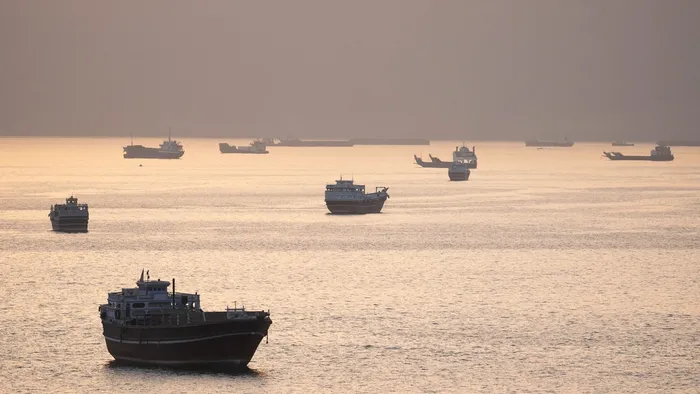
Until then, stop looking at the rig counts in North Dakota. Keep looking at the tankers in the Persian Gulf. That’s who actually sets your price.
The next time someone tells you we are energy independent, ask them why we still care who sits on the throne in Riyadh. They won't have an answer that fits on a bumper sticker.
Refit the refineries or keep paying the tax. There is no third option.
Check the crack spreads on your terminal tomorrow morning and tell me I'm wrong.