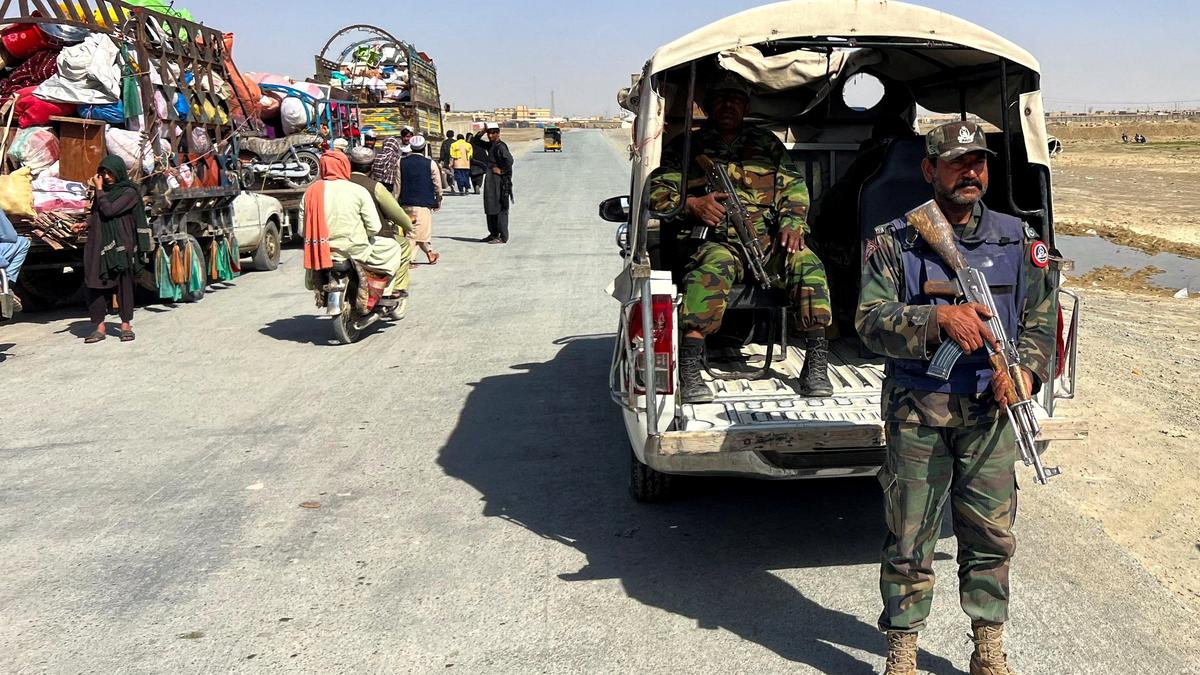
The wind in the Kech district doesn’t just blow. It scours. It carries a fine, alkaline grit that settles into the creases of your skin and the deep, weathered lines of a soldier’s face. When the silence of the scrubland is broken, it isn't usually by the sound of rain. It is the rhythmic, mechanical heartbeat of a frontier operation.
Two days ago, that silence evaporated.
By the time the sun dipped below the jagged horizon of Pakistan's southwestern frontier, fifteen men who had chosen a life of shadows were dead. They fell in two separate, synchronized strikes—one in the dust-choked expanse of Kech and the other in the rugged terrain of Panjgur. To a news ticker, these are just digits. Numbers on a screen. A tally in a decades-long ledger of insurgency and response. But to understand why these fifteen deaths matter, you have to look past the body count and into the geography of a conflict that refuses to sleep.
The Calculus of the Frontier
Security forces didn't stumble upon these groups by accident. This wasn't a chance encounter on a lonely road. It was the result of "intelligence-based operations," a clinical term for a grueling, invisible process.
Imagine a room miles away from the heat, filled with the hum of servers and the flickering glow of satellite imagery. Analysts piece together fragments of human chatter, the heat signatures of a campfire where none should be, and the movement of a single motorbike across a dry riverbed. It is a mosaic of suspicion. In Balochistan, the stakes of an analytical error are measured in lives.
In Kech, the first strike hit home. Eight insurgents, identified by the military as active members of outlawed groups, were neutralized. They were found with a cache of arms that told a specific story: light machine guns, grenades, and the kind of improvised electronics used to turn a peaceful road into a graveyard.
These weren't just men with guns. They were nodes in a network. When you remove eight nodes in a single night, the entire web shudders. The logistical flow of explosives is interrupted. The morale of the remaining cells flickers. For a brief moment, the pressure on the local population—the farmers and shopkeepers who live in the crossfire—lightens.
Shadows in Panjgur
While the dust was still settling in Kech, the second hammer fell in Panjgur. Seven more.
Panjgur is a place of brutal beauty and strategic nightmares. It is a gateway. It sits on routes that bleed into international borders, making it a prized piece of dirt for anyone looking to move illicit goods or dangerous ideologies. The seven individuals killed here were part of the same destabilization effort that has sought to turn Balochistan into a no-go zone for development.
Consider the perspective of a young soldier stationed at a remote checkpoint. For him, the "15 terrorists killed" headline isn't a political victory. It is the reason he might actually get to call home tonight. It is the reason the supply truck carrying fresh water and letters might make it through the pass without hitting a remote-detonated mine.
The conflict in Balochistan is often framed through the lens of high-level geopolitics—the China-Pakistan Economic Corridor (CPEC), regional hegemony, and resource wealth. But at the ground level, it is a war of inches and visibility. The insurgents rely on the "invisible" status of the terrain. They use the caves, the heat haze, and the vastness to disappear. These operations are designed to prove that the state’s eyes see through the haze.
The Invisible Toll
There is a tendency in modern reporting to treat these operations as isolated events, like a thunderstorm that passes and leaves the ground exactly as it was. That is a mistake.
Each operation changes the chemistry of the region. When the Inter-Services Public Relations (ISPR) releases a statement about these 15 deaths, they are sending a signal not just to the public, but to the remaining insurgent factions. The message is clear: the cost of engagement is rising.
But what about the people who aren't holding guns?
For the residents of these districts, life is a delicate negotiation with reality. They wake up to the sound of rotors or the distant thud of ordnance. They see the convoys roll past. They know that every time an operation of this scale occurs, the security net tightens. It means more checkpoints. More scrutiny. It is the price paid for a fragile kind of peace.
The weapons recovered from these sites—snipers, rockets, and communication gear—suggest a level of funding that doesn't come from local pockets. This is a sophisticated insurgency, one that leverages the grievances of a complex history to fuel a contemporary fire. By taking 15 combatants off the board, the military isn't just stopping 15 triggers from being pulled; they are seizing the hardware that represents millions in diverted "investment" into chaos.
The Persistence of the Grey Zone
Balochistan remains a "grey zone." It is a theater where the lines between war and policing are permanently blurred.
Success in this environment isn't measured by a flag planted on a hill. There is no Iwo Jima moment in the deserts of Kech. Success is measured by the absence of a headline. It is the bomb that didn't go off in a crowded market in Quetta. It is the bridge that wasn't blown up. It is the school that remained open because the local commander of a militant cell was neutralized in a midnight raid.
The tragedy of the frontier is that the work is never truly done. You can kill 15, or 50, or 500, but as long as the ideology and the external support remain, the desert will continue to produce shadows.
The soldiers returning from Kech and Panjgur will wash the dust from their faces. They will clean their rifles. They will eat a meal in a corrugated metal mess hall and try to sleep through the heat. They know that somewhere, in another fold of the hills, someone is already trying to fill the vacuum left by the fifteen who fell.
History in this part of the world is written in sand, and the sand is always moving.
But for today, the roads in Panjgur are a little quieter. The night in Kech is a little stiller. The intelligence analysts will zoom out their maps, looking for the next flicker of heat, the next shadow that moves against the grain of the land. They are waiting for the wind to shift again.
The desert doesn't offer apologies, and it certainly doesn't offer endings. It only offers the next mission.
A single boot print in the dry mud of a wadi is slowly filled by the blowing grit, erasing the evidence that anyone was ever there, until the landscape looks exactly as it did a thousand years ago—indifferent, silent, and waiting for the next spark to catch.