The illusion of peace evaporated the moment the religious observances ended. Both Moscow and Kyiv viewed the brief lull for the Orthodox Easter not as a gesture of goodwill but as a tactical pause. It was a time to rearm, recalibrate, and prepare for the next wave of mechanical carnage. Now, the skies over Ukraine are crowded once again. The drone war has resumed with a vengeance, proving that high-tech attrition is the new baseline for this conflict.
You shouldn't be surprised. This pattern of brief, fragile silences followed by immediate, intensified kinetic action is now baked into the DNA of the conflict. It’s a grinding, relentless reality. If you’re trying to understand why this war refuses to fade into a stalemate, look at the drone fleets. They’ve changed how both sides project power. They’ve lowered the cost of surveillance and increased the lethality of precision strikes.
The Reality of Temporary Ceasefires
Politicians love to talk about humanitarian corridors and religious truces. They sell these pauses as moral victories. On the ground, the story is different. Commanders on both sides use these windows to push supplies forward. They rotate exhausted units. They fix communication lines that were frayed by constant electronic warfare.
When the bells stop ringing, the operators return to their screens. These aren't soldiers charging through mud anymore. They’re technicians in basements or reinforced bunkers, staring at grainy thermal feeds. They identify targets, lock them in, and send loitering munitions into the air. The speed at which these attacks restart shows how decentralized the command structure has become. It doesn't take a high-level order to launch a swarm. The systems are already in place, waiting for the signal.
How Drones Became the Primary Weapon
We’ve moved past the era where artillery was the only factor. While the big guns still do the heavy lifting, the drone has become the scout, the sniper, and the kamikaze pilot all at once. The shift toward First Person View (FPV) drones has been particularly devastating.
These devices are cheap. They’re disposable. When you can build an effective, explosive-laden drone for the price of a modest laptop, you change the math of the battlefield. It’s no longer about who has the most expensive tanks. It’s about who can saturate the sky with enough cheap, smart hardware to make maneuvering impossible for the other side.
I’ve looked at the tactical shifts over the past few months. You see a clear evolution in how these platforms are deployed. It’s no longer just about hitting static targets. We’re seeing coordinated strikes where a surveillance drone spots a target, relays the coordinates, and a suicide drone moves in within minutes. This cycle is lightning fast. It leaves very little room for human error or hesitation.
Why This Cycle of Violence Persists
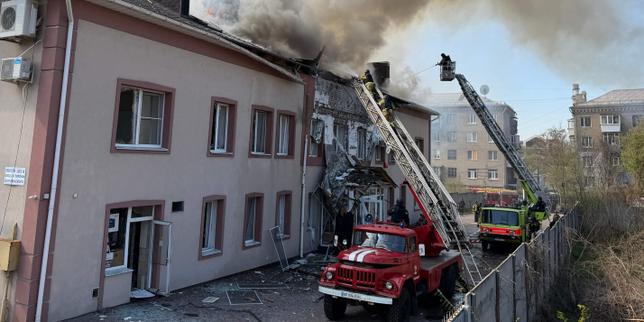
The resumption of hostilities after the Easter break reminds us that neither side believes they have hit a ceiling. Moscow maintains its strategy of deep strikes against energy infrastructure and logistics hubs. They want to wear down the civilian population and the military supply chain simultaneously. Kyiv, conversely, has leaned heavily into long-range asymmetric warfare. They’re targeting refineries and airfields deep inside Russian territory.
This isn't a war that’s ending anytime soon. It’s a war of attrition where the goal is to break the opponent’s capacity to produce. Every drone shot down or successful strike conducted is a data point in a much larger, grim equation. You can see the impact in the way local commanders act. They don't take risks anymore. If they move, they assume they are being watched from above.
Moving Forward in a High Risk Environment
If you’re tracking these events, stop looking for "turning points." Stop waiting for a single decisive battle that changes everything. That’s a fantasy of 20th-century warfare. Today, change is granular. It happens in thousands of small, violent interactions every single day.
For those trying to manage the fallout, the focus has shifted to electronic countermeasures. If you can’t shoot it down, you try to jam it. If you can’t jam it, you hide. The technological arms race is moving faster than the diplomatic one.
Keep an eye on the supply chain for components. That is where this war is truly being fought. It’s about chips, batteries, and signal processors. Until one side loses the ability to source these basic materials, the drones will keep flying. They will keep filling the silence that follows every temporary ceasefire. The war isn't just happening on the front lines. It’s happening in factories, in tech labs, and in the quiet, digital spaces where the next generation of targeting software is being written.