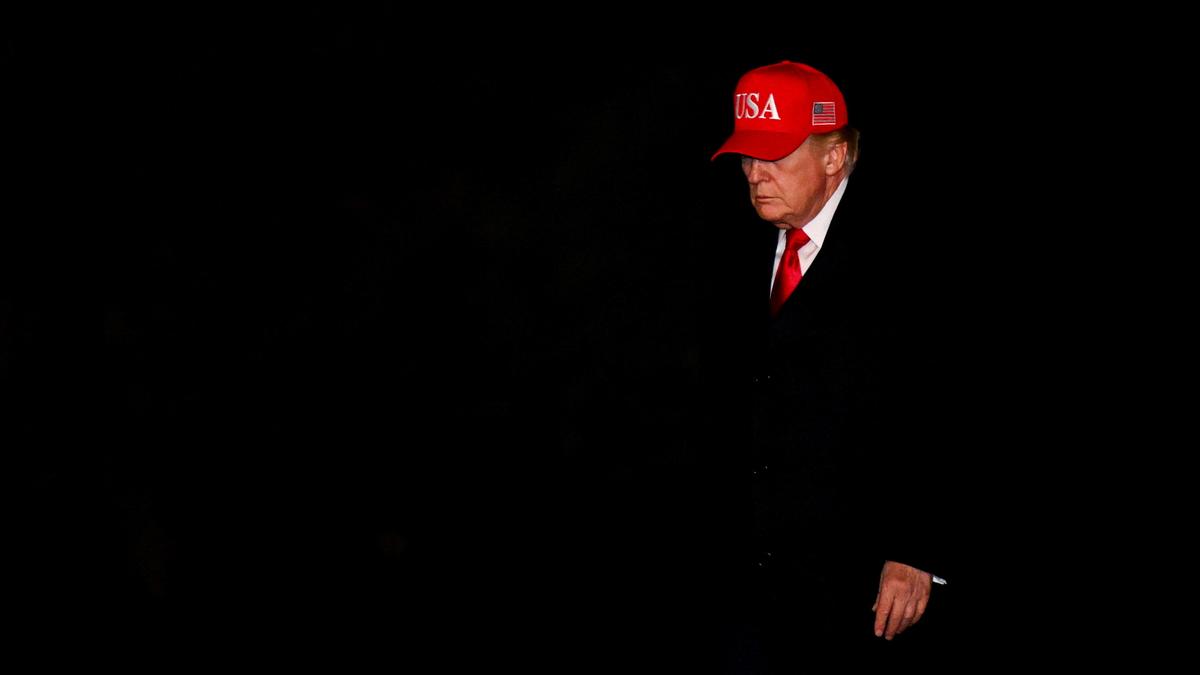
The media is currently patting itself on the back. They are celebrating a victory for the First Amendment because a judge tossed out Donald Trump’s $10 billion lawsuit against the Wall Street Journal and Rupert Murdoch. They think this is a story about libel law, journalistic integrity, and the "protection of the free press."
They are wrong. They are missing the mechanics of the game.
This wasn't a failed attempt to win $10 billion. Nobody with a functioning brain—including the legal team filing the paperwork—honestly expected a check from Dow Jones for ten yards. This was a high-stakes marketing operation masquerading as a legal battle. If you’re looking at the dismissal as a "loss" for Trump, you’re looking at the scoreboard while the stadium is being sold out from under you.
The Myth of the Libel Standard
The "lazy consensus" among legal analysts is that the case died because of the high bar set by New York Times Co. v. Sullivan. They argue that since Trump is a public figure, he had to prove "actual malice"—that the WSJ knew their reporting on his ties to Jeffrey Epstein was false or acted with reckless disregard for the truth.
But focusing on the legal threshold is a distraction. In the world of high-level litigation, the lawsuit is the product, not the verdict.
When a billionaire sues a news conglomerate, the goal isn't always to survive a motion to dismiss. The goal is the Discovery Phase. In a $10 billion suit, you are fishing for internal emails, Slack logs, and editorial memos. You are looking for the "smoking gun" of bias that you can then weaponize in the court of public opinion. The fact that the judge cut this off at the pass isn't a failure of the strategy; it’s just the cost of doing business in a system designed to protect institutional players.
Why $10 Billion is a Distraction
The number is absurd. It’s intentionally inflated to generate headlines. If Trump had sued for $5 million, it’s a local news blurb. By suing for $10 billion, he forced every major outlet to repeat the allegations he was trying to "refute" while simultaneously painting himself as the victim of a massive corporate conspiracy.
In business terms, this is Customer Acquisition Cost (CAC).
The "customers" are voters and donors. The "cost" is the legal fee to file a massive, doomed complaint. For a few hundred thousand dollars in billable hours, you get months of prime-time coverage where you are the protagonist fighting "The Machine." The ROI on that spend, when compared to traditional ad buys, is staggering. Most CMOs would kill for that kind of organic reach.
The Epstein Connection and the Red Herring
The lawsuit centered on reporting about Trump’s past associations with Jeffrey Epstein. The media focuses on whether the WSJ’s phrasing was technically accurate. They debate the nuances of "ties" versus "association."
Here is the nuance they missed: The lawsuit allowed Trump to frame the narrative. By suing, he shifted the conversation from "What was his relationship with Epstein?" to "Look how the biased media is lying about my relationship with Epstein."
It is a classic defensive pivot. You don't defend the facts; you attack the storyteller. By the time the judge dismissed the case, the core audience had already internalized the "fake news" angle. The dismissal itself is now being used as proof that the "system" is rigged against him.
The Institutional Shield
Let’s be brutally honest about the WSJ and Murdoch. They aren't neutral observers. They are a massive corporate entity with a specific ideological and commercial lane. The dismissal confirms that the legal system provides a nearly impenetrable shield for legacy media outlets when reporting on public figures.
Is that "good"? From a constitutional standpoint, perhaps. But from a market transparency standpoint, it creates a protected class of information brokers who can operate with near-impunity as long as they stay within the lines of "opinion" or "editorial discretion."
Trump’s mistake wasn't suing; it was suing in a venue where the house always wins. He challenged the referees on their own turf and expected them to blow the whistle on themselves.
The High Price of Losing
There is a downside to this contrarian view. When you use the legal system as a PR firm, you degrade the utility of the courts. You turn the judiciary into a theater of the absurd.
I’ve seen corporations blow millions on "message litigation"—lawsuits intended only to suppress a competitor's stock price or delay a product launch. It works in the short term, but it builds a "litigation tax" into the entire industry. Trump’s $10 billion swing is just the most visible version of a tactic used every day in Silicon Valley and on Wall Street.
When a tech giant sues a startup for "patent infringement" with no intention of ever going to trial, they are doing exactly what Trump did here. They are using the weight of the legal system to exert pressure, control the narrative, and exhaust the opponent's resources.
Stop Asking if the Lawsuit was Valid
People keep asking: "Was there actually libel?"
That is the wrong question. It doesn't matter. The lawsuit served its purpose the moment it was filed and the "Breaking News" banners hit the screen. It reinforced the brand. It galvanized the base. It forced the WSJ to spend money on defense.
The dismissal is merely the closing of a marketing campaign.
If you want to understand the modern intersection of law, politics, and business, you have to stop looking at court rulings as final judgments on truth. They are just data points in a much larger, more cynical game of attention.
The WSJ won the legal battle. Trump won the attention cycle. In the 2026 economy, attention is the only currency that actually prints.
The "integrity of the press" hasn't been saved. It’s just been shown to be a fortress that can be sieged for fun, profit, and political capital. The next time a massive lawsuit hits the wires, don't look at the damages requested. Look at who is being forced to defend their reputation, and who is getting a free megaphone.
The court dismissed the case, but the damage to the idea of "objective reporting" was done the second the clerk stamped the filing.
Now, go back and look at the "victory" again. It looks a lot more like a stalemate where the only loser is the public's grasp on reality.