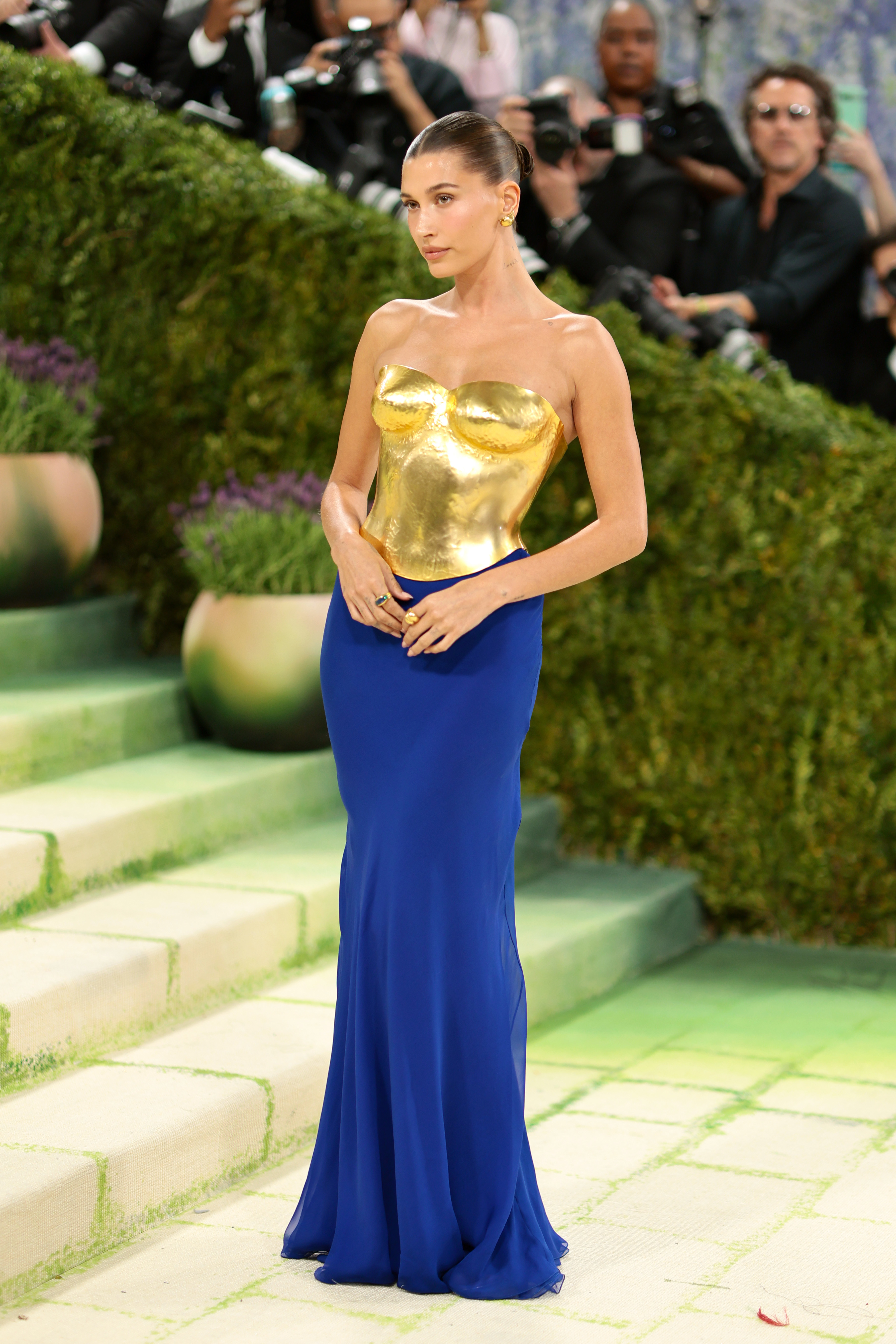
The internet is currently hyperventilating over Doja Cat in a silicone Saint Laurent dress. The headlines are predictable. They call it "ethereal." They call it "boundary-pushing." They claim she "broke the internet" for the seventeenth time this week.
They are lying to you.
What you actually witnessed wasn't a fashion breakthrough. It was a funeral. We are watching the terminal decline of the "Fashion Moment"—that once-sacred intersection of high art and cultural impact—being replaced by a desperate, high-gloss franticness. Doja Cat isn't wearing the dress; the dress is wearing a PR strategy. And if you think this is about style, you’ve already lost the plot.
The Silicone Fallacy
Silicone is a lazy medium.
Let’s be precise about the material science here. In the history of couture, the mastery of a garment was defined by how a designer manipulated difficult, natural fibers—silk, wool, tulle—to mimic or enhance the human form. To make fabric behave like liquid is the ultimate flex.
Using actual liquid-adjacent materials like silicone or latex is a shortcut. It’s the fashion equivalent of using a cheat code in a video game. When Anthony Vaccarello puts Doja in a molded silicone piece, he isn't defying the laws of physics; he’s just shrink-wrapping a celebrity. It requires zero draping skill. It requires zero movement. It is a static sculpture that happens to have a pulse inside it.
The "wow" factor people feel isn't awe at craftsmanship. It’s a primitive biological response to a texture that looks like skin but isn't. It’s the Uncanny Valley of the red carpet. By praising this as the pinnacle of design, we are signaling to the industry that we no longer care about the how, only the thumbnail.
The Costume vs. Clothes Trap
There is a fundamental difference between being a "clothed person" and being a "prop."
In the 90s, when McQueen or Galliano pushed boundaries, the clothes were radical because they were meant to be lived in, however dangerously. They were an extension of the wearer’s psyche. When Doja Cat steps out in a silicone mold, she is no longer an artist; she is a billboard for a luxury conglomerate’s accessory division.
- The Intent: The goal isn't to look good.
- The Execution: The goal is to generate "earned media value."
- The Result: A disposable image that lasts exactly 24 hours in the collective consciousness.
I have spent years watching brands pivot from "What does this represent?" to "Will this trigger the algorithm?" This dress is the final form of that rot. It is designed specifically for a 1080x1350 pixel crop on a smartphone screen. If you saw it in person, without the professional lighting and the frantic energy of a step-and-repeat, it would look like what it is: an expensive piece of plumbing.
The Myth of the Subversive Pop Star
The common defense for these stunts is that Doja is "trolling" or "subverting" the industry.
Stop.
True subversion requires risk. Wearing a custom-made Saint Laurent dress provided by a multi-billion dollar luxury group (Kering) while being surrounded by a security detail and a glam team is the least risky thing a person can do. It is the status quo wearing a mask of rebellion.
If Doja Cat wanted to be subversive, she’d show up to the Met Gala in a Hanes three-pack of t-shirts. That would actually challenge the power structures of the industry. Instead, she is playing the game better than anyone else, while winking at the camera so you feel like you're in on the joke. You aren't. You're the consumer, and the silicone dress is the bait.
We are living through a period of "Gimmick Inflation."
- First, it was bold colors.
- Then it was sheer fabrics.
- Then it was Schiaparelli’s lion heads.
- Now it’s full-body industrial casting.
Where does it go next? When every "moment" is a 10/10 on the shock scale, the scale itself becomes meaningless. We are becoming desensitized to beauty because we are being overfed on spectacle.
The Cost of the Click
Everyone asks, "How did she look?" Nobody asks, "How did she breathe?"
The physical toll of these garments is often framed as "artistic sacrifice." In reality, it’s a symptom of a culture that treats the human body as a secondary consideration to the image. This isn't a critique of Doja—she is a master of her own brand—but it is a critique of a fashion system that has abandoned the "human" in "humanities."
Silicone doesn't breathe. It traps heat. It creates a vacuum against the skin. It is a sensory deprivation tank masquerading as a gown. When we celebrate this, we are celebrating the erasure of the wearer’s comfort and agency in favor of a static, unyielding aesthetic. It is the ultimate expression of the "male gaze," even when directed by a female pop star and a male creative director. It demands perfection through restriction.
The Industry’s Dirty Secret
Here is what the fashion mags won't tell you: the dress isn't for sale.
Most of these "viral" pieces are one-offs created specifically to sell perfume and handbags to people who can't afford the dress. The dress is a loss leader. It’s a marketing expense. By focusing on the "boldness" of the silicone, we ignore the fact that the actual business of fashion has become incredibly boring.
While Doja Cat is being poured into a mold, the actual stores are filled with the same repetitive, safe luxury staples that have dominated the market for a decade. The spectacle exists to distract you from the stagnation. It’s the magician’s flourish while the other hand is reaching into your pocket for $450 for a branded keychain.
Stop Looking for Meaning in the Mold
People Also Ask: "Is Doja Cat the new Lady Gaga?"
The answer is a brutal no. Gaga used fashion as a narrative tool for her music. Doja uses fashion as a distraction from the fact that the "music industry" as we knew it is dead.
People Also Ask: "Is silicone the future of fashion?"
Only if you want to live in a world where your clothes have the soul of a kitchen spatula.
We need to stop rewarding "the look" and start demanding "the craft." If a garment cannot survive a three-minute walk without a team of four people adjusting the hem, it’s not a garment. It’s a set piece.
The next time you see a celebrity in a "viral" dress, ask yourself one question: Does this make me feel something, or does it just make me want to scroll?
If the answer is the latter, the dress didn't win. The algorithm did.
Burn the silicone. Bring back the silk.