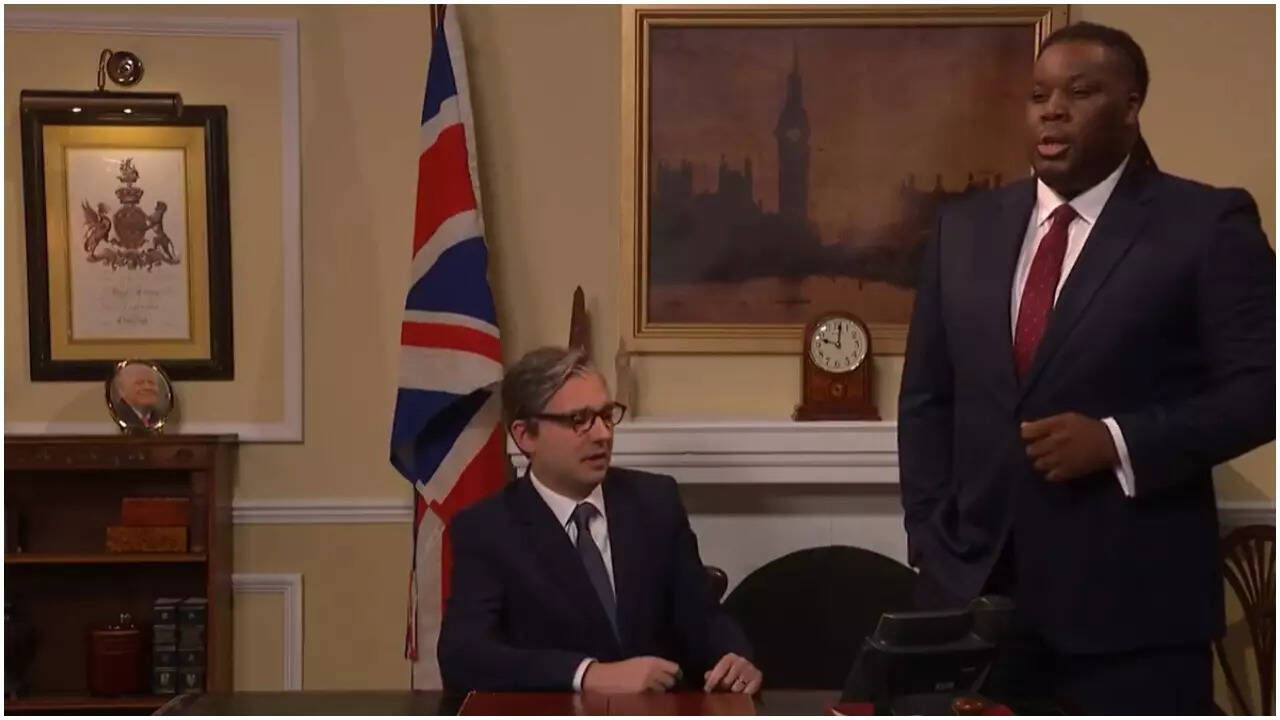
The SNL UK debut did what satire always does when it lacks a real edge: it mocked the aesthetic and missed the architecture. By painting Keir Starmer’s recent phone call with Donald Trump over the Iran escalation as a cringing, "bloomin' difficult" comedy of errors, the writers leaned into the lazy consensus that charisma is a prerequisite for power.
They are wrong.
In the high-stakes theater of a Middle Eastern hot war, "cool" is a liability. Charisma is what gets countries dragged into twenty-year occupations based on a feeling in someone's gut. Starmer’s perceived awkwardness isn't a bug in the British diplomatic OS; it is the firewall. If you find the Prime Minister difficult to talk to, it’s likely because he is treating a geopolitical crisis like a legal deposition rather than a podcast appearance.
The Charisma Trap in Transatlantic Relations
We have been conditioned by decades of "bromance" politics—Blair and Clinton, Obama and Cameron—to believe that if two leaders aren't sharing a laugh and a leather sofa, the "Special Relationship" is failing. This is a nostalgic delusion.
The reality of 2026 is that the U.S. and the UK are operating on entirely different frequencies. Trump views foreign policy as a series of transactional skirmishes and personal loyalty tests. Starmer views it as a framework of international law and treaty obligations. When these two worlds collide on a phone call about Iranian missile batteries, there should be friction. There should be silence. There should be "awkwardness."
I have sat in rooms where "smooth" diplomats agreed to disastrous concessions simply to avoid a pause in the conversation. I have watched officials prioritize "rapport" over national interest because they didn't want to seem "difficult" to their American counterparts. Starmer’s refusal to play the sidekick in Trump’s reality show isn't a failure of personality. It is a calculated refusal to be absorbed into someone else’s narrative.
Why Satire Always Punches Down on Competence
SNL UK’s portrayal of the call suggests that Starmer is outmatched by Trump’s unpredictable energy. This reflects a broader cultural obsession with "vibes" over substance. We are told that being relatable is the same as being effective.
Let's dismantle that.
When Iran and Israel are trading long-range strikes, do you want a Prime Minister who is "good in a room," or do you want a former Director of Public Prosecutions who builds a case? The "scary wonderful" jab in the skit mocks Starmer's attempt to navigate Trump's ego without abandoning the UK's stance on de-escalation. It’s a tightrope walk.
- Misconception: A silent phone line means a lack of influence.
- Reality: Silence is often the only tool left when the person on the other end is demanding a blank check for a regional war.
The media characterizes Starmer as "wooden." In legal circles, we call that being "on the record." Every word is weighed for its implications in the UN Security Council. If that makes for boring television, good. Statecraft should be boring. When it becomes entertaining, people are usually dying.
The Iran Calculus: Logic vs. Impulse
The competitor's narrative suggests that Starmer is "struggling" to manage the relationship. This assumes the relationship can be managed.
Trump’s approach to the Iran war is centered on maximum pressure and unilateral action. Starmer’s mandate—and the UK’s strategic necessity—is centered on the containment of a global energy crisis and the prevention of a refugee surge into Europe. These goals are fundamentally at odds.
Imagine a scenario where a UK Prime Minister was "great" at talking to Trump. That Prime Minister would likely be agreeing to British involvement in a naval blockade or a strike package that the Ministry of Defence cannot afford and the British public will not support. In this context, "awkwardness" is a form of resistance. It is the friction that slows down a rush to judgment.
The Cost of Being a "Good Talker"
Look at the history. Tony Blair was an exceptional communicator. He was "wonderful" to talk to. He had "synergy"—to use a word I despise—with the Bush administration. That charisma helped bridge the gap between flawed intelligence and a full-scale invasion of Iraq.
I’ve seen the internal memos from the early 2000s. The desire to be "in the loop" and "personally close" to the President overrode the skepticism that should have been the default. Starmer’s lack of a "spark" with Trump is a safeguard against that kind of catastrophic intimacy.
Dismantling the "Struggling Leader" Trope
The "People Also Ask" sections of the internet are currently flooded with variations of: "Is Keir Starmer too weak for Trump?"
The premise is flawed. It equates "loudness" with "strength." In the world of high-level negotiations, the person who speaks the least often holds the most leverage. If Trump is frustrated by the call, it’s because he can’t find a hook. He can’t find a personal grievance or a flattery-based opening to exploit.
Starmer is a proceduralist. He anchors every conversation in the Joint Comprehensive Plan of Action (JCPOA) frameworks or NATO Article 5 specifics. To a populist, that is "difficult." To a nation trying to avoid being a junior partner in a third Gulf War, it is essential.
The SNL UK Failure
The problem with SNL UK’s debut isn't just that the jokes were stale; it’s that they are punching at a version of leadership that no longer exists. They are mocking a man for not being a celebrity in an era where celebrity politicians have consistently burned the house down.
They want a "character." They want a Boris Johnson who can trade quips and Latin phrases while the pound crashes. They are uncomfortable with a leader who resembles a mid-level insurance adjuster because they haven't realized that after a decade of chaos, an insurance adjuster is exactly what the UK needs to handle the claim of a broken world.
The Brutal Truth About the Special Relationship
The "Special Relationship" is a ghost. It’s a rhetorical device used to guilt the UK into compliance or to give the US a veneer of multilateralism.
In 2026, the power imbalance is so vast that "friendship" is an irrelevant metric. There is only interest.
- The US wants a loyal deputy in the Middle East.
- The UK wants to avoid a global recession triggered by $150-a-barrel oil.
If Starmer is "awkward" on the phone, it’s because he’s busy saying "no" in a way that doesn't trigger a trade war. That isn't a comedy sketch. It’s a survival strategy.
Stop Trying to Make the Prime Minister "Likable"
The obsession with Starmer's personality is a distraction. Whether he is "bloomin' difficult" to talk to is irrelevant to his ability to move the needle on Iranian uranium enrichment levels or the security of the Strait of Hormuz.
I’ve worked with leaders who were "magnetic." They were also disorganized, impulsive, and prone to making promises they couldn't keep. Give me the "boring" guy who reads the briefing papers three times. Give me the guy who makes the President of the United States wait for an answer because he needs to check the legalities first.
The "scary wonderful" tag used by the SNL writers is meant to be a dig at Starmer’s supposed sycophancy. In reality, it reflects the absurdity of trying to apply 1990s diplomatic tropes to a 2026 nightmare.
The Nuance of the "Difficult" Label
Being "difficult to talk to" is a professional asset in two specific scenarios:
- When the person you are talking to is trying to sell you a lemon.
- When the person you are talking to is trying to start a war.
Trump is currently doing both. He is selling the idea of a "quick, decisive" intervention in Iran while ignoring the logistical reality of a multi-front conflict involving Hezbollah and various proxy groups. Starmer’s "awkwardness" is the refusal to buy the pitch.
If you want a Prime Minister who can trade banter with a populist billionaire, go watch a rerun of the 2010s. If you want to understand how a mid-sized power survives a period of global insanity, start valuing the man who is too busy looking at the map to laugh at the jokes.
The satire isn't biting because it’s targeting the wrong thing. It’s mocking the armor, thinking it’s the skin. Starmer isn't failing the "Trump test" because he can't hold a conversation; he’s passing it because he’s making the conversation too expensive for Trump to win.
Stop looking for a protagonist. Start looking for a technician.