Twenty years ago, a pixelated primate lived in a banner ad at the top of a slow-loading webpage. He wore a yellow hat. He moved with the jerky, three-frame animation of a dial-up era ghost. The instructions were simple: "Punch the Monkey to Win $1,000." We clicked because we were bored, or because we were naive, or because the bright colors offered a brief hits of dopamine in a world that still required us to go outside to buy groceries.
The monkey wasn't real. The thousand dollars was a lie. But the interaction—the act of a human reaching through a screen to touch an animal—set a precedent we didn't see coming. Also making waves recently: The Logistics of Survival Structural Analysis of Ukraine Integrated Early Warning Systems.
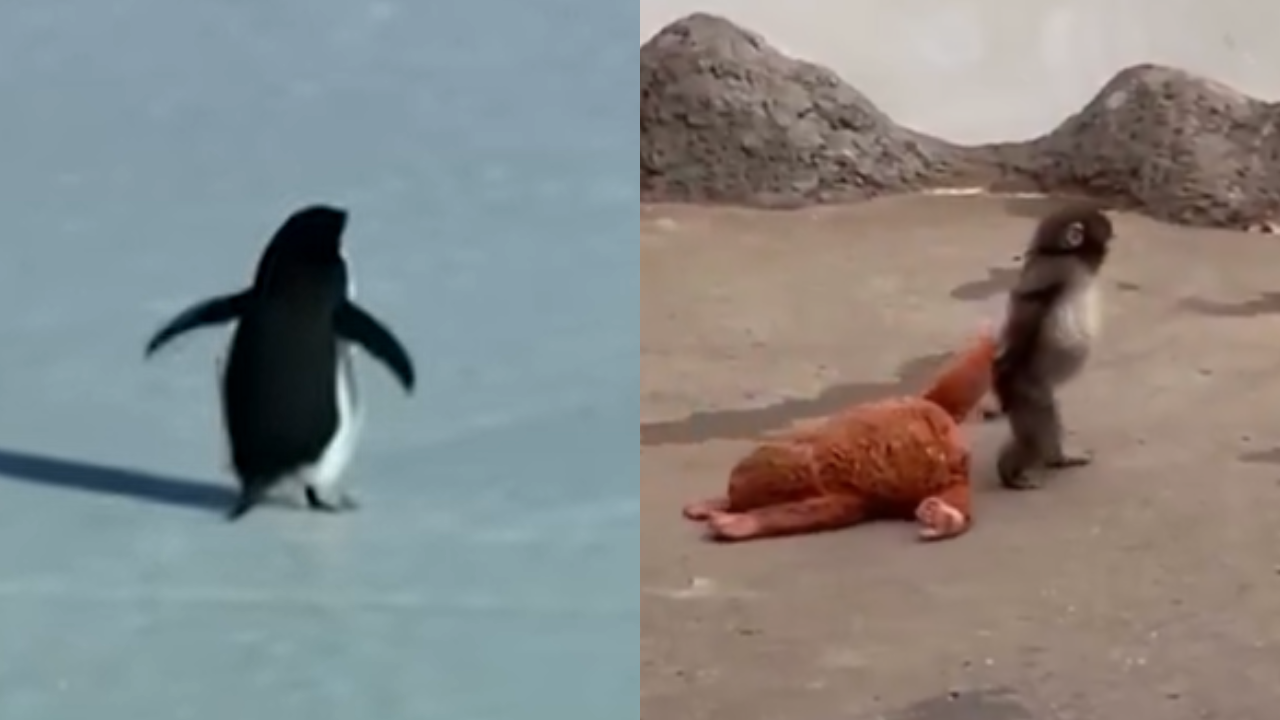
Fast forward to 2026. The monkey has been replaced by a penguin. This penguin doesn't promise money. Instead, he offers something far more valuable in the current economy: a mirror. He is the "Socially Awkward Penguin," reborn and rendered in hyper-realistic 4K, populating our feeds not as a joke, but as a surrogate for our own deteriorating social skills.
We didn't just invite animals into our digital spaces. We moved into theirs. Further information into this topic are explored by The Verge.
The Architecture of the New Wild
The shift happened while we were looking at our phones. In the early 2010s, cats were the undisputed kings of the internet. Grumpy Cat and Keyboard Cat were celebrities, sure, but they were still "others." They were pets we laughed at. They were spectacles.
But as the world grew louder, more fractured, and increasingly digitized, our relationship with these images shifted. We stopped laughing at the animal and started using the animal to explain why we were crying.
Consider a hypothetical office worker named Sarah. Sarah is thirty-four. She works in a high-rise where the windows don't open. When her boss sends a vaguely threatening email about "alignment" at 4:45 PM, Sarah doesn't type out a paragraph about her anxiety. She doesn't call a friend. She opens a messaging app and sends a GIF of a Capybara sitting perfectly still while a bird pecks at its head.
The Capybara is Sarah. Sarah is the Capybara.
This isn't just a "meme." This is a sophisticated form of emotional shorthand that has bypassed traditional language. By 2026, the "animal takeover" of the internet has reached its logical conclusion: we have outsourced our humanity to the animal kingdom because the digital world has made being a human too exhausting.
Why the Penguin Replaced the Protest
There is a specific reason why 2026 belongs to the Penguin.
In the mid-2020s, the internet became a minefield of algorithmic tension. Every word you type is tracked, analyzed, and potentially weaponized by an audience looking for a reason to be offended. Language has become heavy. It carries the weight of politics, identity, and the permanent record of the cloud.
Animals, however, are immune to the culture wars.
A penguin sliding on its belly into a freezing ocean doesn't have a voting record. It hasn't "said" anything problematic in 2014. It exists in a state of pure, blameless being. When we share the image of that penguin, we are participating in a safe form of communication. We are using the animal as a shield.
The data backs this up. In 2025, engagement metrics for "human-centric" influencers began to plateau. People grew tired of the curated perfection of lifestyle bloggers. We hit a wall of "empathy fatigue." In response, the algorithms began to favor the unpredictable, the non-verbal, and the primal.
The rise of the "Penguin Memes" of 2026 is actually a silent protest against the complexity of modern life. We are regressing. We are finding comfort in the flightless bird because, in a world of soaring expectations and digital surveillance, we also feel like we’ve forgotten how to fly.
The Invisible Stakes of the Digital Zoo
It’s easy to dismiss this as "just the internet being weird." But look closer at the mechanics of these platforms.
The tech giants didn't stumble into the animal trend. They engineered it. Animals provide the perfect "neutral content." They keep users on the platform without triggering the "rage-quitting" behavior associated with political news. If a social media company can replace a heated argument about tax code with a three-minute video of a baby elephant trying to use its trunk, the "time-on-site" metric skyrockets.
But there is a cost to this digital sedation.
When we spend six hours a day communicating through the medium of funny animals, we are thinning the soup of human interaction. We are losing the ability to navigate nuance. Why bother explaining the specific, bittersweet feeling of a Sunday evening when you can just post a picture of a sad frog?
We are building a digital zoo, but we’re the ones inside the cages, staring out at a world filtered through the eyes of creatures that don't even know we exist.
The Great Flattening
History has a funny way of repeating itself, but with higher resolution. In the Victorian era, people were obsessed with taxidermy. They wanted to freeze nature, to own it, to keep it in the parlor. They dressed squirrels in little suits and sat them at tiny tables.
We are doing the same thing, just with pixels.
The "Penguin" of 2026 is a digital taxidermy. We have stripped the animal of its wildness, its smell, its danger, and its reality. We have turned it into a vessel for our own neuroses.
I remember the first time I felt the "Great Flattening." I was at a funeral. A real one. For a person. As I stood by the grave, I found my thumb twitching. I wanted to scroll. I wanted to see something that wasn't this—this raw, jagged, uneditable grief. I wanted a video of an otter holding hands with another otter.
I wanted the animal to do the feeling for me.
That is the true danger of the internet in 2026. It isn't that the animals took over the web. It’s that they took over the parts of our brains where the hard feelings used to live. We’ve traded the complexity of the human soul for the adorable simplicity of a flightless bird.
The Ghost in the Machine
We are currently living through a period of "Evolutionary Whiplash." Our brains evolved over millions of years to interact with physical beings in a physical world. Now, we spend the majority of our waking hours staring at a glowing rectangle.
The animals are our tether.
They are the only things left on the internet that feel "real," even when they are generated by an AI. There is a deep, biological comfort in the sight of a fur-covered mammal or a feathered bird. It reminds us of a time before the "Punch the Monkey" banner, before the 401k, before the existential dread of a melting ice cap.
The Penguin is a ghost of a world we are rapidly destroying.
The irony is thick enough to choke on. We obsessively share videos of animals on the internet while their real-world habitats vanish. We use the Penguin to express our social anxiety, while the actual penguin deals with the anxiety of a warming ocean. We have disconnected the image from the entity.
In 2026, the internet is no longer a tool. It is a habitat. And in this habitat, we are the most invasive species.
We think we are the masters of the menagerie. We think we are the ones holding the phone, clicking the "like" button, and deciding which animal goes viral next. But as the sun sets on another day of scrolling, as the blue light fades and we are left in the silence of our own rooms, the truth becomes clearer.
The monkey didn't need the thousand dollars. The penguin doesn't need the meme. They were never the ones who were lost.
We are.
The screen flickers. A new image appears. A tiny, flightless bird stands on a shrinking piece of ice, looking directly into the camera.
He isn't asking for a click. He isn't trying to be funny. He is just waiting for us to put the phone down and remember what it feels like to be cold.