A small, nondescript basement in Kyiv smells of damp concrete and cold coffee. There is no glory here, only the rhythmic tapping of keys and the low hum of cooling fans. Mykyta, a software engineer who traded a high-paying fintech career for a camouflage jacket, stares at a screen displaying a grainy, thermal feed from a drone hovering miles away. He isn't looking for a person. He is looking for a pattern.
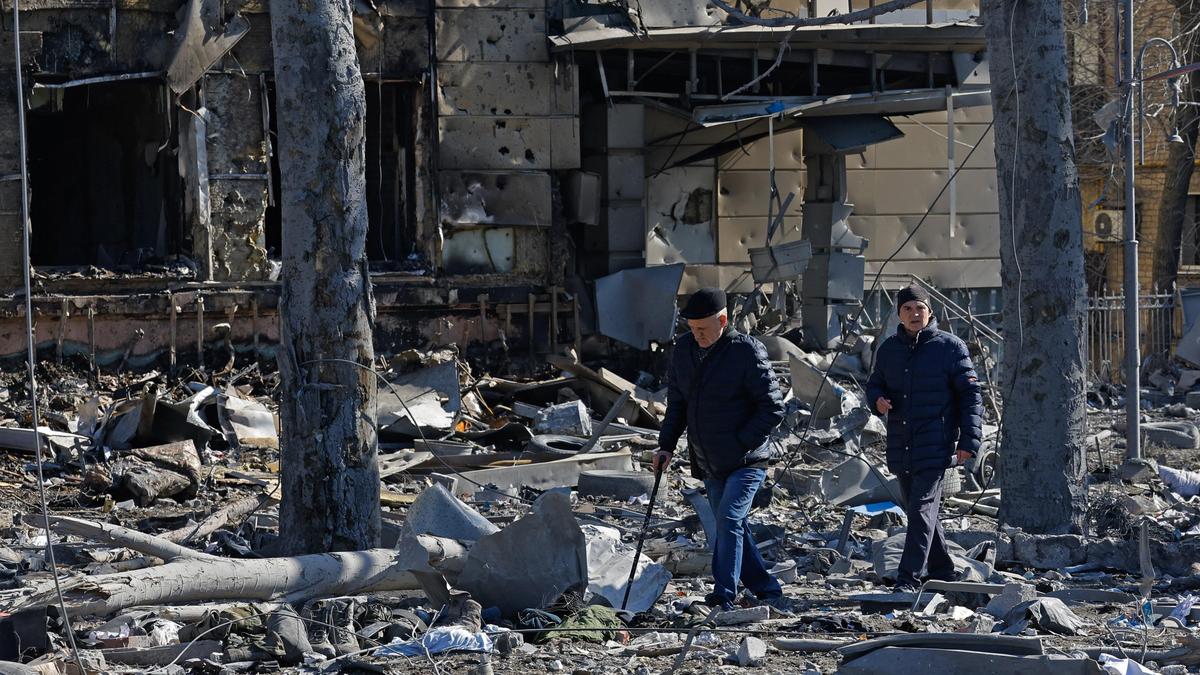
The "battlefield data" we talk about in press releases isn't just a spreadsheet of coordinates. It is the digital pulse of a nation fighting for its life. It is the specific sound a certain engine makes before it fails, the way a shadow falls across a treeline when a tank is hidden there, and the precise trajectory of a missile that just leveled a residential block.
For two years, Ukraine has been the world’s unintended laboratory. But now, the doors to that lab are swinging open. By granting allies access to its raw battlefield data for AI model training, Ukraine is doing something unprecedented in the history of warfare. It is exporting experience.
The Weight of a Terabyte
Imagine a library where every book is written in a language only one person understands. That was the state of modern military AI until recently. Western tech giants and defense contractors have spent billions building "smart" systems, but those systems were raised in sanctuaries. They learned to identify targets on sunny California ranges or in sterile simulations.
Real war is messy.
Real war is a sensor covered in mud. It is a signal jammed by electronic interference. It is a thermal signature blurred by a sudden autumn downpour. When Ukraine shares its data, it is giving these AI models a "childhood" spent in the harshest conditions imaginable. It is moving from the theoretical to the visceral.
Consider a hypothetical scenario to ground this abstract exchange. A drone operator in the Donbas observes a new type of electronic jamming. Instead of just reacting, the system records the frequency, the pulse width, and the physical location. In the past, that data might have lived and died on a local hard drive. Now, that data can be fed into an allied AI model in a lab in London or Virginia. Within hours, the model learns. It adapts. It pushes an update back to the front.
The loop closes.
The Invisible Stakes of the Data Trade
There is a quiet desperation in this level of transparency. Sharing data with allies isn't just a technical handshake; it is an act of profound vulnerability. In the world of intelligence, information is the only currency that matters. To give it away is to give away your edge, hoping that the collective brain of the alliance can sharpen that edge and hand it back before it’s too late.
The sheer volume of information is staggering. We are talking about petabytes of video, telemetry, and intercepted communications. This is the "Big Data" of life and death.
But there is a human cost to this digital transformation. Every data point represents a moment of terror or triumph. A "successful intercept" in a database is a family in an apartment building who didn't die that night. A "failed identification" is a tragedy that someone has to explain to a mother. When we strip the humanity away to feed the algorithms, we risk forgetting that the "input" was once a heartbeat.
Why the Old Rules No Longer Apply
The traditional defense industry moves at the speed of a glacier. It takes a decade to design a jet and another decade to build it. But the software-defined war moves at the speed of a fiber-optic cable.
Ukraine has realized that they cannot outbuild their opponent in sheer mass. They cannot match them tank for tank or shell for shell indefinitely. They have to outthink them. They have to be more "liquid."
By opening access to their data, they are effectively crowdsourcing the defense of their sovereignty. They are saying to the world’s best engineers: "Here is the reality. Fix it." This isn't a partnership built on a "landscape" of "synergy." It is a frantic, necessary bridge built over an abyss.
The complexity is the point. If an AI can learn to distinguish between a decoy and a real S-300 launcher amidst the visual noise of a scorched field, that AI becomes a shield. If it can predict where a strike will land based on subtle shifts in troop movements recorded three days prior, it becomes a prophet.
The Ethical Ghost in the Machine
We have to be honest about the discomfort this creates. There is a chilling quality to the idea of "perfecting" war through machine learning. Many of us find the concept of an autonomous system making a lethal decision repulsive. It feels like we are losing the last shred of our humanity to a cold, calculated logic.
However, the perspective changes when you are the one in the basement with Mykyta. When the choice isn't between "AI or no AI," but between "an AI that works or a funeral," the ethics become much more focused.
The goal of sharing this data isn't to create a "terminator." It is to reduce the margin of error. In war, error is where the civilians are. Error is the hospital hit by mistake. Error is the friendly fire incident. By making these systems smarter through real-world data, the hope—however fragile—is to make the violence more precise, and therefore, perhaps, less indiscriminate.
The Burden of Being the First
Ukraine is the first nation to fight a full-scale, high-intensity war in the age of the algorithm. They are the pioneers of a frontier no one wanted to settle.
This access given to allies is a two-way mirror. While the West gets to see the reality of modern combat without the cost of boots on the ground, Ukraine gets the processing power of the world’s most advanced economies. It is a trade of blood for bits.
But what happens when the war ends? The models trained on this data will remain. The lessons learned in the ruins of Bakhmut or the streets of Kherson will be baked into the security architectures of the West for the next fifty years. We are witnessing the birth of a new kind of global security, one where the "border" is a firewall and the "ammunition" is a well-trained weight in a neural network.
The screens in the Kyiv basement flicker. Mykyta rubs his eyes, the blue light reflecting in his pupils like a digital ghost. He isn't thinking about "robust solutions" or "paradigm shifts." He is thinking about his daughter, who is sleeping in a hallway because it’s the only place without windows.
He uploads the file.
The data travels across the ocean, through undersea cables, into a server farm that hums with the electricity of a small city. There, an AI model adjusts a billion parameters. It learns. It grows. It prepares for a threat it has never seen but now understands.
The code is written in silence, but it echoes in the thunder of the next morning's battery.
The machine is learning. We can only hope it learns the right things.
The hum of the fans continues, a digital vigil for a physical war.