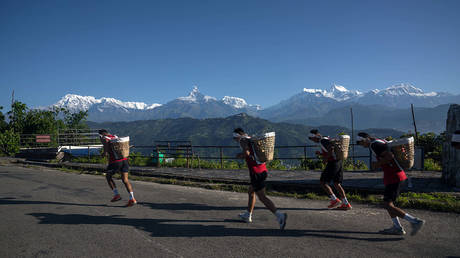
The air at 26,000 feet doesn’t just lack oxygen. It lacks mercy. Every breath is a jagged struggle, a desperate negotiation between your lungs and a sky that wants to freeze them solid. In this place, known as the Death Zone, you are entirely dependent on the person walking in front of you. You trust your guide with your life because, quite literally, there is no one else.
But in the shadowed valleys of the Himalayas, a different kind of negotiation was taking place for years. It wasn’t about survival. It was about a $20 million heist.
Consider a climber we’ll call David. He’s an accountant from London who spent five years saving every spare pound to stand on top of the world. He isn't a professional athlete; he’s a man with a dream and a credit card. When he arrives in Kathmandu, he is greeted by a trekking company that promises the summit. What they actually want is his insurance policy.
The Taste of Metal and Betrayal
The scam begins with a pinch of baking soda in a water bottle or a deliberate slight of hand with unwashed communal food. It’s subtle. It’s effective.
Suddenly, David isn't just tired; he’s vomiting. His head thumps with a rhythm that feels like a pressurized piston. To a novice, this feels like the onset of High Altitude Cerebral Edema (HACE), a lethal swelling of the brain. To his guide, it’s a payday.
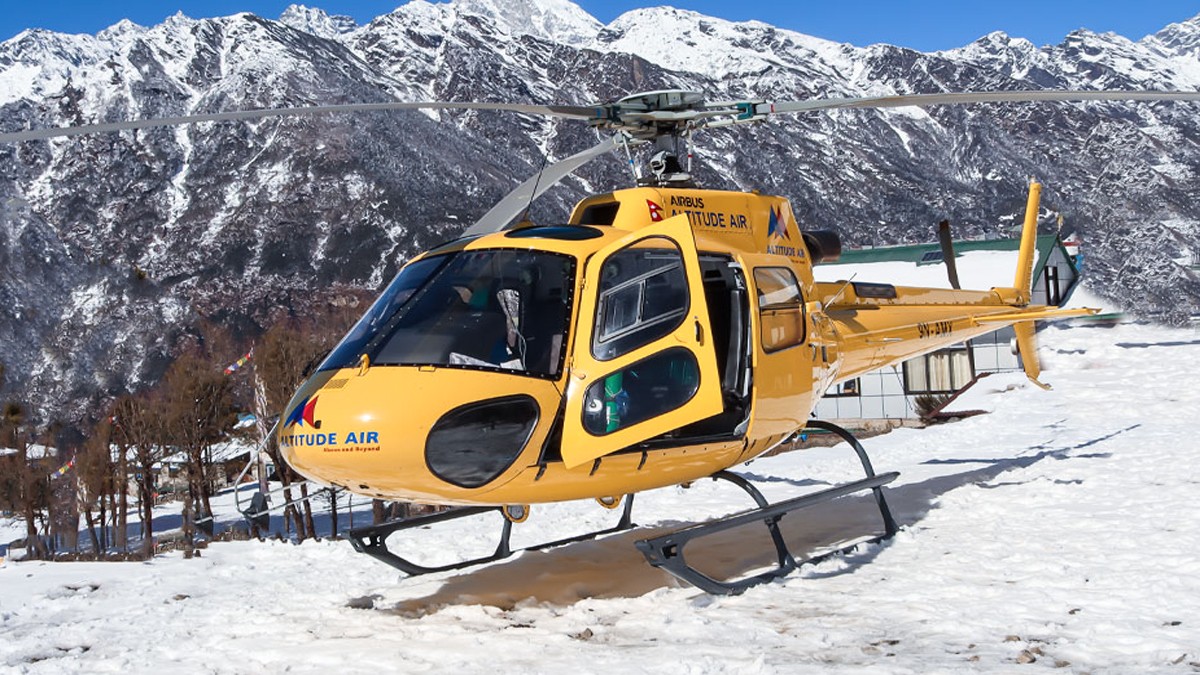
The guide doesn't offer rest or a lower altitude. He reaches for a satellite phone. He doesn't call a doctor for advice. He calls a specific helicopter charter company.
Within hours, the thwack-thwack-thwack of rotor blades cuts through the thin mountain air. David is strapped into a seat, whisked away from his dream, and dropped at a private hospital in Kathmandu. He is confused. He is heartbroken. He is also being billed $15,000 for a flight that should have cost a fraction of that, while the hospital prepares a stack of inflated invoices for "life-saving" treatments he never truly needed.
This wasn't a series of unfortunate events. It was a choreographed performance.
A Syndicate Built on Thin Air
The scale of the "fake rescue" industry on Everest reached such a fever pitch that the Nepali government was forced to launch a formal investigation. The findings were staggering. A tangled web of trekking agencies, helicopter companies, and hospitals had formed a predatory ecosystem.
They weren't just waiting for people to get sick. They were making them sick.
Investigators found that some guides were allegedly putting laxatives or heavy doses of baking soda into the food of their clients. The goal was simple: induce symptoms that mimic altitude sickness. Once the climber panicked, the "rescue" was initiated.
The money flow followed a cynical circularity. The trekking agency would get a kickback from the helicopter company. The helicopter company would get a kickback from the hospital. The hospital would overcharge the insurance provider, and the cycle would reset for the next season.
In a single season, one agency was found to have billed for over 100 rescues. Statistically, that isn't a bad run of luck. It’s a business model.
The Invisible Stakes
When we talk about $20 million in insurance fraud, the numbers feel abstract. They feel like a victimless crime against giant corporations.
They aren't.
The real cost is measured in the integrity of the mountain and the safety of those who truly need help. When the "boy who cried wolf" happens a thousand times at the roof of the world, the system begins to fracture.
Insurance premiums for Himalayan expeditions began to skyrocket. Some major international providers threatened to pull out of Nepal entirely. Imagine being a genuine climber, truly suffering from a pulmonary edema, and having your rescue delayed because an insurance adjuster in Zurich is scrutinizing your paperwork to ensure you aren't part of a scam.
That delay is the difference between coming home in a jacket or a body bag.
The Corruption of the Sacred
For decades, the relationship between a Sherpa and a climber was built on a foundation of sacred trust. The Sherpa was the guardian, the pathfinder, the one who stayed when everyone else fled.
The fraud didn't just steal money; it poisoned that relationship. It turned the guide into a predator and the client into a walking ATM. It’s a tragedy born of desperation and greed. Nepal is a poor country, and the lure of a $2,000 kickback—more than many earn in a year—is a powerful incentive.
But the middlemen, the owners of the charter companies and the private clinics, were the ones reaping the lion's share. They sat in comfortable offices in Kathmandu while men and women suffered on the slopes for their profit.
They turned the highest point on Earth into a low-rent grift.
The Toll of the Long Descent
The government's crackdown in recent years has made the scam harder to pull off. New regulations require more transparency in billing and stricter oversight of helicopter flight logs. But the ghost of the fraud lingers.
David, our hypothetical accountant, eventually went home. He survived his "illness," but he never saw the summit. He spent months arguing with his insurance company, which eventually flagged his claim as suspicious. He was left with a $20,000 bill and a bitter taste in his mouth that had nothing to do with baking soda.
The mountain remains. It is still beautiful, still indifferent, still deadly. But the air there is a little heavier now, weighted by the knowledge that the greatest danger on Everest might not be the cold, the wind, or the lack of oxygen.
Sometimes, the most dangerous thing on the mountain is the person holding your hand.
The true cost of the $20 million fraud isn't found in a ledger or a government report. It's found in the eyes of the climber who realizes, too late, that their struggle wasn't against the elements, but against a script written before they even left home.
As the sun sets over the Khumbu Icefall, the peaks turn a brilliant, deceptive gold. It is a reminder that even in the purest places on the planet, the human heart can find a way to manufacture darkness.
The rescue heli is gone. The wind is the only thing left screaming. And somewhere, in a darkened office miles below, a pen is clicking, waiting to sign off on another miracle that never needed to happen.