The air in a typical suburban diner has a specific weight to it. It smells of burnt decaf and industrial-strength floor cleaner. On a Tuesday morning in middle America, this is where the national mood is measured, not in the marble halls of D.C., but in the way a retired steelworker grips his coffee mug when the news ticker flashes across the overhead TV.
The ticker says thirty-seven percent. Learn more on a connected topic: this related article.
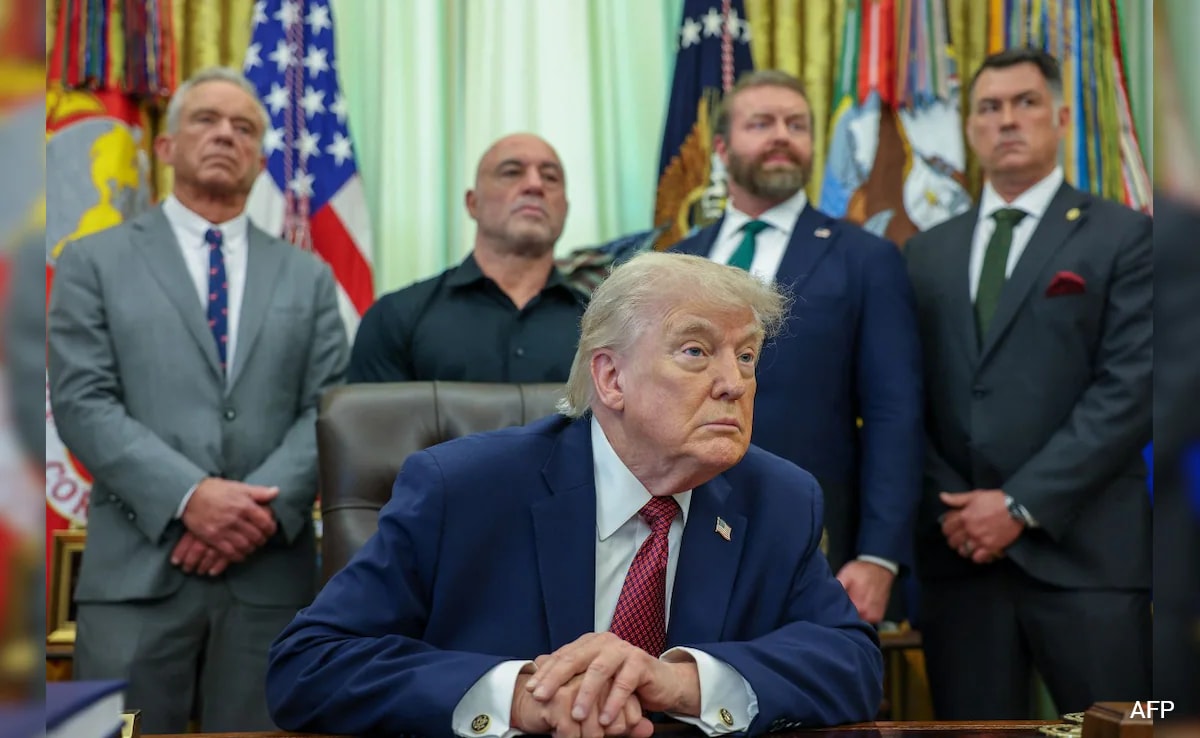
It is a cold, clinical number. It suggests a mathematical certainty, a data point plotted on a Y-axis that has been sliding steadily downward. But for the man at the counter, that number isn't about polling methodology or sample sizes. It’s about the price of the eggs on his plate and the persistent, low-grade fever of anxiety vibrating from the television screen. Donald Trump’s approval rating has hit a new low, and the reason isn't a single scandal or a specific tweet. The foundation is cracking because the two things people count on for a quiet life—economic stability and the absence of war—are suddenly looking very fragile.
The Kitchen Table Ledger
Numbers are bloodless until you apply them to a family budget. For months, the narrative from the West Wing focused on a roaring stock market. But the stock market is an abstraction for someone watching their grocery bill climb while their wages remain frozen in carbonite. More journalism by NPR highlights related views on the subject.
Hypothetically, consider a woman named Sarah. She manages a small logistics firm in Ohio. For three years, she gave the administration the benefit of the doubt. She liked the deregulation. She appreciated the talk of "America First." But lately, the math has stopped working. The trade wars that were supposed to be "easy to win" have started to feel like a slow-motion siege. Her shipping costs are up. Her clients are hesitant. When she looks at that 37% figure, she sees her own growing skepticism reflected back at her.
Confidence is a ghost. You don't know it’s gone until you feel the chill in the room. The latest reports indicate that economic worries are no longer a distant rumble; they are at the front door. People are beginning to wonder if the sugar high of tax cuts has worn off, leaving behind a jagged, uncertain comedown. When the belt tightens at home, the patience for political theater evaporates.
The Long Shadow of Tehran
While the checkbook provides the first tremor, the second comes from across the world. There is a specific kind of exhaustion that settles into a country that has been at war, in some capacity, for nearly a quarter of a century. It is a weary marrow-deep fatigue.
The escalating tension with Iran has moved from the realm of "tough talk" into something that feels dangerously real. For a voter base that was promised an end to "erratic" foreign entanglements, the sight of carrier strike groups moving toward the Persian Gulf feels like a betrayal of a core campaign vow. It feels like a retread of a movie we’ve all seen before, one that ends in flag-draped coffins and trillions of dollars vanished into the desert sand.
This isn't just about geopolitics. It's about the fear of the unknown.
When the news cycle is dominated by talk of uranium enrichment and drone strikes, the average person doesn't see a strategic chess move. They see their children in uniform. They see gas prices spiking at the pump. They see a world that feels less like a protected fortress and more like a tinderbox waiting for a stray spark. This collective breath-holding is reflected in the polls. You cannot govern a people who are constantly flinching.
The Erosion of the Benefit of the Doubt
In the early days of any presidency, there is a reservoir of goodwill. Supporters will overlook the rough edges because they believe the core mission is on track. They will ignore the noise if the signal is strong.
But the signal is flickering.
The decline to 37% represents more than just the opposition digging in their heels; it represents the "soft middle" and the "quiet supporters" starting to drift away. It is the sound of a thousand conversations at kitchen tables where someone finally says, "I'm just not sure this is working anymore."
The American public can be incredibly forgiving of a leader’s personality if the results are tangible. They will tolerate chaos if there is a paycheck at the end of it and peace on the horizon. But when the chaos becomes the only product being delivered, the bargain breaks.
We are witnessing a decoupling. The persona—the rallies, the nicknames, the defiant stances—is losing its ability to distract from the reality of a shrinking comfort zone. The "forgotten man" is starting to feel forgotten again, but this time, the person doing the forgetting is the one he sent to fix it.
The Weight of the Percentage
What does 37% actually look like?
It looks like empty seats at a campaign office that used to be full of energy. It looks like a Republican senator in a swing state suddenly finding a "scheduling conflict" when the President comes to town. It looks like a donor looking at a spreadsheet and deciding to keep their checkbook closed for one more quarter.
Politics is often treated like a game of optics, but at its heart, it is a game of security. We want to know that tomorrow will be slightly more predictable than today. We want to know that our labor will be rewarded with a bit of surplus. When those two certainties are threatened simultaneously—by an economy that feels like it’s teetering and a foreign policy that feels like it’s gambling—the response is a primal withdrawal of support.
The man in the diner finishes his coffee. He folds the newspaper, leaving it on the counter for the next person. He doesn't look angry. He looks tired. He walks out into the bright morning sun, squinting at the world, trying to figure out if he’s standing on solid ground or if the floor is about to give way.
Numbers don't capture the sigh he lets out as he starts his truck. But that sigh is exactly what a 37% approval rating sounds like in the real world.