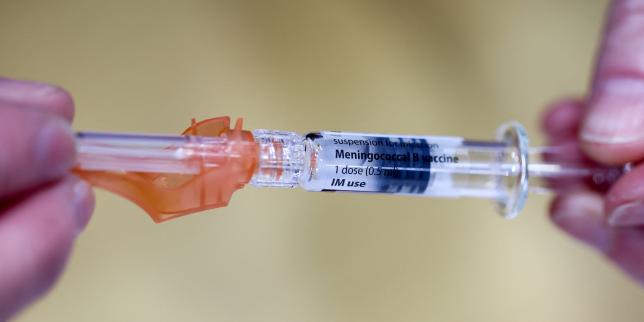
The air in a modern hospital corridor has a specific weight. It smells of industrial-grade lemon, late-night floor wax, and the metallic tang of adrenaline. For most, it is the smell of safety. We trust that behind those double doors, a silent, invisible machinery of protocols is whirring, designed to catch us before we fall.
But in a quiet corner of the United Kingdom, that machinery didn't just stall. It stayed silent while a predator moved through the wards. For an alternative look, read: this related article.
Meningitis does not announce itself with a roar. It begins as a whisper—a stiff neck that feels like a bad night’s sleep, a light that seems a bit too bright, a fever that mimics a common flu. By the time the purple rash blooms across the skin like spilled ink, the battle is often already half-lost. It is a race against a clock that doesn't tick; it sprints.
When an outbreak begins, every second of data is a lifeline. If one case appears, the authorities must know. If two appear, the alarm should be deafening. In this instance, however, the alarm was muffled by the very institution built to sound it. Similar insight on this matter has been shared by CDC.
The Anatomy of a Delay
Imagine a doctor standing over a patient's bed. Let’s call her Sarah—a composite of the dedicated, exhausted staff who walk these halls. Sarah sees the symptoms. She orders the tests. The results come back positive for Neisseria meningitidis. Her stomach drops. She knows that this bacterium is a traveler; it hitches rides in the back of throats and leaps across rooms through a simple cough or a shared glass.
In a functioning system, this realization triggers a "Red Phone" moment. The UK Health Security Agency (UKHSA) needs to be notified immediately so they can trace the patient's steps, hand out preventative antibiotics to family members, and warn local schools.
But at this particular hospital, the paperwork sat.
The "cold facts" of the official report state that the hospital "acknowledged a delay in alerting health authorities." It sounds clinical. It sounds like a missed email or a clerical error. The reality is far more visceral. A delay in reporting a meningitis outbreak isn't like being late with a tax return. It is like seeing a fire in a crowded theater and waiting twenty minutes to pull the lever because you wanted to double-check the serial number on the alarm box.
Why the Silence Happened
We often want to blame a villain. We want a story where a shadowy administrator hides the truth to protect a reputation. Usually, the truth is more mundane and, therefore, more terrifying. It is the "Normalisation of Deviance."
It starts when a department is understaffed. A nurse is handling twelve patients instead of six. A data entry clerk is off sick, and their login doesn't work for the temporary replacement. A culture develops where "we’ll do it first thing in the morning" becomes the standard operating procedure.
In this case, the hospital's internal review pointed to a breakdown in communication between the laboratory and the clinical teams. The lab saw the bacteria under the microscope. They knew what it was. But the bridge that was supposed to carry that information to the people who could act on it had collapsed.
The bacteria didn't care about the broken bridge. It kept moving.
The Human Toll of a Tardy Warning
Consider the stakes for those outside the hospital walls. Meningitis is a disease of the young and the social. It thrives in dormitories, in crowded pubs, and in the close-knit proximity of family life.
When the hospital fails to report a case, they are essentially stealing time from the community. They are stealing the chance for a mother to realize her toddler’s "fretfulness" is actually a brain-swelling emergency. They are stealing the window of opportunity for a teenager's friends to get the prophylaxis that would stop the chain of infection dead in its tracks.
During this specific UK outbreak, the delay meant that the "lookback exercise"—the frantic effort to find everyone who might have been exposed—was starting from behind.
To understand the severity, we have to look at how the body reacts to this invader. The meninges are the protective membranes surrounding your brain and spinal cord. When they become inflamed, the pressure rises within the skull.
$P = \frac{Force}{Area}$
In the closed system of the human cranium, as inflammation (force) increases, the pressure becomes catastrophic. Without swift intervention, the body begins to shut down blood flow to the extremities to protect the core. This is why survivors often lose limbs. This is why "tardy" is a word that feels like an insult when applied to a disease that can kill in under twenty-four hours.
The Invisible Stakes of Public Trust
There is a deeper, more permanent damage done when a hospital admits it waited too long. It isn't just biological; it's social.
Healthcare relies on a social contract. We give up our privacy, we allow ourselves to be poked and prodded, and in return, we expect the system to be our sentry. When that sentry falls asleep—or worse, realizes they’ve missed something and hesitates to admit it—the contract is torn.
The hospital in question has since promised "robust" changes. They have updated their digital alert systems. They have retrained staff. They have vowed that the "siloed" nature of their departments will be dismantled.
But for the families who spent those days of silence wondering why their loved ones were getting sicker, or for the public who only found out about the cluster weeks after the danger had peaked, those promises feel hollow.
The lesson here isn't about better software or more meetings. It’s about the terrifying weight of a single piece of information. In the world of infectious disease, data is not just numbers on a screen; it is a shield.
The Weight of the Notification
Next time you pass a hospital, look at the lights in the windows. Each one represents a story, a struggle, and a delicate balance of biological life. The people inside are fighting battles we can barely imagine.
But the most important fight isn't always at the bedside with a syringe or a monitor. Sometimes, the most heroic thing a person can do in a hospital is to pick up a phone, admit the worst, and sound the alarm before the sun goes down.
Because silence in a fever ward doesn't mean peace. It means the fire is spreading, and nobody has called the engines yet.
The purple rash doesn't wait for the morning shift. It doesn't care about the budget. It only asks for a few hours of quiet to do its work.
In that hospital, it got exactly what it wanted.
Would you like me to generate an image showing the different types of meningitis bacteria to help clarify the biological aspect of the story?