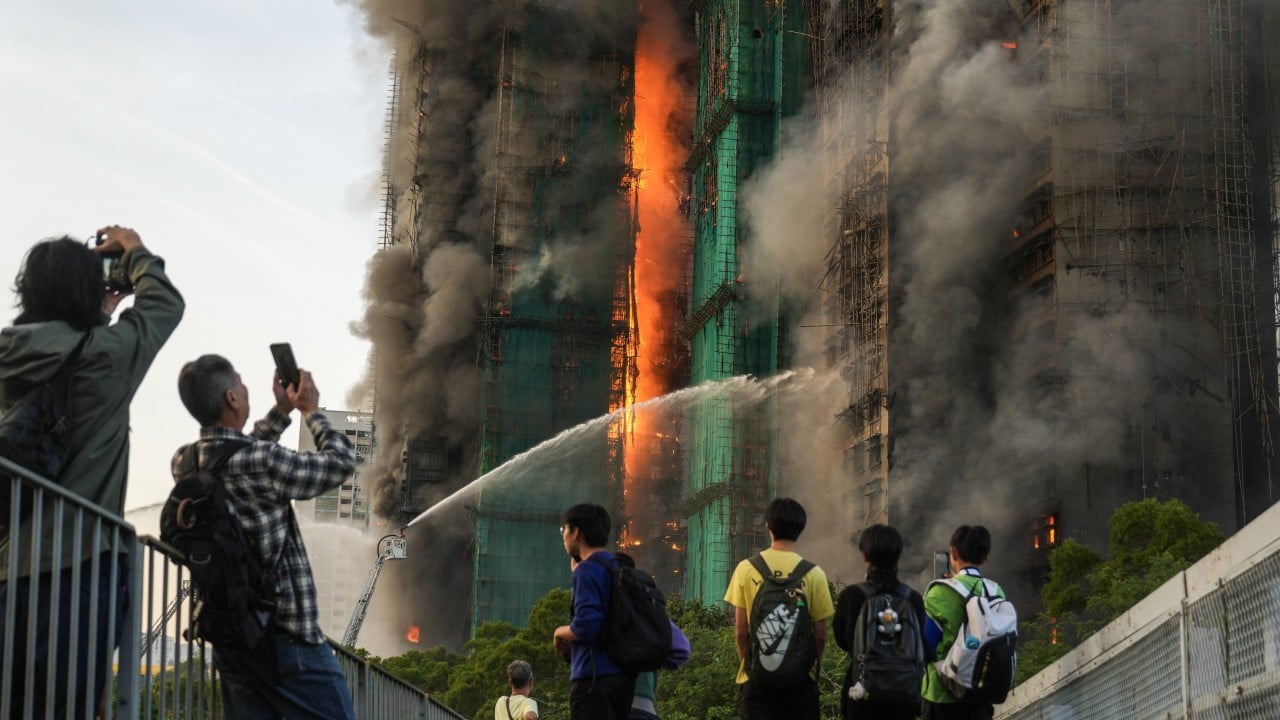
The air in Tai Po is usually heavy with the scent of the nearby Tolo Harbour, a mix of salt and the humid press of a million lives lived in vertical stacks. But inside the Tai Po Plaza, the atmosphere has curdled into something far more acrid. It is the smell of old paper, fluorescent lights, and the simmering quiet of people who realized too late that they had been sold a version of the truth that didn’t exist.
Mr. Lam is not a real person, but he represents three hundred real families. He is the man who spent forty years hauling textiles or teaching primary school arithmetic so that, one day, he could own sixty square meters of Hong Kong soil. To him, a "renovation project" sounds like stewardship. It sounds like painting the faded exterior and fixing the seepage that weeps through the bathroom tiles during typhoon season. It does not sound like a financial ambush.
But in the sterile rooms of a recent inquiry, the story of the Tai Po Plaza renovation didn't look like stewardship. It looked like a hunt.
The Illusion of Consent
The tragedy of the Tai Po blaze building—a name now synonymous with structural and social friction—began not with a hammer or a drill, but with a pen. Residents stood before an inquiry board recently, their voices thin with the exhaustion of years spent fighting a ghost. They claimed they were misled. They claimed that the "Mandatory Building Inspection Scheme" notices, those official government letters that strike fear into the hearts of any middle-class homeowner, were used as a psychological lever.
Imagine standing in a cramped elevator lobby, reading a notice that says your home is legally required to undergo repairs. You are told there is a subsidy. You are told the cost will be manageable. You are shown a glossy vision of a rejuvenated building. You sign.
The inquiry heard that these residents were led to believe the project was a straightforward response to government orders. They weren't told about the staggering scale of the markup. They weren't told that the "consultants" supposedly acting in their best interest were often dancing to a different tune. In the world of Hong Kong property management, the distance between a "necessary repair" and a "gold-plated overhaul" is measured in millions of dollars—money pulled directly from the retirement accounts of people like Mr. Lam.
The Mechanics of the Squeeze
When we talk about building renovations, we often get lost in the technical jargon of spalling concrete, waterproofing membranes, and tender prices. We forget that a building is a living organism.
The inquiry peeled back the layers of how a renovation project can be weaponized against the very people it is meant to protect. It starts with the "Renovate a Building 2.0" scheme. It sounds helpful. It sounds like the government is extending a hand. But for the residents of Tai Po, that hand felt more like it was reaching for their wallets.
The core of the allegation is simple yet devastating: the scale of the works was inflated, and the residents were kept in a state of curated ignorance. By the time the true costs were revealed, the contracts were signed, the scaffolding was rising like a cage around their windows, and the legal machinery was already in motion.
Why does this happen?
It happens because of a power imbalance that is built into the very bones of high-rise living. An individual flat owner has neither the engineering expertise to dispute a surveyor’s report nor the legal budget to challenge a management committee that has gone rogue. They are told the building is "crumbling." They are shown photos of rusted rebar. Fear is a highly effective sales tool.
In the inquiry, the testimony painted a picture of a "black box" decision-making process. Information was drip-fed. Meetings were held at times when working families couldn't attend. The "consensus" was manufactured. It is a slow-motion heist conducted in broad daylight, under the guise of public safety.
The Human Weight of Five Figures
To a developer or a large-scale contractor, a few hundred thousand dollars is a line item. It is a rounding error on a spreadsheet. To a retiree in Tai Po, it is the difference between a dignified old age and a decade of anxiety.
Consider the math. If a renovation project is bloated by 30%, and that cost is distributed across a few hundred units, each household might find themselves suddenly owing a sum that matches five or six years of their total savings. This isn't just about money. It is about the theft of peace.
People stop talking to their neighbors. Suspicion seeps into the hallways like the very damp they were trying to fix. You look at the person next door and wonder: Did they vote for this? Are they on the committee? Did they get a kickback? The social fabric of the building shreds long before the first tile is chipped away.
The inquiry revealed that some residents felt they had no choice but to sign documents they didn't fully understand. They were told that if they didn't comply, they would face heavy fines or even the seizure of their property. This isn't "consultation." It is coercion draped in the finery of bureaucracy.
The Invisible Stakes
The Tai Po case is a canary in the coal mine for thousands of aging buildings across the city. As the concrete forests of the 1970s and 80s begin to show their age, the "renovation industry" has become a feeding ground.
We often assume that corruption is a dramatic affair—briefcases of cash exchanged in dark alleys. In reality, it is much more mundane. It is a consultant who recommends a specific contractor because they "work well together." It is a tender process that is technically legal but practically rigged, with five "independent" bids all coming from the same parent company. It is a management committee that ignores a cheaper, more sensible repair plan in favor of a "comprehensive" one that includes aesthetic upgrades nobody asked for.
The invisible stake here is trust in the system. When the government mandates inspections, it assumes a level of integrity in the private market that clearly isn't always there. If a resident cannot trust the notice on their door, or the committee that represents them, the very foundation of urban life begins to crack.
A Pattern of Silence
During the inquiry, one of the most haunting elements was the description of the silence. Residents described asking for meeting minutes and being told they weren't available. They asked for detailed breakdowns of the costs and were given vague summaries.
This silence is intentional. It creates a vacuum where the only "truth" available is the one provided by the people who stand to profit. By the time the residents of Tai Po Plaza realized they were being misled, the momentum of the project was an unstoppable force.
The inquiry is a rare moment of light in a very dark room. It allows the "Mr. Lams" of the world to stand up and say, "I was lied to." It forces the professionals—the surveyors, the managers, the contractors—to justify their numbers under the cold glare of a public record.
But the damage is already etched into the walls.
The Reality of the Fix
We are told that the solution is better regulation. We are told that the "Electronic Tendering Platform" will fix everything by making bids anonymous. These are technical fixes for a moral problem.
The real problem is that we have turned the basic necessity of shelter into a complex financial instrument that the average person cannot navigate. We have created a system where "safety" is a commodity sold at a premium to those who can least afford it.
As the inquiry continues, more details will emerge. There will be arguments about who said what in which meeting. There will be debates over the specific wording of the 202.0 scheme. But for the people living inside the Tai Po building, the outcome is already written in their bank balances and their stress levels.
They wanted a safe place to live. They wanted to follow the rules. They wanted to maintain their homes. Instead, they found themselves trapped in a narrative where they were the marks, and their building was the prize.
The scaffolding eventually comes down. The building gets its new coat of paint. From a distance, it looks refreshed, sturdy, and clean. But if you get close enough to the walls, you can almost hear the cost. It’s the sound of a hundred quiet conversations about how to afford the next installment, and the realization that the "home" they spent their lives building no longer feels like theirs.
The ink on the signatures has long since dried, but the stain of the deception remains. It is a reminder that in the vertical city, the most dangerous thing isn't a fire or a falling tile. It is the person who hands you a pen and tells you not to worry about the fine print.