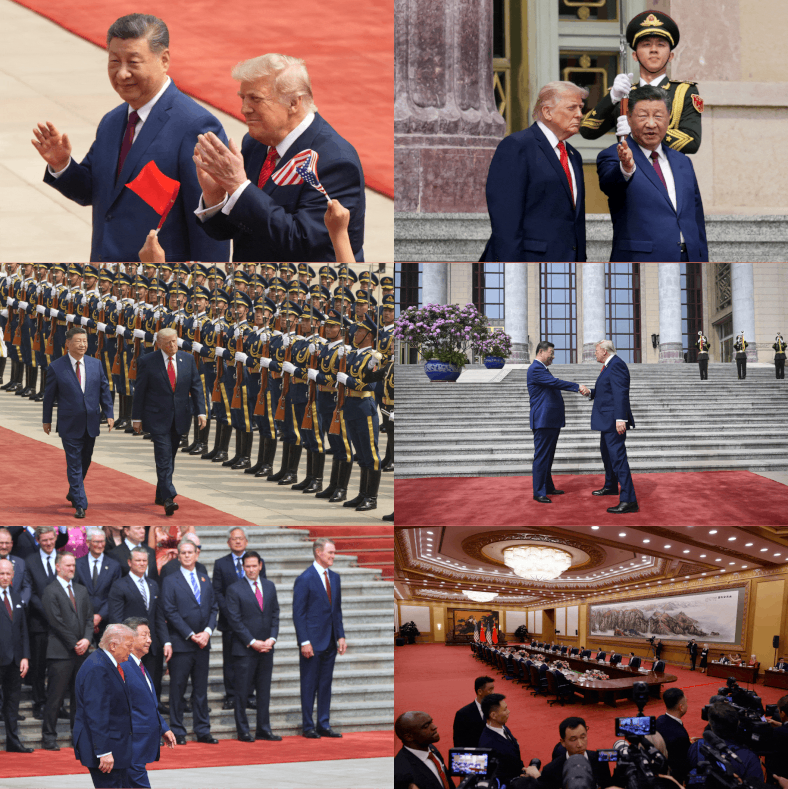
Beijing just threw a party that would make a Hollywood director blush. Gold-trimmed everything. Standing ovations. Grand banquets in the Forbidden City. But don't let the shiny surfaces fool you. Behind the pomp and the high-definition handshakes, China's leadership just handed Donald Trump a very specific, very sharp set of boundaries. They’re playing a game of "nice to meet you, don't touch my stuff," and the "stuff" in question is Taiwan.
If you think a lavish dinner and some flattering talk about "great leaders" will soften China's stance on its core interests, you haven't been paying attention to the last decade of geopolitics. Xi Jinping isn't looking for a buddy. He's looking for a deal that keeps the U.S. out of his backyard.
The Flattery Trap and the Taiwan Red Line
China has mastered the art of the "State Visit Plus." They know exactly how to appeal to a leader who prizes respect and grand gestures. By hosting Trump in the historic heart of Beijing, they’re signaling that they view him as a peer—the head of one great power meeting another. It’s a psychological play. But while the cameras were focused on the tea ceremonies, the diplomatic cables were busy sending a different message.
Taiwan remains the single most explosive issue in this relationship. Xi Jinping’s message to the returning administration is clear: The "One China" policy isn't a bargaining chip for trade wars. You can't swap a tariff reduction for a hands-off approach to Taipei. For Beijing, Taiwan is a matter of national sovereignty and domestic survival. If Trump tries to use Taiwan as leverage for a better trade deal, the red carpet will be rolled up faster than you can say "export controls."
Most people get this wrong. They think China is reacting to U.S. aggression. In reality, China is setting the pace. They’re using this grand welcome to frame the relationship on their terms before the first policy memo even hits the Oval Office desk.
Trading Chips for Sovereignty
Let’s talk about the actual math of this relationship. Trump loves a deal. He sees the world through the lens of trade deficits and manufacturing jobs. China knows this. They’re likely prepared to offer massive purchases of American energy, soybeans, and aircraft to keep the peace on the economic front. It’s a classic move. Buy some time, keep the factories running, and make the American president look like a hero to his base.
But here’s the catch. Those trade concessions come with a price tag that isn't measured in dollars. Beijing wants a "quiet" Taiwan Strait. They want the U.S. to stop the high-level visits to Taipei. They want a slowdown in arms sales. They’re betting that Trump’s "America First" instinct means he won’t want to die on a hill for a small island 7,000 miles away if the trade numbers look good.
Honestly, it’s a smart bet. But it’s also a dangerous one.
The military reality in the region has changed since 2016. China’s navy is larger. Their missile tech is more sophisticated. They aren't just complaining about Taiwan anymore; they’re practicing for a blockade. When they give Trump a "stern warning," it’s backed by a military that is significantly more capable of acting on those threats than it was during his first term.
Why the Grand Welcome is Actually a Warning
You don't throw a party this big for someone you aren't worried about. The sheer scale of the welcome is a testament to how much China wants to avoid a chaotic, unpredictable conflict. They want stability so they can focus on their own struggling economy and tech independence.
The "warning" part of the visit isn't always spoken aloud. It’s in the subtext. It’s in the way Xi talks about "mutual respect" and "non-interference." In diplomat-speak, that means "stay out of our business, and we won’t make your life miserable."
- China is watching the U.S. semiconductor bans closely.
- They are tracking every dollar of military aid sent to Taipei.
- They are testing the limits of the Philippines' defense treaties.
Trump’s team likely sees the grand welcome as a sign of American strength. "They're finally treating us with respect," they'll say. But in Beijing, the view is likely the opposite. They see a grand welcome as a way to manage a volatile partner. It's about containment through kindness.
The Misconception of the New Cold War
Everyone loves the "New Cold War" narrative. It's easy. It's familiar. But it’s wrong. The Soviet Union wasn't deeply integrated into the American supply chain. China is. This makes the "stern warning" on Taiwan even more complicated. If things go south in the Taiwan Strait, the global economy doesn't just catch a cold—it goes into cardiac arrest.
Think about the chips. TSMC in Taiwan produces the vast majority of the world's most advanced logic chips. If China moves on Taiwan, or if the U.S. provokes a crisis that leads to a blockade, the iPhones stop shipping. The car factories close. The AI boom hits a brick wall.
China knows we know this.
Their strategy is to make the cost of defending Taiwan so high—economically and militarily—that the U.S. eventually decides it isn't worth it. The grand welcome is the carrot. The military drills are the stick. They’re showing Trump both at the same time.
Navigating the Ego and the Statecraft
Statecraft is often just high-stakes ego management. China’s leaders are experts at this. They’ve studied Trump. They know he responds well to being treated as a historic figure. By giving him a welcome that surpasses what they gave Obama or Bush, they’re creating a "debt" of hospitality.
But don't think for a second that Xi Jinping will let his personal rapport with Trump get in the way of China's long-term goals. China plays the long game. They think in decades. We think in election cycles.
I’ve seen this play out before. A big summit happens, everyone smiles, a few billion dollars in MOUs are signed, and then six months later, we’re back to naval standoffs and tariff hikes. The fundamental friction doesn't go away because of a nice dinner in the Forbidden City.
What Happens When the Honeymoon Ends
The "grand welcome" phase won't last. It can't. Eventually, the Trump administration will have to make a choice. Do they lean into the "tough on China" rhetoric that wins votes, or do they take the deals Beijing is offering to keep the markets happy?
China is prepared for both. They’ve spent the last four years "de-risking" their own economy from U.S. influence. They’re building their own chip industry. They’re securing grain from Brazil instead of just the Midwest. They’re ready for a fight, even if they’d prefer a feast.
If you’re watching this play out, keep your eye on the arms sales to Taiwan. That’s the real barometer. If the U.S. keeps sending Harpoon missiles and F-16s, the "stern warning" will turn into "stern action." Beijing won't care how many gold-plated chairs they let Trump sit in if they feel the U.S. is actively arming their "renegade province" for a permanent split.
Strategic Next Steps for the U.S. Side
If the U.S. wants to actually "win" this exchange, it needs to move past the optics.
- Separate the Pomp from the Policy: Don't mistake a high-end dinner for a shift in Chinese national strategy. They haven't moved an inch on Taiwan.
- Diversify the Supply Chain Now: The reason China can be so "stern" is that they know they hold the cards on manufacturing. The only way to lower the tension over Taiwan is to make the U.S. less vulnerable to a Pacific shutdown.
- Clarify the Red Lines: Ambiguity used to work. It doesn't anymore. China is getting bolder because they think the U.S. is distracted. Clear, consistent communication—not just tweets or off-hand comments—is what prevents a miscalculation.
The red carpet is just theater. The real story is the warning. China is telling the world that they are ready to be a partner, but only if the U.S. accepts a secondary role in Asia. That’s a deal most Americans aren't ready to sign, no matter how good the dinner was.