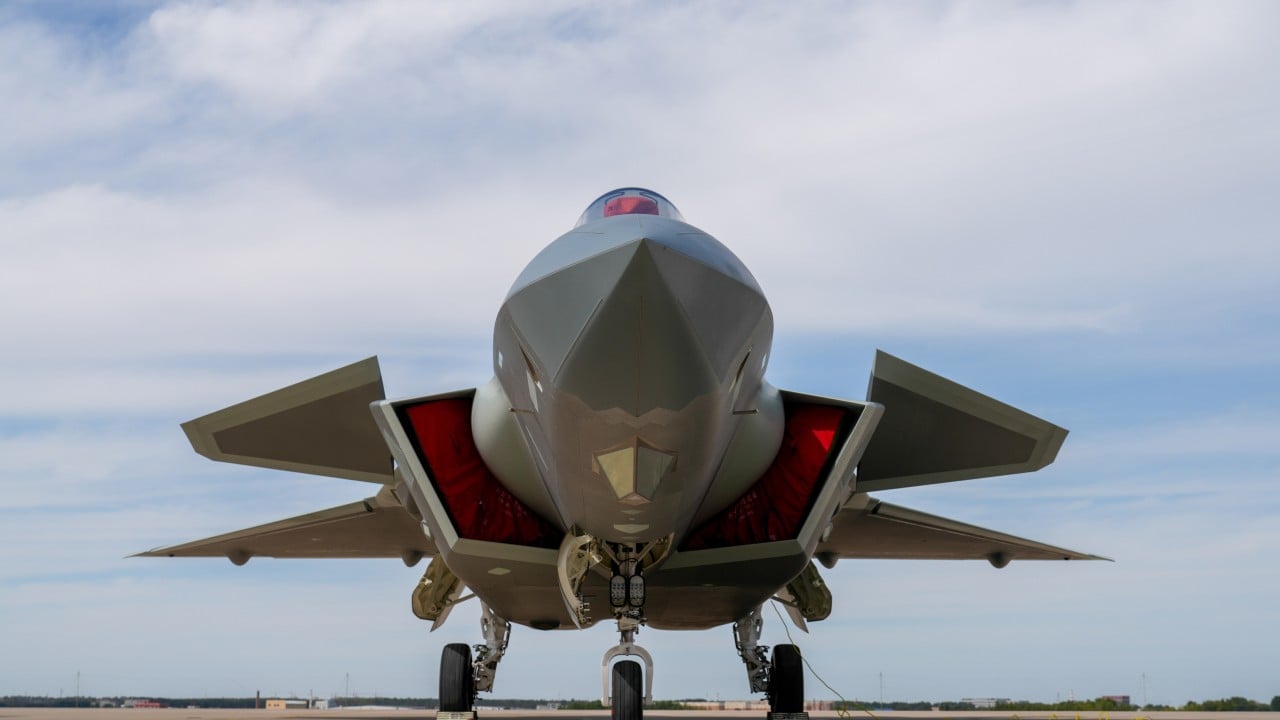
The headlines are lazy. They see a 44% drop in Chinese arms imports and call it a "plummet," as if Beijing suddenly lost its appetite for hardware. They frame it as a cooling of tensions or a failure of Russian supply chains. They are dead wrong.
When a superpower stops buying your tools, it isn’t because they’ve stopped building; it’s because they’ve learned to build them better than you. We aren't watching a decline in military might. We are witnessing the final stage of the largest forced technology transfer in human history. China didn't "stop" importing; they graduated.
The Import Paradox: Buying to Kill the Seller
The mainstream media loves a simple narrative. They look at the Stockholm International Peace Research Institute (SIPRI) data and see a downward slope. They assume this reflects a slowing economy or a pivot in diplomatic strategy.
I’ve sat in rooms with defense analysts who still think in terms of the 1990s. They think the "suzerain-vassal" model of arms sales still applies. In that world, if you stop buying from Big Brother, you're weak. In the real world, if you're a Tier 1 power, every import is a temporary embarrassment—a gap in your own capability that you are working feverishly to close.
China’s drop in imports is the ultimate KPI of their success. For decades, they played the "imitation game." They bought Russian Su-27s not just to fly them, but to gut them. They studied the AL-31 engines until they could produce the WS-10. They didn't just want the jet; they wanted the recipe.
Now that they have the recipe, why would they keep buying the pre-packaged meal? The "plummet" isn't a sign of weakness; it’s a declaration of total industrial autonomy. If you are still tracking "imports" to measure Chinese strength, you are looking at the rearview mirror while they are flooring the accelerator.
The Hong Kong Wealth Myth: The HK$50,000 Dubai Mirage
While we’re dismantling lazy narratives, let’s talk about the "Dubai Exit." The story of a Hong Kong couple moving to Dubai for HK$50,000 is being sold as a blueprint for the middle class. It’s presented as a seamless escape from the high-octane stress of the Pearl River Delta to a tax-free desert utopia.
This is dangerous financial fiction.
I have seen families blow their entire life savings on these "lifestyle pivots." Moving to Dubai isn't a financial strategy; it’s a high-stakes arbitrage play that most people are destined to lose. The HK$50,000 figure is a marketing hook. It covers the flight and maybe the first month’s rent in a shoebox. It doesn't cover the brutal reality of the "Expat Tax"—the hidden costs of schooling, healthcare, and the fact that in Dubai, your residency is tied to your utility to the state.
People ask: "Is Dubai the new Hong Kong?"
The answer is: Only if you enjoy living in a shopping mall with no permanent right of abode.
Hong Kong’s struggle isn't about people leaving with fifty grand. It’s about the institutional shift of capital. Real wealth isn't moving in HK$50,000 increments. It’s moving in quiet, private office structures. If you’re following the "couple who moved to Dubai," you’re watching the tourists. Watch the family offices. They aren't "exiting"; they are diversifying. They keep their roots in HK for the China access and their branches in Dubai or Singapore for the hedge.
The Engine Problem: Where the Data Actually Hits the Metal
Back to the hardware. The skeptics will point to China’s struggle with high-end jet engines as proof that they still "need" the West or Russia.
They’ll say, "But their metallurgy is decades behind!"
This is the "Copium" of the defense industry. Yes, single-crystal turbine blades are hard to make. Yes, the mean time between overhauls (MTBO) for Chinese engines used to be laughable compared to a Pratt & Whitney or a Rolls-Royce.
But look at the trajectory.
The gap is closing at an exponential rate. When you have a centralized state that can throw infinite capital and human talent at a specific physics problem, "decades" turn into years. The SIPRI data shows imports from Russia falling off a cliff. This isn't because Russia doesn't want to sell; it's because China no longer finds the Russian tech "superior enough" to justify the strategic dependency.
The People Also Ask: Dismantling the Premise
Does a drop in arms imports mean China is less of a threat?
The question itself is flawed. It assumes that "buying weapons" equals "military power." In reality, "producing weapons" equals "sustained military power." An import-dependent nation is a fragile nation. By cutting imports, China is removing its own "kill switch." If you can’t build your own chips and your own engines, you can’t fight a long war. They are fixing that.
Is Dubai a safer bet for my money than Hong Kong?
Stop looking for a "safe bet." There is no such thing. Dubai is a high-beta play on global oil and stability. Hong Kong is a high-beta play on the Chinese economy. If you move your money because of a headline about a couple and their HK$50,000, you aren't an investor; you're a victim of FOMO.
Why is Russia losing its best customer?
Russia isn't "losing" a customer; they've been "cannibalized" by one. Russia traded its long-term technological edge for short-term cash during the lean years. They sold the crown jewels (S-400s, Su-35s) to Beijing. Now, the apprentice has built a better workshop.
The Brutal Reality of Self-Sufficiency
True power is the ability to say "No" to a supplier.
For the last forty years, the global order was built on the idea that the "West" (and its satellites) held the keys to the high-tech kingdom. We believed that if we just controlled the flow of high-end components, we could control the geopolitical temperature.
China’s import crash is the sound of that door locking from the inside.
They are no longer interested in being a part of our "tapestry" of global trade if it means being a subordinate thread. They are building their own loom. This isn't just about jets and tanks. It’s about the entire stack: from the rare earth minerals at the bottom to the AI-driven targeting systems at the top.
Stop Watching the Shipments, Watch the Patents
If you want to know what’s actually happening, stop looking at the ports in Shanghai. Look at the research labs in Chengdu and Shenyang.
We are obsessed with the "what"—what are they buying? We should be terrified of the "how"—how are they replacing us? The 44% drop in imports is a smoke screen for a 400% increase in domestic capability.
The HK$50,000 Dubai exit is a distraction for the masses, a "lifestyle" story to keep people from looking at the hard structural shifts in global wealth. While the middle class dreams of tax-free sun, the superpowers are bracing for a world where they don't have to rely on anyone else.
The era of the "global shopper" is over. The era of the "autarkic titan" has begun.
If you’re still waiting for China to "come back" to the international arms market, you’ll be waiting forever. They didn't leave the market; they bought the mall and fired the staff.
Don't buy the "plummet" narrative. It’s not a crash. It’s a launch.
The next time you see a statistic about declining trade with China, don't ask what they're losing. Ask what they've finally figured out how to make for themselves. That is where the real danger—and the real story—lies.
Would you like me to analyze the specific domestic production capabilities of the Shenyang Aircraft Corporation to see exactly which Western components they have successfully cloned?


