The current expansion of capital expenditure (Capex) by Google (Alphabet), Meta, and Microsoft represents a fundamental shift from traditional software-as-a-service (SaaS) economics to a model defined by heavy industrial-scale infrastructure. While previous growth cycles relied on the marginal cost of software distribution approaching zero, the generative AI era is governed by the physical constraints of compute density, power availability, and silicon throughput. The aggressive upward revisions in spending forecasts—surpassing $150 billion collectively for the fiscal year—are not speculative bets; they are the necessary entry costs for a new architectural standard in global computing.
The Triad of Allocation Hyper-Scaling Infrastructure
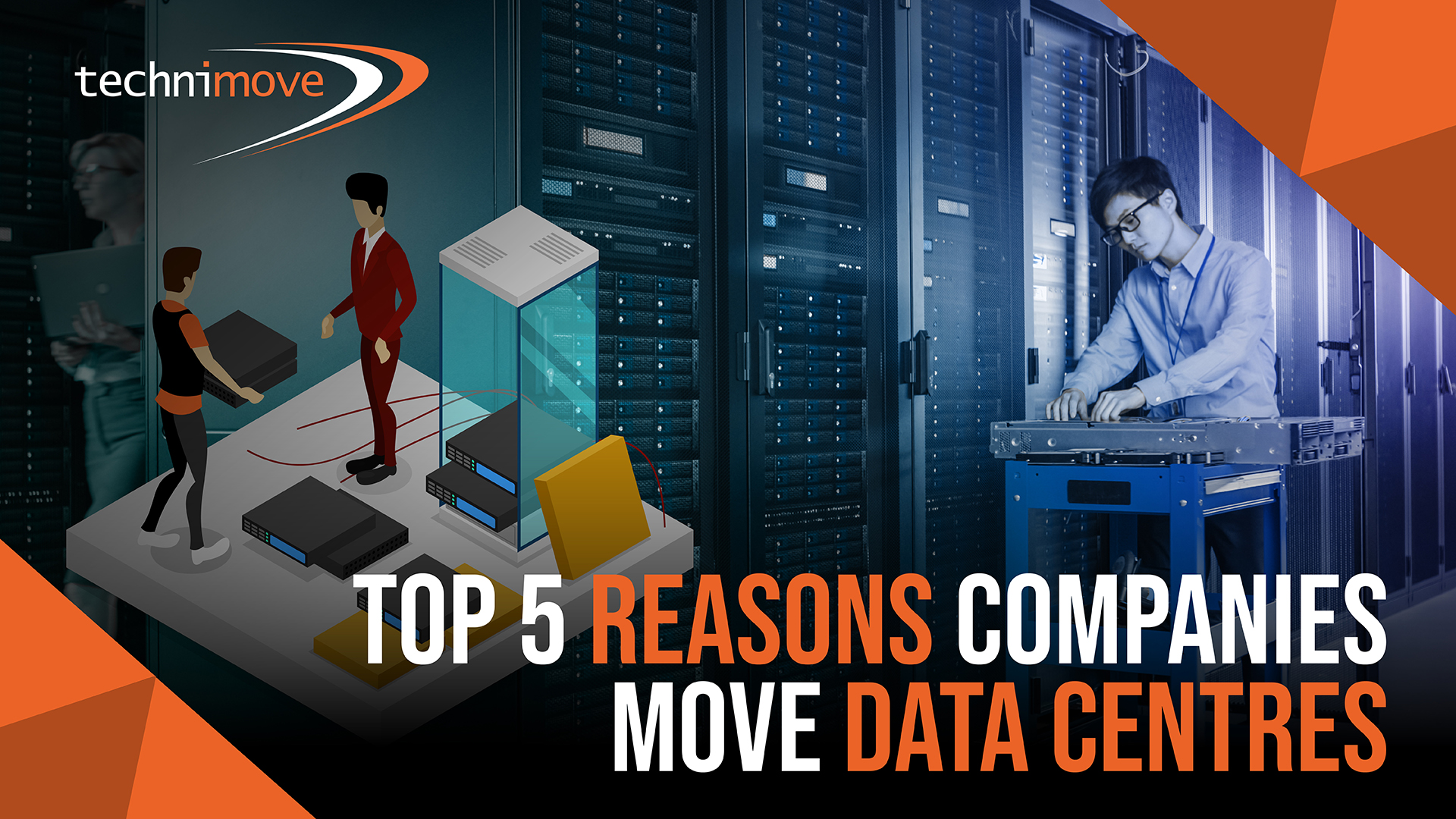
The surge in spending is concentrated within three distinct layers of the technology stack. Understanding the escalation requires isolating these drivers rather than treating "AI spending" as a monolith.
- Compute Fabric Expansion: This involves the procurement of high-end GPUs and custom ASICs (TPUs). The unit cost of these chips is an order of magnitude higher than standard CPUs used in the previous decade.
- Power and Cooling Infrastructure: Modern AI clusters operate at thermal densities that exceed the limits of traditional air-cooled data centers. Spending here is directed toward liquid cooling systems and the acquisition of localized power generation or grid-scale energy storage.
- Network Topology Reconfiguration: Unlike standard web traffic, training large language models (LLMs) requires massive east-west traffic within the data center. This necessitates specialized InfiniBand or high-speed Ethernet fabrics to ensure that thousands of chips function as a single coherent machine.
The Capex to Revenue Lag A Structural Necessity
Public markets often react with volatility to Capex spikes because they apply a traditional retail or SaaS depreciation logic to a foundational hardware build-out. This creates a perceived "ROI gap." However, the lag between capital deployment and revenue recognition in AI follows a specific sequence of "Build, Train, Serve."
The Build Phase requires 12 to 18 months of lead time for data center construction and hardware delivery. The Train Phase follows, consuming massive compute cycles without generating external user revenue. Only in the Serve Phase—where inference begins—does the investment translate into top-line growth. Meta’s pivot is particularly illustrative: the company is spending aggressively to improve content recommendation and ad targeting (immediate ROI) while simultaneously funding the Llama ecosystem (long-term platform ROI). Microsoft and Google are focused on the "Copilot" and "Gemini" integration into existing productivity suites, aiming to transition the spend into high-margin subscription increments.
The Cost Function of LLM Dominance
Maintaining a competitive advantage in the AI sector is governed by a diminishing returns curve on model parameters versus an exponential curve on training costs. This is the "Compute Moat."
- Training Parity: To compete at the frontier, a firm must match the compute budget of the leader. If the leader trains on 100,000 H100s, any competitor using 10,000 H100s is structurally disadvantaged regardless of algorithmic efficiency.
- Inference Scaling: As models become more capable, the cost to serve a single query increases. Google’s integration of AI Overviews into Search changes the unit economics of a query from a simple database lookup to a complex generative process. The Capex surge is an attempt to achieve "Inference Efficiency" through custom silicon, which lowers the long-term operational expense (OpEx).
Risk Vectors and Hardware Obsolescence
The primary risk in this high-intensity spending cycle is not "lack of demand," but rather "architectural locked-in." If a hyperscaler commits $40 billion to a specific GPU architecture and the industry shifts toward a more efficient transformer variant or a non-transformer architecture (such as State Space Models), the specialized hardware may face premature technical obsolescence.
Furthermore, the energy bottleneck is becoming a hard ceiling. Supply chain constraints have shifted from silicon availability to transformer (electrical) and substation availability. Microsoft’s recent moves to secure nuclear power agreements signal that the bottleneck has moved from the chip to the grid.
The Shift from General Purpose to Specialized Silicon
A critical driver of the spending forecasts is the transition toward vertically integrated stacks. Google’s reliance on its TPU (Tensor Processing Unit) and Microsoft’s introduction of the Maia chip suggest a desire to decouple their Capex from Nvidia’s margin.
- Margin Capture: By designing their own chips, hyperscalers recapture the 60-80% gross margin that would otherwise go to hardware vendors.
- Workload Optimization: Custom silicon is tuned for the specific mathematical operations required by their proprietary models, providing better performance-per-watt than general-purpose GPUs.
This internal development requires massive upfront R&D spend, contributing to the higher forecasts, but it significantly reduces the "Tax on AI" that these companies pay to the broader semiconductor ecosystem.
Competitive Equilibrium and the Survival of the Scale
We are witnessing a "War of Attrition" where the barrier to entry is being raised beyond the reach of all but the five largest entities on earth. The strategic logic is simple: the cost of over-investing is a temporary margin compression, whereas the cost of under-investing is permanent platform irrelevance.
Meta’s aggressive spending is a defensive maneuver to ensure they are not reliant on third-party mobile operating systems for their future growth. Google’s spend is an existential necessity to protect the Search monopoly. Microsoft’s spend is an offensive play to capture the next era of enterprise computing.
The concentration of this capital creates a "Gravity Well" for talent and data. The more compute a firm owns, the faster it can iterate; the faster it iterates, the more users it attracts; the more users it attracts, the more data it generates to train the next generation of models. This virtuous cycle is fueled exclusively by the Capex that markets are currently scrutinizing.
Strategic Recommendation for Stakeholders
The volatility surrounding AI spending forecasts should be ignored in favor of monitoring "Revenue per Kilowatt." As power becomes the ultimate unit of account in the AI economy, the winners will be those who can convert energy into intelligence at the lowest possible cost.
- Monitor Utilization Rates: Investors should demand transparency on how much of the new compute is being used for internal R&D versus external, revenue-generating workloads.
- Evaluate Energy Portfolios: The long-term viability of these spending forecasts depends on the ability of Microsoft, Google, and Meta to secure "Behind-the-Meter" energy assets.
- Assess Software Defensibility: Compute alone is a commodity. The strategy must move beyond "More Chips" to "More Moats"—specifically, how these companies lock in enterprise data so that the underlying hardware investment becomes a permanent utility for the global economy.
The acceleration of AI Capex is the construction of a new global utility. The firms that survive this capital-intensive phase will not just be software providers; they will be the owners of the infrastructure upon which all future economic activity is computed.