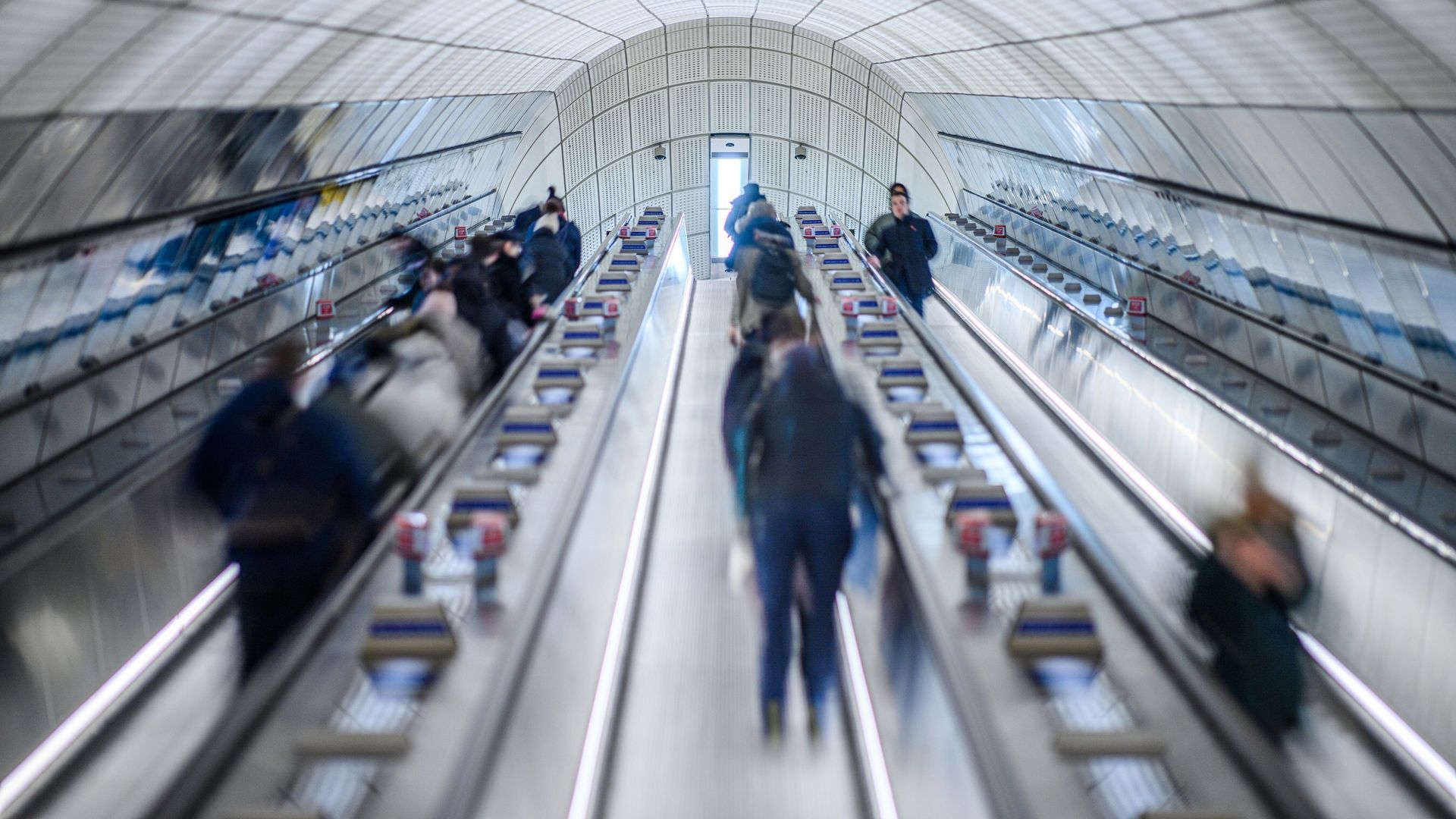
The collective sigh of relief echoing across London this morning is entirely misplaced. Commuters are celebrating the news that this week’s planned London Underground strikes have been called off after eleventh-hour talks between Transport for London (TfL) and the unions. The media is running its usual celebratory playbook: disaster averted, the city keeps moving, crisis managed.
It is a completely short-sighted view.
Averting a strike at the last minute is not a victory. It is a symptom of a deeply broken operational culture that guarantees worse service, higher fares, and more severe systemic failures down the line. When TfL caves to union pressure behind closed doors to avoid a week of bad headlines, they are not fixing the subway network. They are merely financing an expensive truce with money the transit system does not have.
We need to stop asking "How do we prevent the next strike?" and start asking "Why is London’s vital infrastructure being held hostage by nineteenth-century labor dynamics?"
The High Cost of Last-Minute Peace
Every time a Tube strike is cancelled at the final hour, the public assumes diplomacy won. Having spent fifteen years analyzing corporate restructuring and public infrastructure financing, I can tell you exactly what actually happens in those closed rooms. Management compromises on structural modernization to buy temporary peace.
The core issue is never just about a 2% or 3% wage increase. The real battleground is always workplace modernization. TfL needs to automate more maintenance scheduling, adjust rosters to match modern post-pandemic ridership patterns, and phase out redundant operational roles. The unions fight to preserve rigid, outdated working practices that date back to the era of paper ticketing.
When a strike is called off, it usually means TfL agreed to kick the modernization can down the road.
Consider the financial reality. TfL relies heavily on passenger revenue, a vulnerability laid bare when ridership plummeted during recent years. Unlike the New York City Subway or the Paris Metro, which receive massive, permanent state subsidies to cover operating costs, London’s network is hyper-dependent on the farebox. When TfL sweetens the pot to stop a strike, that money is extracted directly from future capital investment budgets.
The result? You do not walk to work today, but you will endure more signal failures, slower fleet renewals, and hotter platforms next summer. You are trading five days of acute inconvenience for five years of chronic degradation.
Dismantling the Commuter Myths
The public discussion surrounding London transport disputes is built on a foundation of flawed premises. Let us dismantle the most common ones.
Myth 1: Unions are fighting for passenger safety
This is the most frequent justification deployed by labor representatives. They claim that reducing station staff or changing maintenance schedules compromises commuter safety.
The data contradicts this entirely. Automated and heavily modernized transit networks globally show no statistical drop in safety metrics compared to legacy, staff-heavy systems. The Paris Métro Line 1 and Line 14, both fully automated with platform screen doors, operate with incredible efficiency and safety profiles. Safety arguments are almost always a rhetorical shield used to protect outdated job descriptions and roster inefficiencies.
Myth 2: Striking is a sign of union strength
In reality, the constant threat of strikes reveals a desperate defense mechanism against inevitable obsolescence. The London Underground is gradually shifting toward a reality where human intervention is less critical for basic operations. The Victoria, Jubilee, Northern, and Central lines already operate using Automatic Train Operation (ATO), where a computer controls the speed, braking, and routing of the train, while the driver primarily operates the doors.
The aggressive posturing we see today is an attempt to lock in rigid contract terms before technology renders those specific job functions entirely irrelevant.
The Paris and Singapore Blueprint
To understand how regressive the London model is, look at how global financial hubs manage mass transit.
Singapore’s Mass Rapid Transit (MRT) system operates seamlessly without the threat of crippling labor disputes. Why? Because the system was built from the ground up with automation and flexible labor laws in mind. The circle, Downtown, and Thomson-East Coast lines are completely driverless.
Imagine a scenario where London committed fully to converting the entire Tube network to Grade of Automation 4 (GoA4)—fully unattended train operation.
Transit Automation Levels (GoA)
---------------------------------------------------------------
GoA1: Manual driving with visual signals
GoA2: Semi-automatic (Computer drives, human operates doors) <- Most of London Tube
GoA3: Driverless (Human on board for emergencies only)
GoA4: Unattended (No staff on board, fully automated)       <- Paris, Singapore
The capital cost would be astronomical upfront, easily stretching into tens of billions of pounds. The transition would trigger the mother of all labor disputes, effectively shutting down parts of the city for months. That is the dark, uncomfortable truth that contrarians must admit: the transition to a strike-proof system requires enduring short-term chaos that no current politician has the stomach to authorize.
But the long-term payoff is a self-sustaining, hyper-reliable network free from the whims of union voting cycles. Paris did not automate Line 1 overnight; they phased it in over years while keeping the legacy tracks running. London refuses to even start the conversation in earnest.
Stop Asking the Wrong Questions
The standard media inquiry after a strike is averted is always: "How will this affect commuters tomorrow morning?"
The question you should be asking is: "How much efficiency did TfL just surrender to achieve this?"
When we look at "People Also Ask" entries regarding Tube strikes, the public wants to know about refund policies, alternative bus routes, and whether the congestion charge is suspended. This is rearranging deckchairs on the Titanic. The public has been conditioned to think like victims managing their own misery rather than stakeholders demanding an elite, modern transit system.
If you are a business owner in London, stop celebrating these cancelled strikes. Every single last-minute deal means your tax burden will remain high, your employees will continue to commute on Victorian-era infrastructure that breaks under a heatwave, and the underlying structural deficit of TfL will widen.
The current model is unsustainable. By celebrating the cancellation of a strike, we are validating a system of economic extortion that keeps London's infrastructure firmly rooted in the past.
True operational resilience is not achieved by caving to pressure to keep the gates open for one more week. It is achieved by building a system that doesn't care who walks out, because the technology is designed to keep running regardless. Until London faces that reality, every cancelled strike is just another step toward systemic bankruptcy.