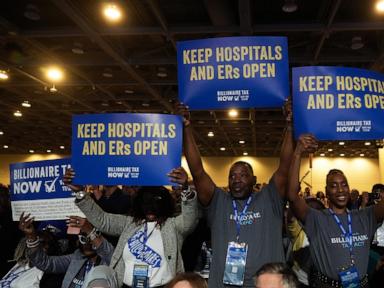
The fight over California's pocketbooks just hit a massive milestone. Supporters of the so-called 2026 Billionaire Tax Act claim they've gathered more than 1.5 million signatures, effectively punching their ticket to the November ballot. That's nearly double what's needed to qualify. If you've lived in California long enough, you know the ballot initiative process is a chaotic, high-stakes game. But this isn't just another niche proposal. It's a direct shot at the wealthiest people on the planet.
California is home to more billionaires than any other state—and even some entire countries. We're talking about a group of roughly 200 people who collectively sit on $2 trillion in wealth. The backers of this act, led by the SEIU-United Healthcare Workers West, want a piece of that pile to fix what they call a looming healthcare disaster.
What the Billionaire Tax Act Really Does
Don't let the complex legal jargon fool you. The core of this proposal is surprisingly blunt. It's a one-time 5% tax on the net worth of any California resident worth over $1 billion.
There's no sliding scale for "kind of rich." If you're a billionaire, the state wants 5% of everything: your stocks, your art collection, your private jets, and even your intellectual property. The goal is to raise an estimated $100 billion over five years.
Where does the money go
The primary target for these funds is the state's healthcare system. Specifically, it's designed to backfill federal funding cuts to Medi-Cal and prevent the closure of community clinics and emergency rooms. A portion would also trickle down to food assistance programs and public K-14 education.
Backers argue that while middle-class families often pay an effective tax rate of 8% or higher, the billionaire class pays less than 1.5% of their total wealth annually. They see this as a necessary correction. Critics see it as a suicide note for the California economy.
The January 1 Trap
Here's the detail that's making wealthy residents sweat: the retroactivity clause. If this passes in November, it doesn't just look forward. It targets anyone who was a California resident as of January 1, 2026.
You can't just pack your bags today and avoid the bill. The architects of this measure knew people would try to flee, so they baked in a residency test that looks back to the start of the year. It's an all-or-nothing test. There’s no proration. If you lived here on New Year's Day and you’re worth a billion dollars, you're on the hook for the full 5%.
Valuation Headaches
How do you even value a billionaire? It's not like they have a savings account with nine zeros in it. Most of their wealth is tied up in private companies or illiquid assets. The act proposes some aggressive new math:
- Public Stocks: Valued at market price on December 31, 2026.
- Private Businesses: Valued at book value plus a 7.5x multiplier of average profits.
- Personal Assets: Anything over $1 million—like a rare Ferrari or a Basquiat—needs a certified appraisal.
Why Gavin Newsom is Fighting His Own Party
You’d think a progressive governor in a deep-blue state would jump at the chance to tax the ultra-rich. Think again. Governor Gavin Newsom has been one of the loudest voices against the proposal. He's called it "bad economics" and warned it could decimate the state's budget.
The problem is that California’s tax base is already incredibly top-heavy. Nearly half of the state’s personal income tax revenue comes from the top 1% of earners. If even a handful of these whales leave, the ripple effect on the budget is catastrophic. We’ve already seen a preview of this. Reports suggest at least six billionaires left the state specifically because of this proposal, taking roughly $27 billion in potential taxable revenue with them before the ink was even dry on the petition.
The Opposition War Chest
The tech moguls aren't sitting back. Sergey Brin and Eric Schmidt have already poured millions into "Building a Better California," a Super PAC dedicated to killing this measure. They argue that wealth taxes represent an "expropriation of private property" and will drive investment out of Silicon Valley for good.
Is This Actually a Good Idea
Honestly, it depends on who you ask at the coffee shop. If you're a healthcare worker seeing clinics close because of federal cuts, this looks like a lifeline. If you're an economist, you're probably worried about "wealth flight."
One thing is certain: the signatures are in. The 2026 Billionaire Tax Act isn't a theoretical debate anymore. It’s a reality that will be decided at the polls.
If you’re a high-net-worth individual—or even just someone who cares about where the state’s money goes—you need to watch this closely. The next few months will see a blitz of ad campaigns from both sides. Expect a lot of "David vs. Goliath" rhetoric from the unions and "Economic Collapse" warnings from the tech sector.
Next Steps for Voters
- Check your registration: Ensure you're ready for the November 3, 2026, election.
- Read the fine print: Look for the official Title and Summary from the Attorney General’s office when the ballot guide arrives.
- Follow the money: Keep an eye on which tech giants and labor unions are funding the "Yes" and "No" campaigns to understand the true interests at play.
The signature count is just the beginning. The real war for California's future starts now.