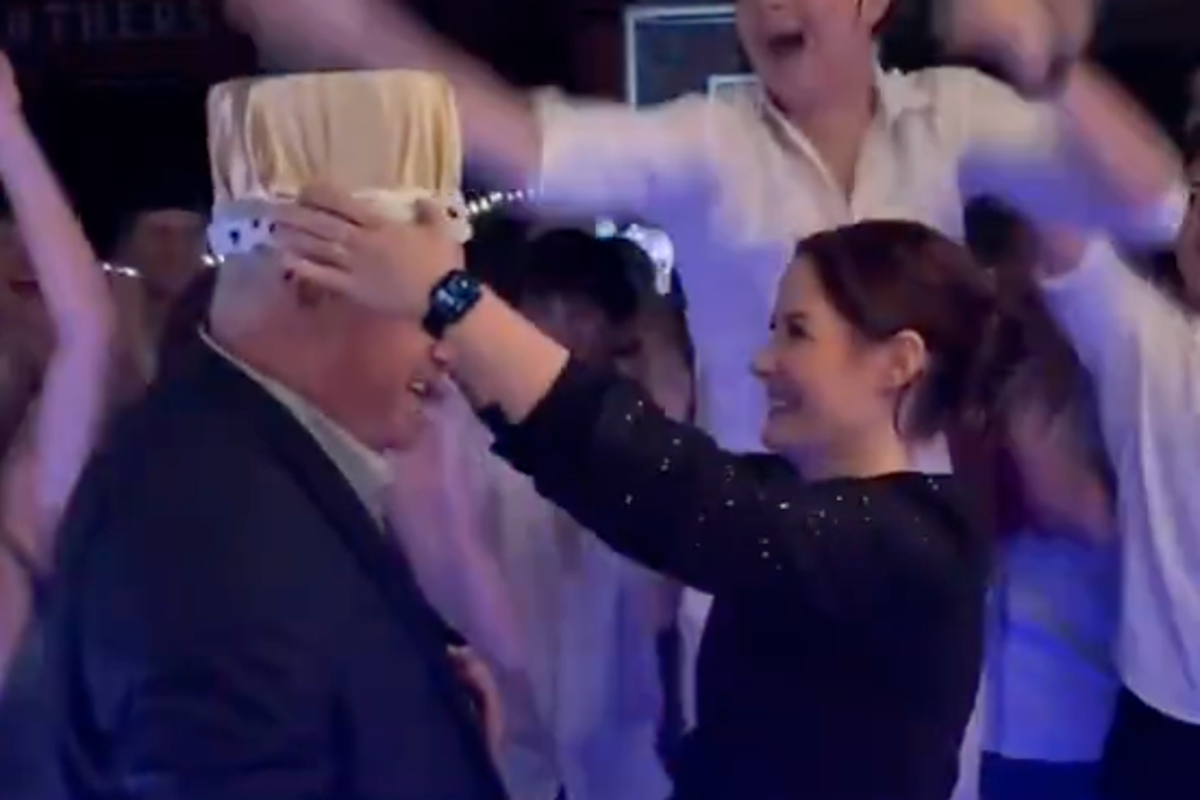
When the music started at the high school prom, the man in the tuxedo wasn't just a principal anymore. He was a symbol. The crowning of a school administrator as prom king—usually a role reserved for a popular senior—is a rare, emotionally charged event that signals a community trying to stitch itself back together. This gesture isn't about tradition; it is a raw, public attempt to say thank you to a man who physically stepped between a gunman and his students. But beneath the flashing lights and the applause, this moment reveals a much more complex reality about how American schools handle the aftermath of extreme violence.
The Weight of the Hero Label
Society loves a hero. We find comfort in the narrative of a single individual whose bravery cancels out the horror of a mass casualty event. When this principal tackled the shooter, he became the protagonist of a story the town desperately needed to hear. The prom king title acts as a public coronation of that bravery. However, labeling someone a hero can be a double-edged sword. It creates an expectation of invulnerability. It suggests that because he saved lives, he is okay.
The reality of trauma is never that clean.
Psychological recovery for those who engage in "heroic" acts often involves a period of intense scrutiny and internal pressure. By elevating an administrator to the status of a local deity, the community unintentionally makes it harder for that individual to admit they are struggling. He is now the face of the school's resilience. If the hero is hurting, what does that mean for the kids who looked to him for protection? The crown is heavy because it represents the emotional stability of hundreds of teenagers.
Beyond the Viral Moment
The headlines focus on the spectacle. They capture the cheering students and the principal's humble smile. What stays out of the frame are the months of quiet, grueling work that preceded this night. An administrator's job after a shooting isn't just about security cameras and metal detectors. It is about managing the collective PTSD of a faculty. It is about convincing parents that the building is safe when you yourself know how easily that safety was shattered.
We must look at the mechanics of school leadership under fire. Most principals are trained for pedagogy and budget management, not urban warfare. When violence erupts, they are forced into a role they never signed up for. The decision to tackle a shooter is an instinctive one, born of a protective bond between educator and student. That bond is what the students were honoring at the prom. They weren't just voting for a "cool" teacher; they were acknowledging the person who ensured they lived to see their senior year.
The Impact on the Student Body
For the students, this vote was a form of reclamation. A school shooting steals a sense of agency from young people. It turns a place of learning into a crime scene. By breaking the rules of prom—ignoring the standard popularity contests to honor an adult—the students took back control of their own narrative. They decided what mattered. In a world that felt chaotic and dangerous, they chose to center their evening around gratitude rather than fear.
This shift in the social hierarchy of a high school is significant. It shows a level of maturity that is forced upon survivors of violence. These are no longer just kids worried about dates and dresses; they are individuals who have looked at the end of their lives and seen a man standing in the way of it. The prom king title is their way of acknowledging that the traditional milestones of high school have been permanently altered.
The Institutional Failure Behind the Individual Bravery
While we celebrate the principal, we have to ask why he had to be a hero in the first place. Every time a school official has to tackle a gunman, it is a testament to a systemic failure. We are placing the burden of national policy failures on the shoulders of people who should be worried about test scores and graduation rates.
The hero narrative is often used to distract from the lack of preventative measures. If we focus enough on the brave principal, we don't have to talk about the lack of mental health resources or the ease with which the shooter obtained a weapon. This is the "feel-good" trap of modern news. It allows the public to exhale and feel that "everything turned out okay," even though the underlying conditions that led to the violence remain unchanged.
We are asking our educators to be soldiers. We are asking them to be therapists. Now, we are asking them to be icons.
The Long Road of Recovery
A prom lasts four hours. The trauma lasts a lifetime. The principal will eventually take off the crown, the students will graduate, and the cameras will move on to the next tragedy. But the school building remains. The hallways where the struggle took place are the same hallways the students walk every day.
Recovery isn't a straight line. It is a series of loops. There will be days when the school feels normal, and days when a slammed locker door sends everyone into a panic. The prom king ceremony is a peak in that recovery, a moment of high morale, but it is not the finish line. True institutional health requires more than just one-night celebrations; it requires a sustained commitment to the long-term mental health of every person who was in that building.
The Changing Face of School Leadership
This incident highlights a shift in what we expect from school leaders. The "Hero Principal" is becoming a recognizable archetype in American culture. This has profound implications for how we recruit and train administrators. Are we looking for leaders who can handle a crisis, or are we looking for educators? Ideally, they are the same, but the stress of the former often negates the effectiveness of the latter.
When a principal becomes a public figure of this magnitude, their ability to lead the school effectively changes. They are no longer just an administrator; they are a public asset. Their time is taken up by interviews, award ceremonies, and security consultations. The very act of being a hero can pull a principal away from the day-to-day needs of their students. It is a strange paradox where the act of saving the school can lead to a disconnect from its daily operation.
A New Standard for Prom
Perhaps the most interesting aspect of this story is the total abandonment of tradition by the students. Prom is often criticized for being exclusionary or superficial. In this instance, it became a communal ritual of healing. The students used the tools they had—their votes, their dance, their crown—to create a ceremony that actually meant something.
They bypassed the usual social politics to make a statement about what they value. In doing so, they provided a blueprint for how other communities can handle the aftermath of trauma. You don't have to follow the old rules when the world has changed. You create new ones that reflect your current reality.
The Silence After the Music Stops
The morning after the prom, the glitter is swept up and the tuxedo is returned. The principal goes back to his office. The "hero" tag remains, but the man inside it has to find a way to live with what happened. He has to carry the memories of the shooter’s face, the sound of the gun, and the weight of the lives he saved.
We owe it to these individuals to look past the crown. We owe it to them to provide the support that isn't televised. If we only celebrate the moments of public triumph, we ignore the private struggles that define the lives of survivors. The principal’s coronation was a beautiful moment, but it was also a reminder of the impossible position we put our teachers in.
The real work of a hero doesn't happen on a stage under a spotlight. It happens in the quiet moments of the school day when a student is struggling and a teacher stops to help. It happens in the meetings where security protocols are debated. It happens every time a school leader decides to show up for work despite the fear.
The crown is a nice gesture, but the man didn't tackle a shooter for a title. He did it because he loved his students. That love is the only thing that actually heals a community. Everything else is just noise.
Invest in the people, not the story.