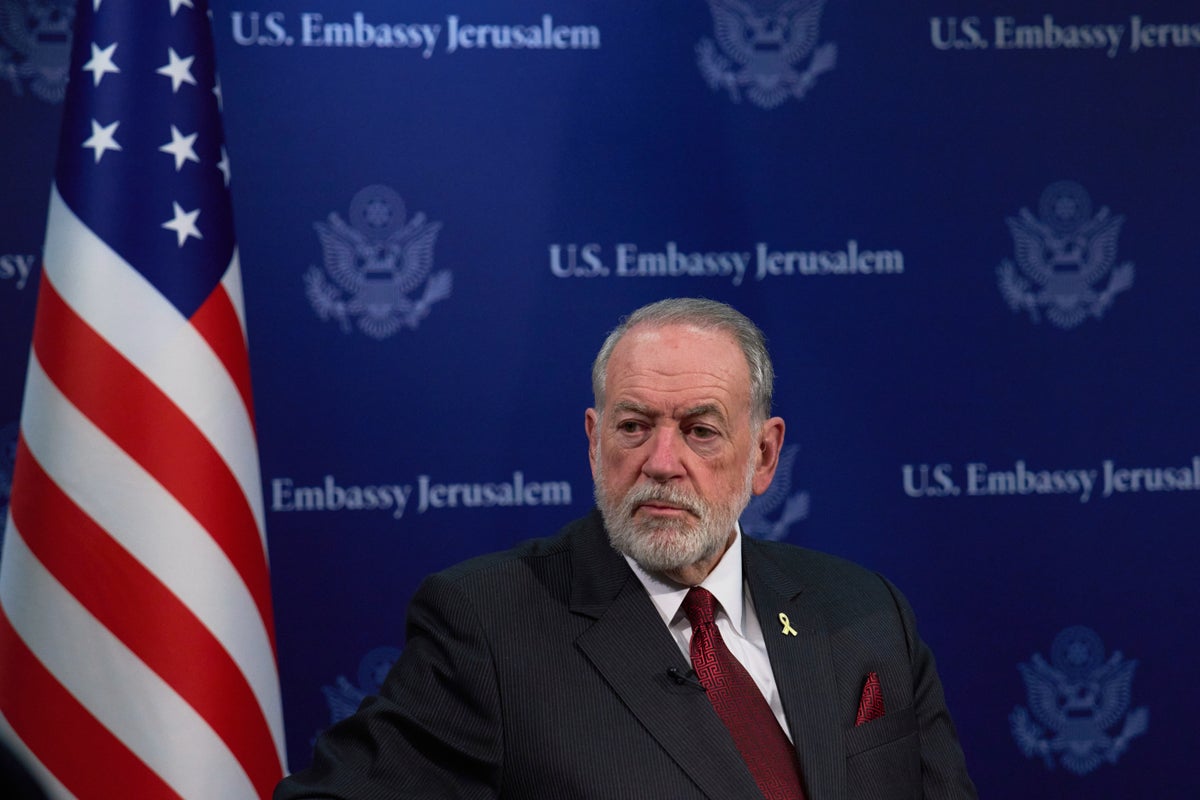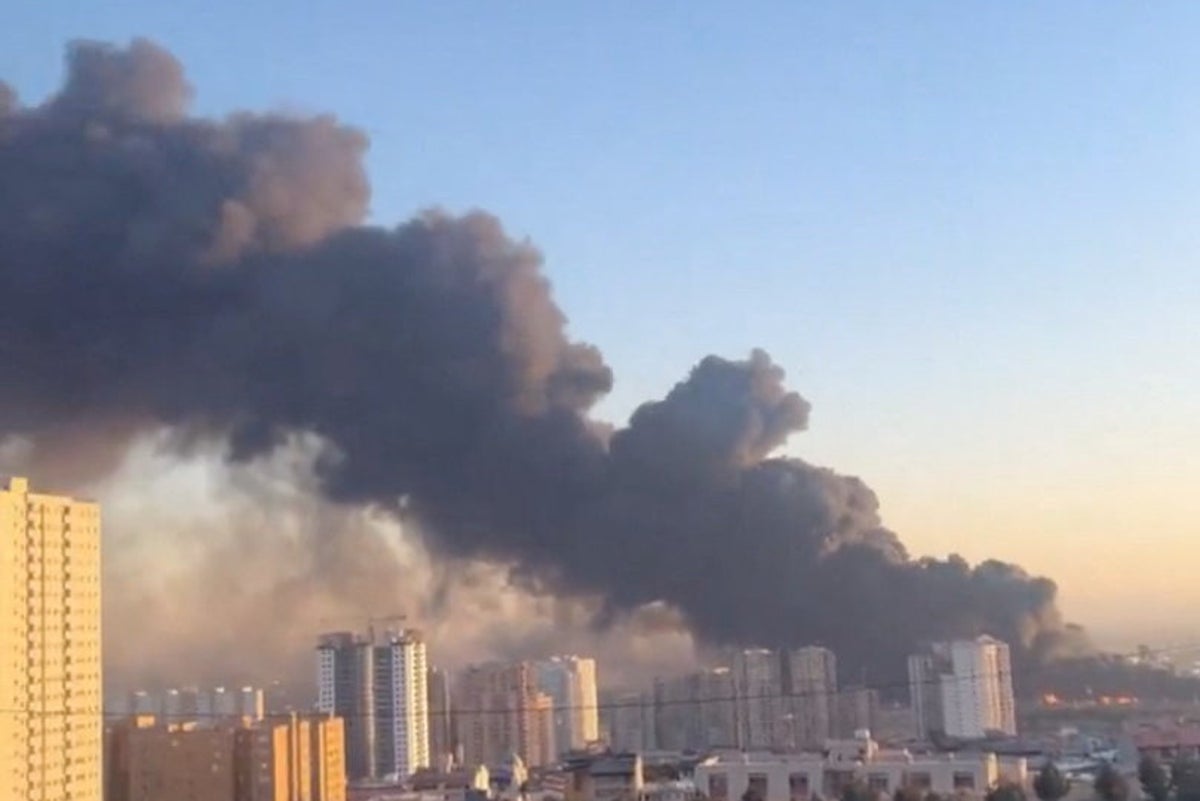
The United States government has officially signaled to the estimated 600,000 American citizens currently in Israel that they are, for all practical purposes, on their own. In a series of escalating security alerts culminating this week, the US Embassy in Jerusalem confirmed it is "not in a position" to evacuate or directly assist Americans in departing the country. This isn't a temporary logistical hiccup. It is a calculated, hard-line policy stance that highlights a growing rift between the expectations of private citizens and the cold reality of modern geopolitical brinkmanship.
The message from the State Department is jarringly clear: if you want to leave, find your own way to the border. The Embassy has pointed toward Israeli-run shuttles to the Taba crossing into Egypt, but with a chilling caveat. They cannot guarantee your safety if you take them. For a superpower that prides itself on its reach, the admission of powerlessness—or perhaps, more accurately, the refusal to exercise power—is a watershed moment in American consular history. Learn more on a connected issue: this related article.
The Myth of the Guaranteed Extraction
There is a persistent belief among Americans traveling abroad that the State Department acts as a global concierge service, ready to dispatch a C-130 the moment things get hairy. This has never been the case, but the current crisis in Israel has finally stripped away the illusion.
In standard operating procedure, the US government only triggers a Non-combatant Evacuation Operation (NEO) when commercial options are non-existent and the host nation has effectively collapsed. Neither condition currently applies to Israel in the eyes of Washington. Despite the rain of missiles and the shuttering of Ben Gurion Airport, the Israeli government remains fully functional. To the State Department, as long as a nation can still run a bus to a border, the US military stays on the sidelines. Further journalism by USA Today delves into related views on this issue.
The refusal to evacuate is also a political lever. Launching a massive, military-led evacuation would signal a total lack of confidence in Israel’s ability to secure its own territory. It would be a diplomatic vote of no confidence that Washington is unwilling to cast while it simultaneously provides the munitions for the conflict.
The Logistics of Abandonment
While other nations like Poland, Brazil, and Bulgaria have actively deployed military and government-chartered aircraft to repatriate their citizens, the US has stood firm on "available commercial transportation." The problem? There isn't any.
- Airspace Lock: Major US carriers like United, Delta, and American suspended flights almost immediately.
- The Insurance Wall: Commercial airlines cannot operate in a war zone without war-risk insurance, which becomes prohibitively expensive or entirely unavailable the moment the first rocket hits a civilian runway.
- The Land Gap: With Ben Gurion closed, the only exits are the land bridges to Jordan and Egypt. These routes are currently bottlenecks, subject to the whims of regional security forces and sudden closures.
For the hundreds of thousands of dual citizens and tourists, this means navigating a labyrinth of "courtesy" information provided by an embassy that refuses to endorse the very options it lists. When the US Embassy says they are providing information on the Taba shuttle as a "courtesy," they are legally insulating themselves. If that bus is hit, the State Department wants no fingerprints on the manifest.
Security Alerts as a Shield
The recent directives for US government employees to "shelter in place" serve a dual purpose. On the surface, it is a basic safety measure. Beneath the surface, it is a bureaucratic firewall. By ordering its own staff to stay put, the State Department creates a standard: if it’s too dangerous for the diplomats, they cannot be expected to venture out to organize a civilian evacuation.
This creates a paradox. The government acknowledges the environment is too volatile to move its own protected staff, yet tells private citizens—who lack armored convoys and secure communication lines—to navigate that same environment to reach a border crossing. It is a policy of survival of the most resourceful.
The Regional Domino Effect
The current paralysis isn't confined to the borders of Israel. The State Department's recent "depart immediately" order covers 13 countries across the Middle East. This isn't just about the immediate violence; it’s about the total collapse of regional civil aviation.
When the airspaces of Jordan, Iraq, and Lebanon flicker on and off like a faulty lightbulb, the "commercial flight" escape hatch becomes a fantasy. We are witnessing the first major conflict of the 21st century where the sheer scale of the American presence—over half a million people—makes a traditional evacuation technically and politically impossible. To move that many people would require a mobilization on the scale of the Dunkirk evacuation, involving the entire Sixth Fleet and a total cessation of hostilities.
The Cost of the Shifting Policy
For decades, the unspoken contract was that the US passport was the ultimate insurance policy. That contract has been shredded. The "Brutal Truth" is that the US government now views private citizens in high-risk zones as "voluntary entrants" who accepted the risk upon arrival.
This shift is partly a result of the 2021 Afghanistan withdrawal. The political and logistical scars of Kabul have made the current administration allergic to any operation that involves frantic crowds at an airport gate. The images of people falling from planes or waiting in sewage-filled trenches for a flight that never comes are a nightmare Washington is determined not to repeat.
Consequently, the policy has moved from "Rescue" to "Information." You will get emails. You will get links to PDFs. You will get locations of meeting points in Haifa and Herzliya. But you will not get a seat on a government plane.
The message to every American currently in the region is to look at the person in the mirror. That is your evacuation team. The land crossings are open for now, but in a conflict where the objectives are shifting and the "third wave" of escalation is always an hour away, "for now" is a precarious place to live.
Make your own plan. Buy the bus ticket. Pay the visa fee. Do not wait for a dial tone from the Embassy that will never come.
The US government is not unable to save you; it has simply decided that the cost of doing so is too high.