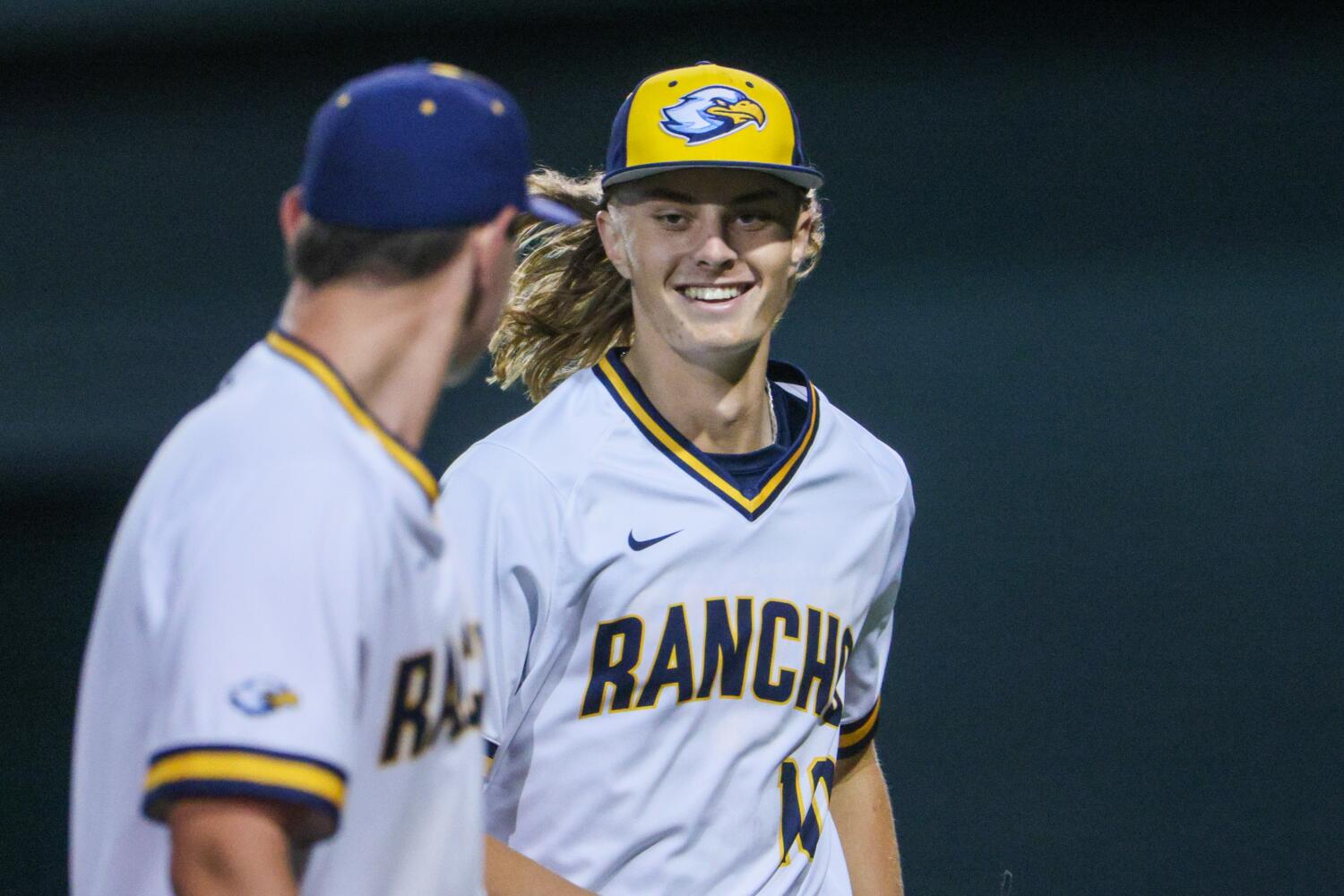
When Eric Sondheimer of the LA Times wrote about a family leaning on high school sports to navigate the aftermath of a tragedy, he touched on a localized truth that has much broader, more aggressive implications for the American educational machine. For some, a Friday night football game or a Tuesday afternoon track meet isn't just an extracurricular activity. It is a biological and psychological triage unit. In the wake of profound loss, the human brain seeks rhythm to combat the chaos of grief. High school sports provide a rigid, uncompromising structure that forces a grieving teenager out of the vacuum of their own mind and back into a physical reality where actions have immediate consequences.
This isn't about the "spirit of the game" or "building character" in the abstract sense. Those are marketing slogans used by school boards to justify budget allocations. The reality is much more visceral. When a student-athlete loses a parent or a sibling, the neurochemical hit of physical exertion—the cortisol spikes followed by endorphin release—acts as a primitive regulator. It is one of the few environments where a teenager can experience controlled, communal struggle that mirrors their internal state without being consumed by it. Meanwhile, you can explore other developments here: Barcelona Wins The Battle But Real Madrid Just Won The War.
The Neurological Anchor of Routine
Grief is a disorienting force that shatters a person’s sense of time and sequence. The brilliance of the high school sports calendar lies in its relentless lack of empathy. The bus leaves at 3:15 PM. The whistle blows at 4:00 PM. You have ten minutes to warm up.
For a family in the middle of a crisis, these arbitrary rules become a lifeline. They create an "external clock" that replaces the broken internal one. While the household might be a quiet, heavy space filled with unanswered questions and paperwork, the field is a place of loud, objective clarity. You either make the catch or you don't. You either hit the time or you fail. This binary nature of sports offers a temporary relief from the messy, non-linear progression of emotional healing. To see the complete picture, check out the detailed report by FOX Sports.
The prefrontal cortex, responsible for decision-making and logic, often goes offline during intense trauma. The amygdala takes over, keeping the individual in a state of hyper-vigilance or total shutdown. Engaging in high-intensity sports forces the prefrontal cortex back into the driver's seat. A point guard cannot effectively navigate a full-court press while fully dissociated. The game demands presence. It demands a return to the "now," which is the only place where grief cannot stay in its most toxic form.
The Failure of Traditional Counseling in Isolation
We often push grieving students toward a therapist's office. While clinical support is necessary, it is often insufficient on its own for the teenage demographic. Sitting in a chair and talking about "how you feel" is an intellectual exercise. Adolescents, however, are physical creatures driven by hormonal shifts and a need for tribal belonging.
Sports provide a "side-by-side" form of support rather than a "face-to-face" one. There is a specific kind of bond formed when two people are running wind sprints together or lifting weights in a hot basement gym. They don't have to talk about the dead. They don't have to acknowledge the tragedy. The support is felt through the shared physical burden. For a young man or woman who feels isolated by their tragedy—feeling like the "kid with the dead dad"—the locker room is the only place where they are just another teammate.
The Cost of Entry and the Barrier to Healing
If we accept that high school sports are a vital component of the mental health infrastructure, we have to look at the widening gap in access. Pay-to-play models are the silent killers of this recovery mechanism. In affluent districts, a student-athlete has access to trainers, sports psychologists, and top-tier equipment. In underfunded urban or rural districts, the very program that could save a student's mental health is often the first thing on the chopping block during a budget shortfall.
When a school cuts its JV baseball program, it isn't just cutting a game. It is cutting a specialized form of communal therapy for at-risk youth. The data shows a direct correlation between participation in organized athletics and lower rates of substance abuse and depression among grieving teens. Yet, we continue to treat these programs as "extras" rather than essential health services.
Beyond the Scoreboard
The "Sondheimer" narrative often focuses on the heart-tugging moments—the jersey retirement or the tribute game. These are fine for local news, but they miss the gritty daily utility of the sport. The real work happens at 6:00 AM in the weight room when no one is watching.
Hard physical training mimics the physical symptoms of anxiety: a racing heart, sweat, and heavy breathing. By repeatedly entering this state in a controlled environment, an athlete builds a "tolerance" for these sensations. When a panic attack hits later in the evening, the athlete’s body is already familiar with the feeling. They have been here before. They have trained their nervous system to stay calm under the pressure of physical distress.
The Coach as an Unintentional Clinician
Coaches are the most undervalued mental health workers in the country. A math teacher sees a student for 50 minutes in a structured academic setting. A coach sees that same student when they are exhausted, frustrated, and at their most vulnerable.
Most coaches aren't trained in grief counseling, yet they are the ones on the front lines. They notice when a player's energy drops or when their aggression becomes unproductive. The relationship between a coach and an athlete is built on a foundation of "doing" rather than "talking." This makes the coach a uniquely positioned figure to pull a student out of a downward spiral. They can offer a "task" as a distraction, which is often more effective than offering "help."
The Shadow Side of the Sports Lifeline
It is dangerous to view high school sports as a pure panacea. There is a risk that the sport becomes an unhealthy obsession—a way to outrun the grief rather than process it. If an athlete's entire identity is wrapped up in their performance, an injury can trigger a secondary trauma that is even more devastating than the first.
Schools need to be wary of the "hero" narrative. When a student plays through grief and performs at a high level, we tend to celebrate their "strength." Sometimes, that strength is just a mask for a complete internal collapse. The pressure to win can become a new source of stress that compounds the existing tragedy.
Rebuilding the Infrastructure of Resiliency
If we want to use high school sports as a tool for reducing the stress of tragedy, the approach needs to be systemic. This means:
- Integrated Support: Athletic departments must have a direct line to the school’s counseling services. A student shouldn't have to choose between practice and a therapy appointment.
- Coach Training: Providing coaches with basic mental health first aid training so they can recognize the signs of complex grief.
- Removal of Financial Barriers: Ensuring that every student, regardless of their family’s financial situation after a tragedy, can participate in sports without worrying about fees or equipment costs.
The American high school sports system is one of the last remaining places where communal, physical struggle is prioritized. In a world that is increasingly digitized and sedentary, this physical reality is a requirement for the human spirit to endure loss. We must stop viewing sports as a distraction from the "real world" of academics and tragedy. For a family in pain, the field is the real world. It is the only place where the rules still make sense and where the path forward is marked by white lines and a clear objective.
The next time you see a teenager sprinting toward a finish line or diving for a loose ball, look closer. You aren't just seeing an athlete. You are seeing a person engaged in a desperate, necessary act of self-regulation.
Ask yourself what happens to that child when the season ends.