The United States military does not lack the firepower to clear the Strait of Hormuz, but it lacks a viable way to do so without triggering a global economic collapse. While armchair generals often demand a "show of force" to keep the world’s most vital oil artery open, the Pentagon is operating under a different set of physics. The calculation isn't about who has more ships. It is about the asymmetric cost of a single mistake. If the U.S. Navy initiates a full-scale clearing operation, the resulting insurance hikes and regional instability would effectively close the strait more efficiently than any Iranian blockade ever could.
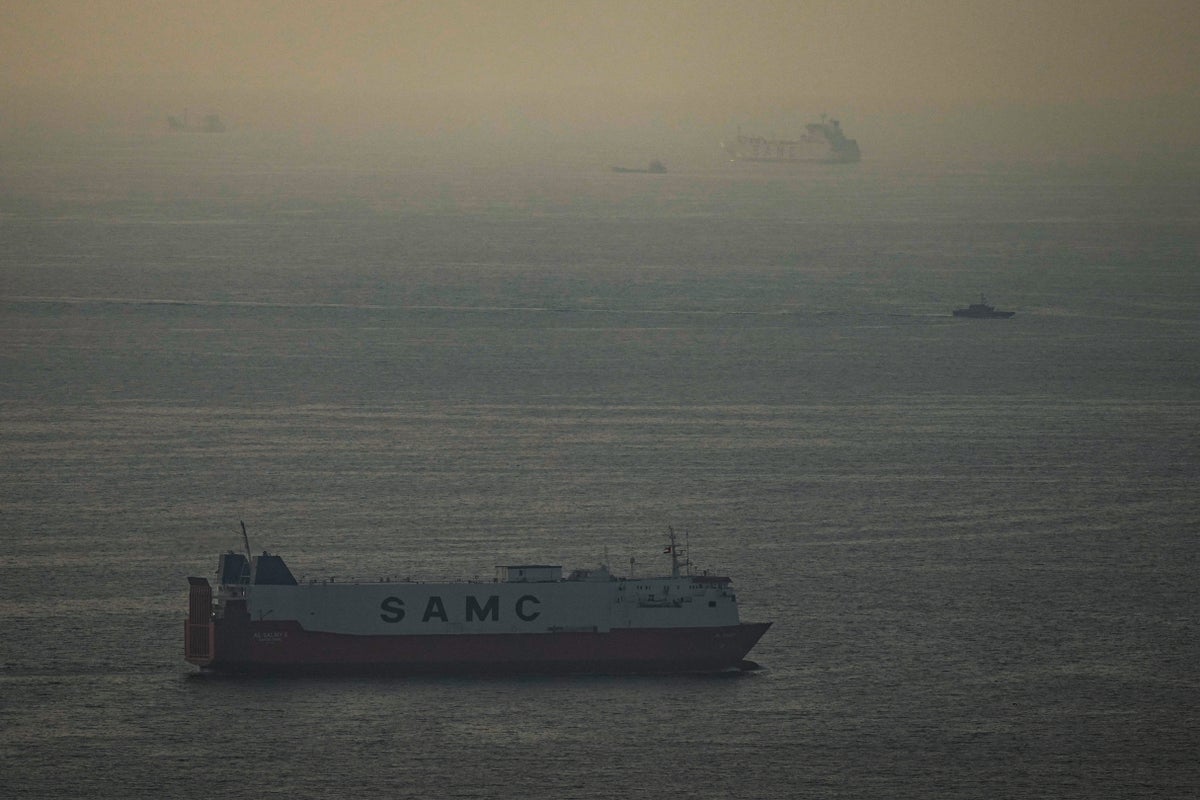
The Strait of Hormuz is a narrow choke point where the shipping lanes are barely two miles wide in either direction. Through this gap flows roughly one-fifth of the world’s total oil consumption. For decades, the American security umbrella has rested on the assumption that the U.S. could and would use its carrier strike groups to pulverize any attempt to shutter the passage. However, the modern reality of anti-access/area-denial (A2/AD) weaponry has flipped the script. Washington is currently choosing a strategy of "managed tension" over direct intervention because the latter offers no clear exit strategy and an almost guaranteed spike in crude prices that would crater the domestic economy.
The Asymmetry of Modern Naval Warfare
We are no longer in an era where the biggest ship wins by default. Iran has spent thirty years perfecting a "mosquito fleet" strategy designed specifically to counter a blue-water navy. This isn't a secret. It’s a transparent, publicized doctrine. They utilize thousands of fast-attack craft, many of them remote-controlled or carrying suicide payloads, alongside a dense network of land-based anti-ship cruise missiles tucked into the jagged limestone cliffs of the Iranian coastline.
A U.S. destroyer is a billion-dollar masterpiece of engineering. An Iranian drone or a sea mine costs less than a luxury SUV. In a high-intensity conflict, the U.S. Navy has to be right 100% of the time to maintain its reputation and operational integrity. The adversary only has to be lucky once. If a single American hull is breached or sunk in the Strait, the maritime insurance market would move to "War Risk" status instantly. Shipping companies would refuse to send tankers through the Gulf, regardless of whether the Navy declared the water "safe."
This is the central paradox of naval power in the 21st century. The mere presence of a massive fleet is supposed to be a deterrent, but in a narrow corridor like Hormuz, that fleet becomes a target rich environment. The U.S. military recognizes that the "cure" of a kinetic intervention is currently more lethal to the global markets than the "disease" of low-level harassment and shadow-war tactics.
The Invisible Barrier of Maritime Insurance
When we talk about "opening" a waterway, we aren't just talking about removing physical obstructions. We are talking about the confidence of the London insurance markets. This is the overlooked lever that dictates American foreign policy in the region. Lloyd’s of London and other major underwriters determine the feasibility of global trade.
If the U.S. launches a pre-emptive strike to take out Iranian missile batteries, those underwriters will immediately designate the entire Persian Gulf as a no-go zone. Premiums would skyrocket to levels that make the transport of oil unprofitable. Even if the U.S. Navy successfully destroys every Iranian asset within 48 hours, the "tail risk"—the possibility of a lingering mine or a sleeper cell with a shoulder-fired missile—would keep those rates elevated for months.
The U.S. military is essentially being held hostage by the fragility of the global supply chain. This is why you see a pattern of "proportional response" rather than overwhelming force. When a tanker is seized or a drone is shot down, the U.S. responds with cyber warfare or targeted sanctions. These are surgical tools designed to punish without spooking the commodity traders in New York and London. A carrier-led invasion of the coastline would be a blunt instrument that shatters the very market the Navy is supposed to protect.
The Geographic Trap
Geography is the one thing no amount of military spending can fix. The Strait of Hormuz is not the open ocean. It is a confined space where the deep-water channels—the only places heavy tankers can safely travel—lie almost entirely within range of basic shore-based artillery.
The Hidden Danger of Sea Mines
Mines are the ultimate "poor man's" weapon of mass destruction. They are cheap, easy to deploy from civilian-looking dhows, and notoriously difficult to find. The U.S. Navy’s mine-countermeasure (MCM) capabilities have historically been a neglected corner of the budget. While the Pentagon has tried to bridge this gap with autonomous underwater vehicles and specialized helicopters, clearing a field of smart mines in a contested environment is a slow, agonizing process.
- Detection: Sonar in shallow, busy waters is plagued by "clutter"—shipwrecks, debris, and thermal layers.
- Neutralization: Each suspected contact must be investigated and destroyed, often by divers or specialized robots.
- Security: While MCM ships are doing this work, they are sitting ducks for shore-based missiles.
If Iran were to seed the Strait with even a few dozen sophisticated mines, it could take weeks to guarantee the lanes are clear. During those weeks, the global economy would be losing millions of barrels of oil per day. The U.S. avoids a direct shooting war because it knows it cannot guarantee a quick "all clear" signal to the commercial world.
The Problem of Proximity
The Iranian mainland offers high-ground observation and concealment. Their mobile missile launchers can pop out of a mountain tunnel, fire, and disappear before an F-35 can even get a target lock. This "hide-and-seek" warfare means that to truly secure the Strait, the U.S. would need to occupy or at least maintain constant aerial supremacy over a vast stretch of rugged Iranian territory. This isn't a "naval operation" anymore; it’s a full-scale regional war.
The Diplomatic and Regional Fallout
Using force in the Strait doesn't happen in a vacuum. It forces every regional player—Saudi Arabia, the UAE, Qatar, and Kuwait—to pick a side in a conflict that could lead to the destruction of their own desalination plants and oil infrastructure.
The Gulf states are currently playing a delicate double game. They want the protection of the U.S. military, but they are terrified of an actual war on their doorstep. Many of these nations have moved toward de-escalation with Tehran precisely because they realize the U.S. cannot protect every square inch of their infrastructure from a swarm of low-cost drones. If Washington goes rogue and starts a shooting war, it risks losing the logistical support of the very allies it needs to sustain a long-term presence.
The Transition to Silent Warfare
Since a loud war is too expensive, the U.S. has pivoted to a silent one. This explains why the "force" used is often invisible. Electronic warfare, GPS jamming, and offensive cyber operations are the primary weapons of choice. These tools allow the U.S. to degrade Iranian capabilities without providing the dramatic footage that sends oil prices to $200 a barrel.
We are seeing a move toward "unmanned persistence." The deployment of Task Force 59—a fleet of small, autonomous surface vessels—is an attempt to create a "digital ocean." By saturating the Strait with sensors, the Navy hopes to make it impossible for Iran to move covertly. The goal is to strip away the element of surprise. If you can see every dhow and every missile move in real-time, the "mosquito" strategy loses its sting. But this is a long-term tech play, not an immediate fix for a sudden blockade.
Why the Status Quo is the Strategy
The American public has no appetite for another "forever war" in the Middle East, and the Pentagon knows it. But more importantly, the U.S. is now a net exporter of oil and gas. While a spike in prices would hurt the American consumer at the pump, it doesn't represent the existential threat it did in the 1970s. The urgency to "die for the Strait" has diminished in the eyes of many strategic planners.
The current policy is one of containment and theater. The U.S. keeps enough force in the region to prevent a total takeover, but not enough to provoke a desperate, scorched-earth response from Tehran. It is a messy, unsatisfying, and often frustrating stalemate.
The U.S. military hasn't used force to reopen the Strait because the definition of "open" has changed. It’s no longer about whether a ship can physically pass through; it’s about whether the global financial system believes it can pass through safely. As long as the threat of Iranian "lucky shots" remains high, a massive military intervention remains the least attractive option on the table. The Navy is standing down not because it is weak, but because it is smart enough to know that in this specific fight, the only way to win is to avoid playing the game.
The next time you see a headline about a tanker being harassed, don't look for the carriers to start launching strikes. Look at the price of Brent Crude and the statements coming out of the insurance houses in London. That is where the real war is being fought, and so far, the U.S. has decided that a tense peace is cheaper than a chaotic victory.