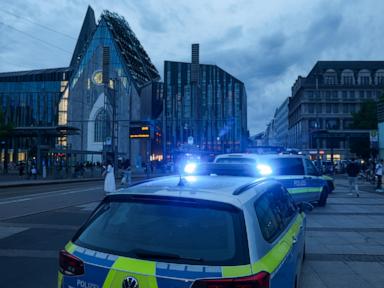
Germany is once again grappling with the aftermath of a car-ramming attack that has left investigators and the public searching for answers. While early reports often lean on the term "motive unclear," a deeper look into the systemic failures of the German mental health and judicial systems reveals a recurring pattern. The suspect in the most recent incident had a documented history of psychiatric treatment, yet he remained behind the wheel and unmonitored. This is not an isolated lapse in judgment by local police. It is the result of a rigid legal framework that prioritizes patient privacy and individual liberty over the proactive assessment of public threat, often until it is too late.
The incident follows a chillingly familiar script. A vehicle plows into a crowd, the driver is apprehended, and within hours, authorities announce that there are no "initial indications" of a political or extremist motive. Instead, the focus shifts to the perpetrator's mental state. By labeling these events as psychiatric crises rather than acts of terror, the state often avoids the difficult conversation about why individuals with known violent tendencies or severe instability are still integrated into high-risk environments without oversight.
The Privacy Paradox in German Public Safety
Germany maintains some of the strictest data protection and medical privacy laws in the world. While these laws protect the average citizen from state overreach, they create massive blind spots for law enforcement. If a person undergoes psychiatric treatment, that information is frequently siloed within the medical community. Even when a patient exhibits "red flag" behaviors, the threshold for a doctor to breach confidentiality and alert the police is incredibly high.
This creates a vacuum where the right hand of the state—the police—has no idea what the left hand—health services—is doing. We see the consequences in the recurring "lone wolf" ramming attacks. The suspects are almost always known to health professionals, but because they haven't committed a specific crime recently, they are not on any security watchlist. The legal system waits for the blood to be spilled before it acknowledges the danger.
The Failure of Forensic Outpatient Care
When a suspect with a history of mental illness is released back into society after a stint in a psychiatric ward, they are supposed to be monitored. However, the German "Forensische Ambulanz" (forensic outpatient clinics) are notoriously underfunded and overstretched. These clinics are tasked with ensuring that individuals who have shown aggressive tendencies stay on their medication and remain stable.
The reality is far less organized. Caseloads are massive. A patient might miss an appointment or stop taking their antipsychotic medication, and it could take weeks before a social worker or therapist raises the alarm. By then, the individual has already spiraled. In several recent cases across North Rhine-Westphalia and Berlin, suspects had been in and out of the system for years. The "motive" isn't a secret political manifesto; it is a slow-motion collapse of the mental health safety net that everyone saw coming but no one was empowered to stop.
The Vehicle as a Low Tech Weapon of Choice
For decades, the intelligence community focused on bombs and firearms. But the 2016 Breitscheidplatz Christmas market attack changed the arithmetic of European security. It proved that a common vehicle is the most difficult weapon to track and the easiest to acquire. You don't need a dark web contact or a chemistry set to cause mass casualties. You just need a driver's license and a set of keys.
Despite this, Germany has been slow to implement physical barriers in high-pedestrian areas outside of major holiday events. City planners often argue that "bollardizing" a city ruins the aesthetic or hinders emergency vehicle access. This reluctance creates soft targets. When you combine a high-stress urban environment with a person suffering from untreated paranoid schizophrenia and a three-ton SUV, the results are mathematically predictable.
Why Medical History Does Not Equal Lack of Intent
There is a dangerous tendency in modern reporting to treat "mental illness" and "terrorist intent" as mutually exclusive categories. This is a false binary. Many individuals who are radicalized or who decide to commit acts of mass violence suffer from underlying personality disorders or psychosis. The illness may provide the spark, but the choice of target and the method of attack often involve a degree of planning and clarity.
By immediately pivoting to a "psychiatric motive," officials often close the book on investigations into how these individuals were influenced. Did they browse extremist forums that valorize "incel" violence or vehicular attacks? Did they seek out content that exacerbated their delusions? When we stop at the diagnosis, we stop looking for the influences that directed the violence toward the public.
The Legal High Bar for Involuntary Commitment
In Germany, the "PsychKG" (Psychiatric Help Act) and the "Betreuungsrecht" (Guardianship Law) make it very difficult to keep someone in a facility against their will. Unless a person is an "imminent danger" to themselves or others at the exact moment of evaluation, they must be released.
The definition of "imminent" is the sticking point. A man can say he hears voices and hates the government, but if he hasn't picked up a knife yet, he is often sent home with a prescription he may never fill. Judges are wary of infringing on civil liberties, a direct legacy of Germany's 20th-century history. But this historical trauma has created a contemporary vulnerability. The state is so afraid of the ghost of its authoritarian past that it fails to protect the living from the predictable violence of the present.
Tracking the Shift from Terror to Instability
If we look at the data from the last five years of mass-casualty attempts in Germany, a clear trend emerges. The number of attacks linked to organized foreign terror groups has plateaued, while "individualized" attacks—perpetrated by people with extensive psychiatric records—have risen. This shift demands a change in counter-terrorism strategy.
We are no longer just looking for sleeper cells; we are looking for the "peripheral" population. These are people living in halfway houses, receiving state benefits, and interacting with local health clinics. They are hiding in plain sight, not because they are master spies, but because the bureaucracy that manages them is designed to be blind.
Resource Depletion in Local Police Forces
While the federal government discusses high-level security, the burden of managing these unstable individuals falls on local police. A patrol officer in a mid-sized German city is often the first and only line of defense. These officers are not trained psychiatrists. They are forced to make split-second decisions on whether to take someone to a jail cell or a hospital.
Frequently, the hospital refuses the intake because there are no beds, or the jail refuses because the person is clearly ill. The individual is then "released into the wild," and the police are left to wait for the inevitable 911 call. This cycle of "catch and release" is exhausting for the force and deadly for the public.
The Economic Cost of the Silent Crisis
The focus is usually on the immediate tragedy—the lives lost and the families destroyed. But there is a broader economic and social cost to this instability. Every time a car-ramming occurs, public trust in the safety of urban spaces erodes. Tourism drops, insurance premiums for public events skyrocket, and the cost of retrofitting cities with security hardware runs into the billions.
If a fraction of the money spent on post-incident security and judicial proceedings were diverted into a high-intensity, mandatory follow-up system for violent psychiatric outpatients, the "unclear motives" of tomorrow could be prevented today.
Moving Beyond the "Isolated Incident" Narrative
The public is tired of being told that every attack is a tragic one-off. When the same pattern repeats in Trier, in Volkmarsen, in Berlin, and now again, it is no longer an anomaly; it is a feature of the system.
True investigative journalism requires us to look past the police press release. We must demand to know why the suspect's driver's license wasn't revoked after his third psychiatric hospitalization. We must ask why the clinic didn't alert the authorities when he stopped showing up for his court-ordered evaluations. And we must stop accepting "mental illness" as a complete explanation that requires no further inquiry.
The safety of the sidewalk should not depend on the hope that a person in the middle of a psychotic break decides to be non-violent. It should depend on a system that identifies high-risk individuals and ensures they are under care, not under the influence of their worst impulses behind a steering wheel.
The state’s primary duty is the protection of its citizens. When it fails to bridge the gap between medical privacy and public safety, it abdicates that duty. We don't need more "unclear motives." We need a clear-eyed overhaul of how the law handles the intersection of madness and machinery.


