The shadow war between Tehran and Washington has officially run out of shadows. For decades, the friction between the Islamic Republic of Iran and the United States relied on a predictable, if bloody, dance of proxies and deniability. That era ended when missiles began flying directly from Iranian soil toward Israeli population centers. The core premise of the current crisis is no longer about regional influence or nuclear enrichment levels in a vacuum. It is about a fundamental shift in Iranian military doctrine that assumes the United States is either too politically fractured or too strategically exhausted to enforce its "red lines."
Tehran’s recent rhetoric and military posturing suggest a calculated gamble. By openly challenging the U.S. to intervene while simultaneously threatening to strike American bases across the Middle East, Iran is testing the limits of Western deterrence. This isn't just bluster for a domestic audience. It is a sophisticated stress test of the global security architecture. If the U.S. fails to respond to direct provocations, the post-1945 order in the Middle East evaporates. If the U.S. overreacts, it risks a regional conflagration that could collapse the global economy.
The Death of Strategic Ambiguity
For years, the U.S. operated under the assumption that Iran feared direct confrontation. The logic was simple: the conventional disparity between the two militaries was so vast that Tehran would never risk an open exchange. That assumption was wrong. Iran has spent thirty years building a "resistance economy" and an asymmetric arsenal designed specifically to make a conventional U.S. victory too expensive to contemplate.
We are seeing the results of a long-term Iranian investment in ballistic missiles and suicide drones. These are not weapons of a desperate state. They are the tools of a power that has decided the cost of staying in the "gray zone" is now higher than the cost of open defiance. When Iranian officials publicly dare the U.S. to act, they are betting that the White House is more afraid of $150-a-barrel oil than it is of a nuclear-capable Iran.
The Israeli Friction Point
Israel is the immediate catalyst, but the true target is the U.S.-led security umbrella. Every time an Iranian-backed group hits a commercial vessel in the Red Sea or a missile crosses into Israeli airspace, the underlying question remains the same: where is the American line?
The current Israeli government views the threat as existential, a perspective that doesn't always align with Washington’s desire for "de-escalation." This creates a dangerous wedge. Iran exploits this gap by portraying the U.S. as a captive to Israeli interests, while simultaneously warning that any American support for an Israeli counter-strike will result in the total destruction of regional energy infrastructure.
Money and Drones
To understand why Tehran feels emboldened, look at the balance sheets. Despite years of "maximum pressure" sanctions, Iran has found ways to move its crude. The emergence of a "dark fleet" of tankers and the strengthening of ties with Beijing and Moscow have provided a financial floor that didn't exist a decade ago.
The Russian Connection
The war in Ukraine changed everything for the Middle East. Iran is no longer a pariah state acting in isolation. It is now a critical defense partner for a nuclear-armed Russia. The exchange of Iranian drone technology for Russian Su-35 fighter jets and advanced air defense systems like the S-400 has significantly raised the stakes. A strike on Iran today is no longer a localized event; it is a strike on a node of a new, revisionist axis.
The Drone Calculus
Consider the cost-to-kill ratio. A $20,000 Shahed drone requires a multi-million dollar interceptor missile to bring it down. Iran has figured out that it doesn't need to win a dogfight. It only needs to bankrupt the defender’s magazine depth. This is a war of attrition played out in the sky, and currently, the math favors the manufacturer of the cheap, swarming drone.
The Domestic Pressure Cooker
Internal Iranian politics are often misinterpreted as a monolith of religious fervor. In reality, the regime is facing its most significant domestic legitimacy crisis since 1979. Economic mismanagement and social unrest have pushed the leadership into a corner.
History shows that regimes in this position often look for an external enemy to galvanize a fractured population. By framing the conflict as a direct challenge to "Great Satan" (the U.S.) and "the Zionist entity" (Israel), the hardliners in the IRGC (Islamic Revolutionary Guard Corps) hope to drown out the cries for internal reform with the sounds of nationalistic defense. It is a high-stakes diversion. If they win the standoff, they secure their grip on power for another generation. If they lose, the entire structure could fail.
The Intelligence Gap
One of the most concerning aspects of this escalation is the degradation of reliable intelligence. Both sides are operating on assumptions about the other’s breaking point that may no longer be true.
The U.S. believes Iran is rational and will stop just short of total war. Iran believes the U.S. is a declining power that will retreat if the body bags start coming home. When two nuclear-adjacent powers misread each other’s intentions so fundamentally, the path to accidental war becomes a highway. We are no longer talking about "if" a spark will ignite the region, but rather which spark will be the one that can't be extinguished.
Weaponizing the Strait of Hormuz
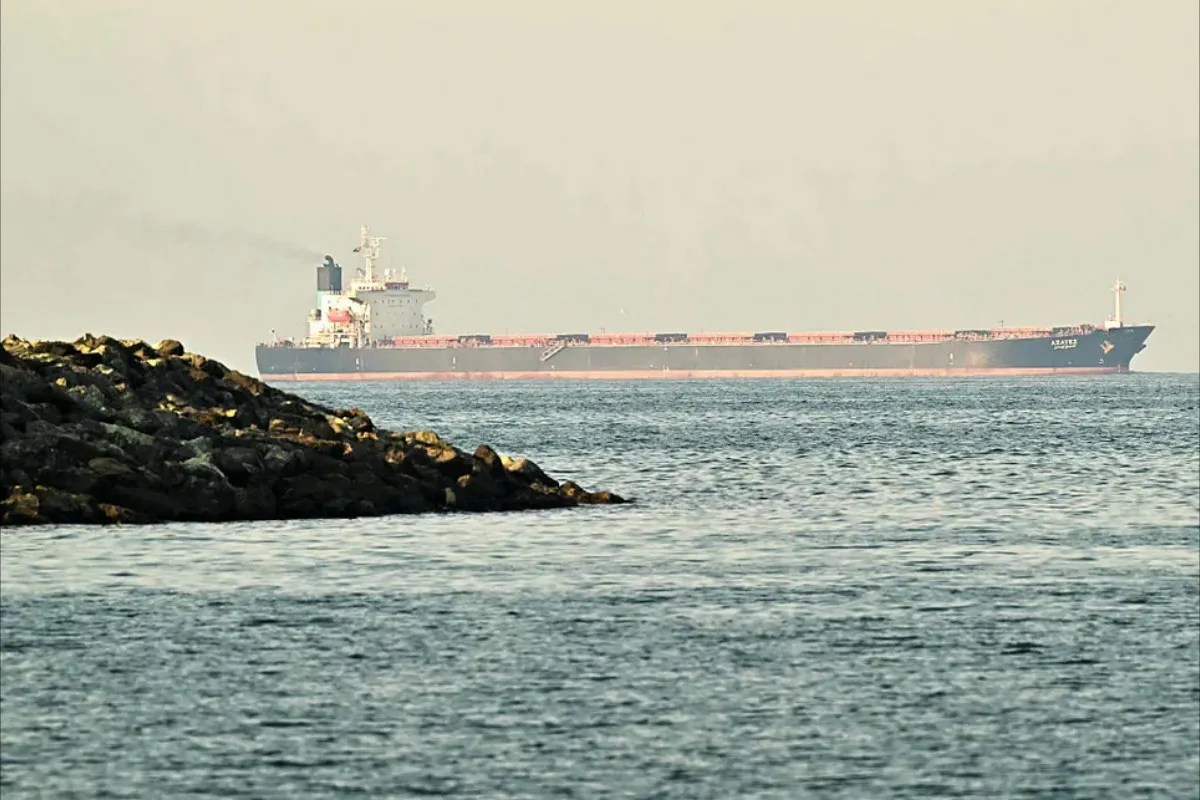
The ultimate Iranian trump card remains the Strait of Hormuz. Roughly 20% of the world's oil passes through this narrow choke point. Iran’s naval strategy isn't built to defeat the U.S. Fifth Fleet in a traditional battle. It is built to sink enough ships and lay enough mines to make insurance rates for tankers so astronomical that the world’s shipping lanes effectively close.
The U.S. Navy has practiced for this scenario for decades, but theory and reality are different beasts. A prolonged closure of the Strait would trigger a global depression. Tehran knows this. They use the threat of global economic collapse as a literal shield for their regional maneuvers.
The Myth of De-escalation
Washington’s favorite word is "de-escalation." It is a noble goal, but in the current climate, it is often interpreted by Tehran as a sign of weakness. When the U.S. sends private messages urging restraint after a major provocation, the IRGC doesn't see a partner for peace. They see an adversary that is terrified of the consequences of its own power.
True deterrence requires a credible threat of force. Currently, that credibility is at an all-time low. Until the U.S. demonstrates that the cost of Iranian aggression exceeds the benefits, the cycle of escalation will continue. This doesn't necessarily mean an all-out invasion—which would be a catastrophic mistake—but it does mean targeted, undeniable consequences that the regime cannot ignore.
The Fragmentation of the Middle East
While the world focuses on the U.S. and Iran, the regional players are making their own side deals. The Abraham Accords showed a shift toward a new security architecture, but that progress is frozen. Saudi Arabia, the UAE, and Jordan are in an impossible position. They fear Iranian hegemony, but they also fear being the front line in a war they didn't start.
If the U.S. cannot guarantee the safety of its partners, those partners will look elsewhere. We are already seeing increased diplomatic engagement between Riyadh and Tehran. This isn't because of a new-found friendship; it’s a hedge against American perceived unreliability. The more the U.S. hesitates, the more the regional order tilts toward a messy, multi-polar instability where every state is armed to the teeth and looking out only for itself.
The Real Risk of Nuclear Breakout
All roads lead to the nuclear question. Iran’s enrichment levels are now at a point where "breakout time" is measured in days or weeks, not months. The conventional threats we see today—the drones, the proxies, the rhetoric—serve as a distraction from the rapid advancement of the nuclear program.
By keeping the U.S. bogged down in a series of smaller crises, Tehran buys the time it needs to achieve a fait accompli. Once Iran has a nuclear deterrent, the rules of the game change forever. The "dare" they are currently issuing to the U.S. will no longer be a gamble; it will be a statement of fact from a protected power.
The situation demands a move beyond the current policy of reactive containment. Relying on "hope" that the regime will moderate its behavior has proven to be a failed strategy across multiple administrations. The U.S. must decide if it is willing to enforce a regional order through actual power, or if it is ready to manage the fallout of a Middle East where Iran dictates the terms of engagement.
The time for diplomatic theater has passed. Either the U.S. restores a credible military deterrent immediately, or it must begin preparing for a world where the Strait of Hormuz is an Iranian lake and the American era in the Middle East is a closed chapter.
Check the readiness of regional assets and the actual state of the strategic petroleum reserve.