Epuyén is a place where the air usually tastes like cold needles and pine needles. Tucked into the lush, emerald creases of the Argentine Patagonia, it is a town where neighbors don’t just know each other; they are woven into the same fabric of mountain life. But in the late months of 2018, that air changed. It didn’t smell of woodsmoke or oncoming snow. It smelled of fear.
It started at a birthday party. Imagine a crowded room, the warmth of human bodies pressed together against the mountain chill, laughter echoing off wooden walls. One man, a local laborer, felt a flicker of a fever. He thought it was the flu. He hugged his friends. He toasted to another year of life. He didn’t know that inside his lungs, a microscopic predator was already beginning to dismantle him.
By the time the party ended, the fuse was lit. Within weeks, the local cemetery began to fill.
The Shadow in the Dust
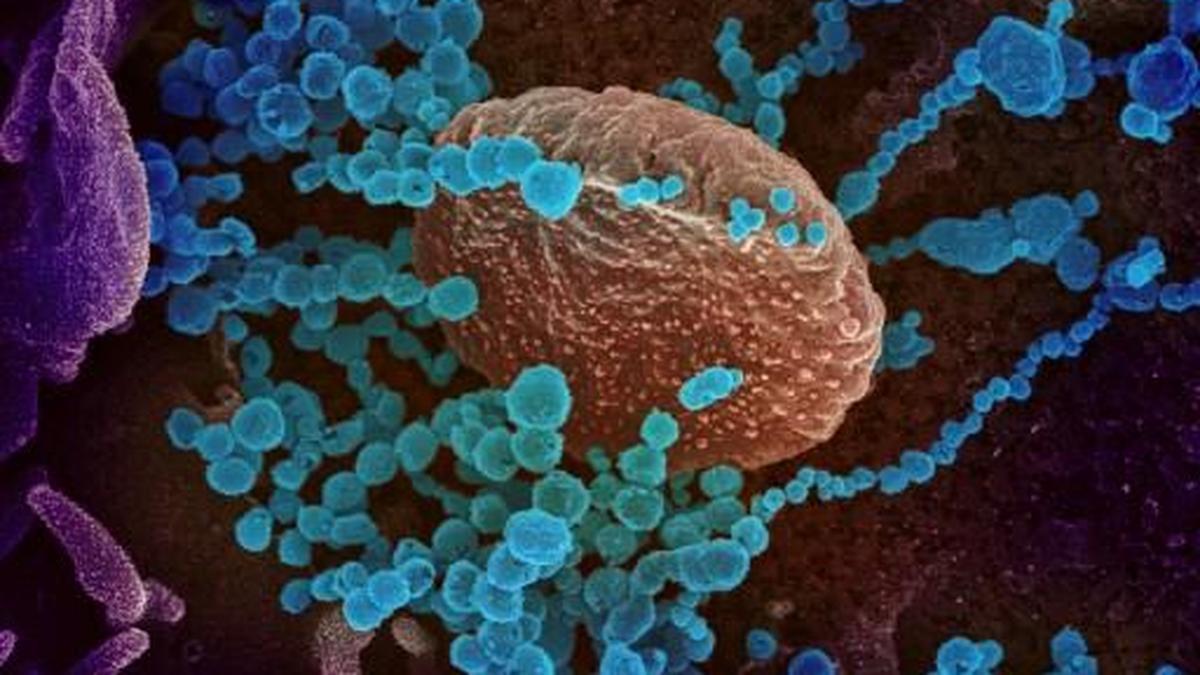
Hantavirus is not a new enemy, but it is a terrifyingly efficient one. Usually, it is a lonely disease. It lives in the guts of the long-tailed pygmy rice rat, a tiny creature that scuttles through the underbrush of the Andean forests. The virus sheds in the rat’s droppings and urine. When a person sweeps out a long-abandoned shed or clears a patch of brush, they kick up dust. They breathe. The virus enters.
In the standard medical textbooks, this is where the story ends. One person gets sick, their lungs fill with fluid, and they either survive or they don't. It is a tragedy, but a contained one. But what happened in Epuyén defied every established rule of the game. The virus wasn't just coming from the rats anymore. It had learned a new trick.
It was moving from person to person.
The horror of a respiratory virus that kills half of its victims is hard to overstate. When you realize that a simple conversation, a shared meal, or a goodbye kiss could be a death sentence, the very foundations of a community crumble. Trust becomes a liability. Love becomes a risk factor.
The Anatomy of a Collapse
Doctors in the region were used to the occasional Hantavirus Pulmonary Syndrome (HPS) case. They knew the drill: fever, muscle aches, and then the sudden, catastrophic "leak" where the capillaries in the lungs fail, drowning the patient from the inside out.
But the math in Epuyén stopped making sense. One case became five. Five became a dozen. The victims weren't just forest workers; they were the doctors treating them, the relatives sitting at their bedsides, and the guests from that single birthday party.
Dr. Jorge Elías, a local health official, found himself standing at the center of a nightmare. He had to tell a town built on communal strength that they had to stop being a community. No more mate—the traditional caffeinated drink shared from a single straw that defines Argentine social life. No more wakes. No more funerals. No more touching.
The scientists who flew in from Buenos Aires and the World Health Organization were baffled. They looked for a "super-spreader," a biological anomaly. They tested the rats, thinking perhaps the local rodents had developed a more potent strain. But the truth was more chilling. This specific strain, known as the Andes virus, had achieved a rare and deadly evolution. It had mastered the bridge between us.
The Invisible Stakes
To understand why this mattered far beyond the borders of a small mountain village, you have to look at the global map of emerging diseases. Most of the time, when a virus jumps from an animal to a human—what scientists call a "spillover"—it hits a dead end. The human is a "terminal host."
If the Andes virus had truly cracked the code for efficient human-to-human transmission, the world was looking at a potential pandemic that made the common flu look like a seasonal nuisance. Hantavirus has a mortality rate that can hover around 40%. For comparison, the 1918 Spanish Flu killed roughly 2.5%.
The stakes weren't just the lives of the people in Epuyén. The stakes were the possibility of this "Andes North" strain hitching a ride on a bus to Bariloche, then a plane to Buenos Aires, and then the world.
The response was draconian because it had to be. Health authorities didn't just suggest a quarantine; they enforced a digital and physical perimeter. People were confined to their homes by judicial order. Police patrolled the streets to ensure that families weren't gathering. In a town where the social fabric is the only thing that gets you through the winter, the isolation was a different kind of death.
The Weight of a Breath
Consider a hypothetical woman named Elena. She lives three houses down from the original outbreak. Her brother was at the party. Now, he is in the hospital, hooked to a ventilator that is struggling to push oxygen through lungs that have turned to sodden sponges. Elena wants to hold his hand. She wants to pray over him.
Instead, she is told she cannot leave her kitchen. She watches the mountain mists roll in through the window, wondering if the very air she breathes is an assassin. She listens to the radio, hearing the death toll climb. Each name is a neighbor. Each name is a memory.
This is the human cost of a biological mystery. It isn't just about the "origin of the outbreak" or "racking up data points." It is about the terror of the domestic. It is about the way a microscopic strand of RNA can turn a hug into a weapon.
The researchers worked frantically in high-containment labs, wearing pressurized suits that made them look like astronauts in a forest. They sequenced the viral genome. They found that the virus in the victims was nearly identical, confirming the chain of human transmission. It wasn't a series of separate jumps from rats; it was a single spark that had become a wildfire.
The Silence After the Storm
By the time the outbreak was declared over in early 2019, 34 people had been infected. Eleven were dead. In a small town, eleven deaths is not a statistic. It is a gaping hole in the town’s soul.
The origin was eventually traced back to that single social gathering, but the "why" remains a haunting question. Why did the virus choose that moment to jump? Why did it become so unusually aggressive in its transmission? Nature doesn't provide answers; it only provides results.
Today, the tourists are back in Epuyén. The hikers trek through the forests, their boots kicking up the dust of the Andean trails. The mate gourds are being passed around again, though perhaps with a lingering, subconscious hesitation.
The world moved on, distracted by newer, larger shadows. But for those who lived through the winter of the Andes virus, the lessons remain etched into the mountain stone. They know that we are not the masters of the wild places. We are guests, living on the sufferance of a world that breathes in ways we are only beginning to understand.
They know that the most dangerous thing in the world isn't a predator with teeth or claws. It is the breath of a friend in a warm room, carrying a secret that was never meant for us.
The forest looks the same as it always did—silent, majestic, and indifferent. The rats still scuttle through the leaf litter. The wind still whistles through the pines. But in Epuyén, people listen to that wind a little more closely now, aware that sometimes, the air itself can turn against you.