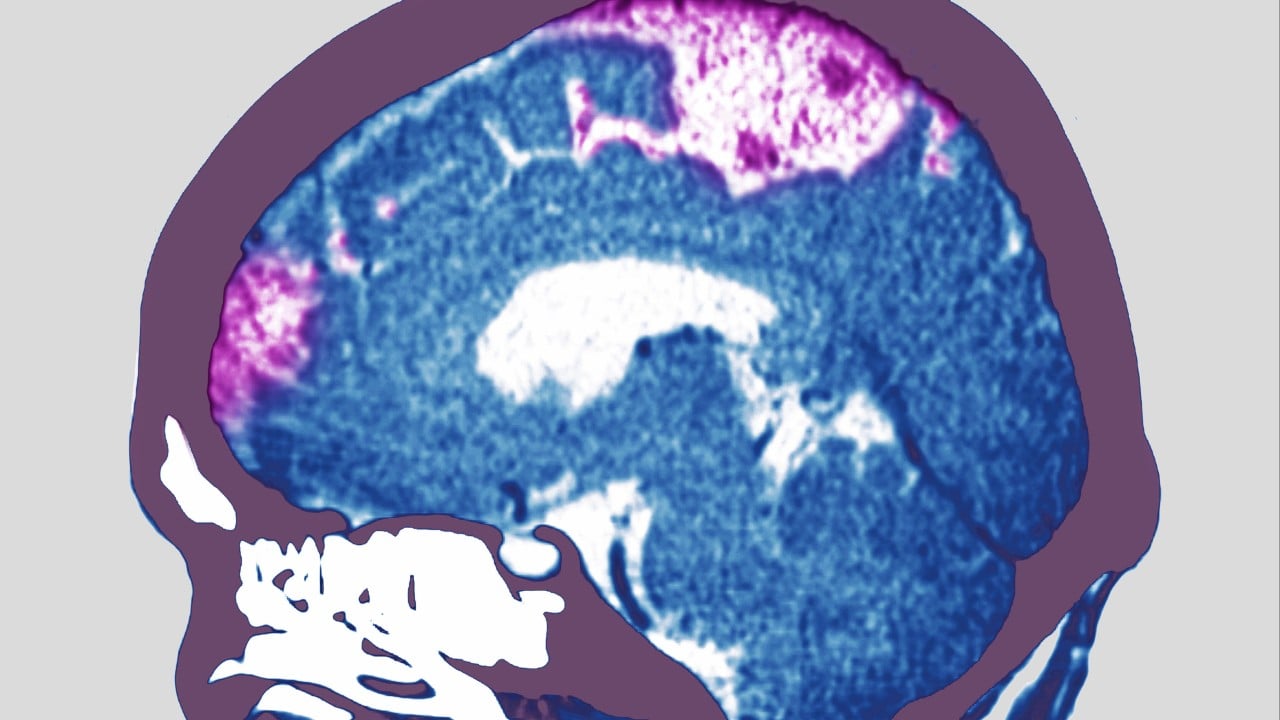
The hospital room in Hong Kong is quiet, save for the rhythmic, mechanical hiss of a ventilator. On the bed lies a man we will call Mr. Chen. He is sixty-two years old. Yesterday, he was a grandfather who enjoyed his morning dim sum and argued about the stock market. Today, he is a casualty of a biological lightning strike. A blood vessel in his brain has blocked, starving his neurons of oxygen.
In the medical world, we call this an ischemic stroke. But for Mr. Chen, it is an erasure. Memories, motor skills, and the very essence of his personality are flickering like a candle in a gale. For a more detailed analysis into this area, we recommend: this related article.
When a stroke hits, the clock doesn't just tick; it screams. Every minute that passes without blood flow means 1.9 million neurons die. By the time Mr. Chen reached the emergency room, the immediate danger of the clot was being managed, but a second, more insidious enemy was waking up.
This enemy is inflammation. When brain cells die, they release distress signals that trigger a massive immune response. It is a biological paradox: the body tries to heal itself by sending in a clean-up crew, but that crew often brings a sledgehammer. The brain begins to swell. This "secondary injury" can be more devastating than the stroke itself, turning a recoverable injury into a permanent disability. For further information on this topic, in-depth reporting can be read on National Institutes of Health.
The Hollywood Drug in a Lab Coat
While Mr. Chen fought for his life, a group of scientists at the University of Hong Kong were looking at a pen—a small, pre-filled injector that has dominated global headlines for the better part of two years.
You know the name. GLP-1 receptor agonists.
The world recognizes them as the "skinny jab." They are the reason celebrities suddenly have hollowed-out cheekbones and why pharmaceutical stocks have soared into the stratosphere. Originally designed to manage Type 2 diabetes by mimicking a gut hormone that regulates insulin, these drugs found a second, more lucrative life as weight-loss miracles.
But the researchers in Hong Kong aren't interested in waistlines. They are interested in the fire inside Mr. Chen’s skull.
The central nervous system was once thought to be a fortress, protected by the blood-brain barrier. We used to believe that what happened in the gut stayed in the gut. We were wrong. It turns out the brain is peppered with GLP-1 receptors, like tiny satellite dishes waiting for a signal.
Beyond the Needle
The Hong Kong team, led by experts who have spent decades studying the intersection of metabolism and neurology, noticed something startling in their data. Patients who were already taking GLP-1 drugs for diabetes seemed to have a "shield" they didn't know they were wearing.
Statistics began to tell a story that the marketing campaigns ignored. When these researchers analyzed clinical records and conducted animal model studies, they found that GLP-1 didn't just lower blood sugar. It acted as a potent anti-inflammatory agent directly within the neural tissue.
Think of the brain after a stroke as a forest fire. The standard treatment—clot-busting drugs—is like cutting a firebreak. It stops the spread. But GLP-1 behaves like a specialized chemical suppressant dropped from a plane. It targets the "microglia," the brain’s resident immune cells.
In a normal state, microglia are like diligent gardeners, pruning dead connections and keeping things tidy. After a stroke, they become frenzied. They pump out toxic chemicals called cytokines that kill neighboring healthy cells. GLP-1 enters the fray and whispers a command to these cells: Calm down.
It flips the switch from a pro-inflammatory state to a neuroprotective one. In the Hong Kong trials, the results were not just statistically significant; they were visual. Brain scans of subjects treated with GLP-1 analogs showed smaller "infarct volumes"—meaning less of the brain had actually died compared to those without the drug.
The Invisible Stakes of the Aftermath
We often celebrate the "save" in medicine. The surgeon who removes the tumor, the EMT who restarts the heart. But the true tragedy of a stroke is the long, gray "after." It is the three years of speech therapy. It is the husband who can no longer remember his wife’s name. It is the loss of dignity that comes with being unable to hold a spoon.
This is where the Hong Kong research shifts from interesting chemistry to a moral imperative.
If GLP-1 can dampen the secondary fire of inflammation, it extends the window of recovery. It changes the "after." By protecting the neurons in the "penumbra"—the area surrounding the dead tissue that is damaged but not yet lost—these drugs give patients a fighting chance to keep their independence.
However, there is a catch. The medical community is cautious, and for good reason.
The brain is the most complex machine in the known universe. Shuttling a metabolic drug into a neurological crisis is not as simple as giving a patient a shot and hoping for the best. We still don't fully understand the long-term implications of altering brain chemistry in the acute phase of a stroke. There are questions about dosage, timing, and the potential for side effects that could complicate a patient’s fragile state.
The Irony of Abundance
There is a bitter irony currently playing out in global health. While the wealthy are clamoring for these injections to fit into smaller clothes, Mr. Chen and thousands like him are waiting for clinical trials to prove what the Hong Kong scientists suspect.
The supply chain is bucking under the pressure of vanity.
This creates a tension that the scientists feel daily. Every milligram of the drug diverted to a lifestyle choice is a milligram that isn't available for a clinical trial that could redefine stroke recovery. The researchers in Hong Kong aren't just fighting biology; they are fighting a market that has prioritized the "now" of the mirror over the "future" of the neurological ward.
But the data is stubborn. It refuses to be ignored.
Recent studies have shown that these drugs may also reduce the buildup of amyloid plaques—the sticky proteins associated with Alzheimer’s. Others suggest a benefit for Parkinson’s. The gut-brain axis, once a fringe theory, has become the center of a medical revolution. The "gut hormone" is actually a master key, and we are just beginning to see which doors it can unlock.
The Mechanic and the Masterpiece
Imagine your brain is a masterpiece of clockwork, millions of tiny gears turning in perfect synchronization. A stroke is a wrench thrown into the gears. The metal twists, the heat rises, and the friction begins to melt the surrounding components.
The standard approach has always been to pull the wrench out. That's vital. But the Hong Kong team is teaching us how to cool the metal before it melts.
They are looking at the GLP-1 molecule not as a weight-loss tool, but as a stabilizing force. It is the difference between a house that is partially damaged and a house that is a total loss.
When we look at Mr. Chen, we shouldn't just see a patient. We should see the high stakes of this research. If the scientists are right, the future of stroke treatment won't just be about what happens in the first hour in the ER. It will be about the quiet protection provided by a hormone we thought we already understood.
The hospital lights flicker. Mr. Chen’s daughter sits by the bed, holding his hand, watching the monitor. She doesn't know about the GLP-1 receptors or the microglial polarization. She just wants her father back.
Science moves slowly, burdened by the weight of proof and the necessity of caution. But in the labs of Hong Kong, the narrative is shifting. The drug that changed the way the world looks at its reflection may soon be the drug that allows us to keep our souls intact after the storm.
We are standing on the edge of a new understanding of resilience. The fire is burning, but for the first time, we might have a way to turn down the heat before everything turns to ash.
The needle is ready. The data is clear. The only thing left is to decide who gets to be saved.


