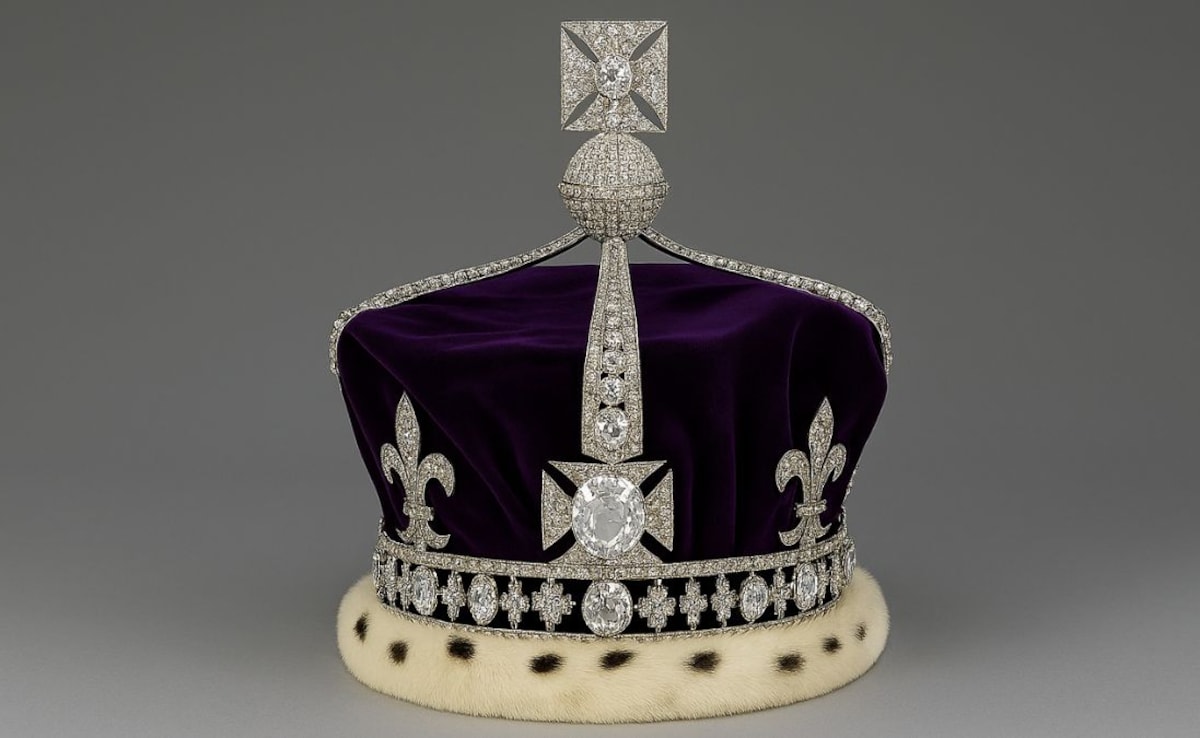
In the sterile, climate-controlled silence of the Tower of London, a single object exerts a gravitational pull that spans continents and centuries. It sits behind reinforced glass, a 105.6-carat teardrop of carbon that seems to swallow the room's light only to spit it back out in a cold, fractured prism. To a casual tourist with a ticket and a camera, it is the Kohinoor. To a historian, it is a fossilized scream of imperial ambition. To Zohra, a fictional but representative student from Punjab standing in that very queue, it is a stolen piece of her grandfather’s bedtime stories.
She looks at the stone and sees more than a mineral. She sees the palm of a ten-year-old king. You might also find this connected story interesting: Geopolitical Transactionalism and the NATO Ukraine Iran Triad.
The recent call by New York City Council Member Zohran Mamdani for the British monarchy to return the diamond has reignited a fire that never actually went out; it just smoldered in the basement of global diplomacy. Mamdani’s stance isn’t merely about a rock. It is about the heavy, lingering ghost of the British Raj and the fundamental question of who owns history when history was written by the person holding the sword.
The Weight of a Ten Year Old King
History is rarely a clean transaction. We like to imagine treaties signed in grand halls with fountain pens and mutual respect. The reality of the Kohinoor is far grittier. Imagine a boy, Duleep Singh, the last Maharaja of the Sikh Empire. He was ten years old. His mother was imprisoned. His kingdom was collapsing under the weight of British "annexation"—a polite Victorian word for a takeover. As discussed in latest articles by Al Jazeera, the effects are notable.
The Treaty of Lahore in 1849 was the document that legally "gifted" the Kohinoor to Queen Victoria. But logic dictates a simple truth: a child under duress cannot give informed consent. If you take a toy from a crying child while holding his hand behind his back, you haven't received a gift. You've committed a theft with better paperwork.
The stone traveled from the humid heat of India to the damp gray of London, but it didn't arrive as the polished sparkler we see today. It was larger then, nearly 186 carats, but it lacked the specific "brilliance" the British public expected. Prince Albert, obsessed with modernity, ordered it recut. In that process, the diamond lost 40% of its weight. It was literally trimmed to fit a Western aesthetic, a metaphor so heavy it almost writes itself. The "Mountain of Light" was shaved down to fit a British crown.
A Curse Written in Masculine Ink
There is a superstition whispered in the corridors of the subcontinent that the Kohinoor carries a lethal curse for any man who wears it. Legend says that only God or a woman can wear it with impunity. Whether you believe in the metaphysical or not, the historical record is remarkably bloody.
Before it reached the British, the diamond passed through the hands of the Mughals, the Persians, the Afghans, and the Sikhs. Each transition was marked by blinding, poisoning, or decapitation. Shah Shuja Durrani, an Afghan ruler, was tortured for the stone. He eventually fled to the Punjab, where Maharaja Ranjit Singh—the "Lion of Punjab"—acquired it. Ranjit Singh wore it on his arm, a symbol of a unified, sovereign India that stood defiant against the encroaching East India Company.
When Ranjit Singh died, the lion’s shadow vanished, and the vultures moved in. The British didn't just want the territory; they wanted the talisman. They understood that to break a people, you must take the things they find sacred.
The Myth of Universal Heritage
The most common defense for keeping the diamond in London is the concept of "Universal Heritage." The argument suggests that institutions like the British Museum or the Tower of London are the world’s libraries, keeping treasures safe for all of humanity to see. It’s a beautiful sentiment on the surface.
Beneath that surface, however, lies a staggering arrogance.
It suggests that the original owners—India, Pakistan, Iran, or Afghanistan, all of whom have claimed the stone—are somehow incapable of stewardship. It implies that the only way to truly appreciate a piece of Eastern history is through a Western lens, behind a British barrier. When Mamdani backs the return of the Kohinoor, he is challenging the idea that the "spoils of war" are a valid legal category in the 21st century.
Consider the logistical reality. If a person walks into a pawn shop today with a watch that was stolen three generations ago, the police don't care how much the current "owner" loves it. The chain of title is broken. The Kohinoor represents a broken chain of title on a global, multi-trillion-dollar scale.
Beyond the Carats
What is the Kohinoor actually worth? Economically, it is priceless. You cannot put a market value on a stone that has never been sold on an open market for centuries. But the human cost is where the math gets complicated.
For the people of India, the diamond is a missing limb. Its absence is a physical reminder of the $45 trillion that some economists, like Utsa Patnaik, estimate was drained from India during the colonial era. The diamond is the most visible, sparkling symptom of a much deeper, much more painful extraction.
When people ask why we are still talking about a rock in 2026, they are missing the point. We are talking about the dignity of a billion people. We are talking about the right to hold one's own past in one's own hands.
The Shifting Tides of Restitution
The world is changing. We have seen the return of the Benin Bronzes to Nigeria. We have seen ancestral remains returned to Indigenous tribes in North America and Australia. The "Finders Keepers" school of international law is dying a slow, necessary death.
The British government often points to the 1963 British Museum Act or similar legal structures that prevent the "de-accessioning" of artifacts. They argue their hands are tied by their own laws. It is a convenient circle of logic: We can't give it back because we made a law saying we don't have to give it back.
But laws are human inventions. They can be unmade just as easily as they were drafted. What lacks is not the legal mechanism, but the moral courage to admit that the Victorian era ended a long time ago.
A Stone Without a Country
The Kohinoor’s journey is also complicated by the map itself. When the British took the diamond, "India" was a different geographic entity. Today, the modern nations of India, Pakistan, and Afghanistan all lay claim to it. Some use this geopolitical knot as an excuse to do nothing. "Who would we even give it to?" they ask, throwing their hands up in faux-frustration.
This is a stalling tactic. The difficulty of the solution does not erase the necessity of the justice. Whether the stone sits in a museum in Delhi, a shrine in Lahore, or is shared in a rotating exhibition across the subcontinent, the primary requirement is its removal from the hands of the people who took it by force from a child.
The Silent Gaze
Back in the Tower of London, the line moves forward. Zohra reaches the front. She has thirty seconds to look before the guards usher her along.
She sees her own reflection in the glass, superimposed over the diamond. For a moment, the two images merge. The diamond sits on her forehead like a bindi, a ghostly weight of what was and what could have been. She doesn't feel a sense of "universal heritage." She feels a sharp, cold pang of longing.
The diamond is famous for its "water"—the clarity and flow of its internal light. But as the sun sets over the Thames, the light inside the Kohinoor looks less like water and more like a tear, frozen in time, waiting for the warmth of a home it hasn't seen in nearly two hundred years.
The British Crown Jewels are meant to project power, permanence, and a divine right to rule. But as the global conversation shifts, as voices like Mamdani’s grow louder, that power starts to look brittle. A crown held together by stolen glue cannot stay intact forever. The Mountain of Light was never meant to be a trophy. It was meant to be a sovereign's pride, and until it returns to the soil from which it was plucked, it will remain the most beautiful evidence of a crime ever put on public display.