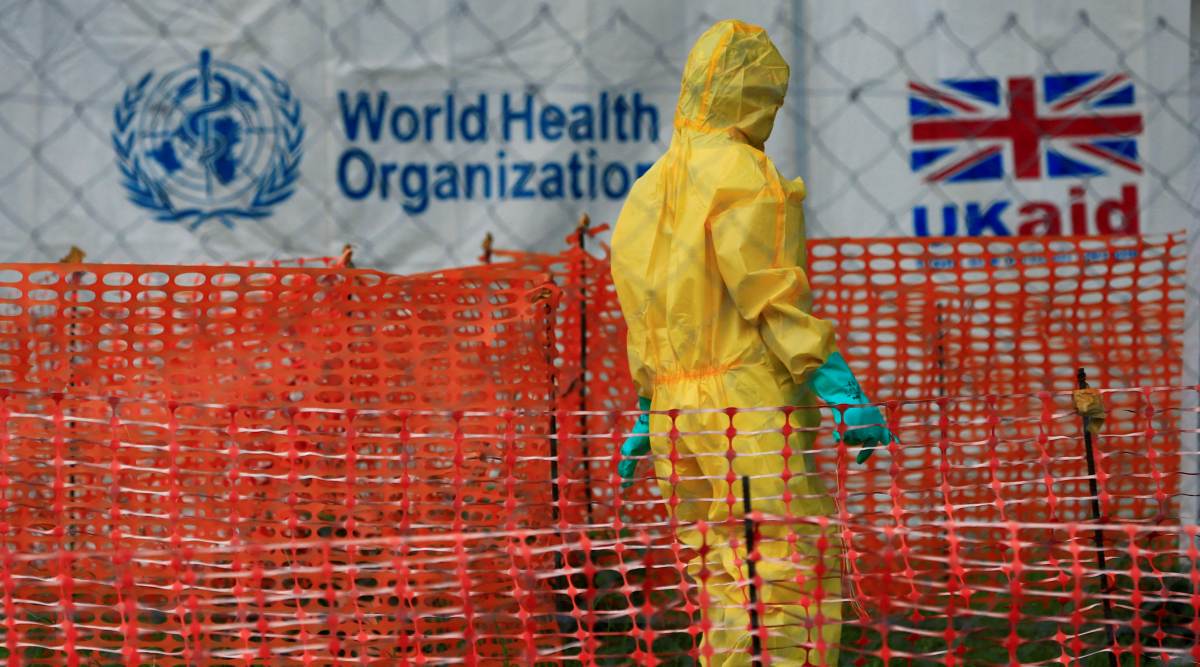
The World Health Organization just triggered its highest alarm, declaring the sudden surge of Ebola cases across the Democratic Republic of the Congo and Uganda a Public Health Emergency of International Concern. In the public imagination, an Ebola declaration conjures images of the 2014 West African devastation or the highly organized, vaccine-backed responses in North Kivu. But the bureaucrats and epidemiologists drafting the emergency declarations in Geneva know a darker reality. This is not the Ebola the world knows how to fight. The conventional global health playbook, built on a foundation of rapid ring vaccination and standardized monoclonal antibody treatments, is entirely useless against this specific threat.
The crisis is driven by the Bundibugyo virus, a rare variant of the Ebola genus that has blindsided health authorities in the conflict-ridden Ituri province of the DRC before spilling into the Ugandan capital of Kampala. As of mid-May 2026, the official ledger stands at eight laboratory-confirmed cases, 246 suspected cases, and 80 suspected deaths. Those numbers are a dangerous fiction. They represent only what a broken, insecure surveillance network can see in a region defined by informal healthcare clinics and displaced populations moving through dense mining corridors.
The actual scale is almost certainly vastly larger. What makes this declaration genuinely terrifying to the global health apparatus is a stark, absolute technical reality. There are no approved vaccines for the Bundibugyo strain. There are no approved therapeutics. The international community is standing before an accelerating regional outbreak completely empty-handed, relying on containment strategies from the 1970s.
The Fatal Flaw of Targeted Innovation
For the last decade, global health organizations celebrated the conquest of Ebola as a triumph of modern biotechnology. The deployment of Ervebo, a highly effective vaccine developed against the Zaire ebolavirus strain, alongside breakthrough antibody treatments like Inmazeb and Ebanga, effectively transformed a terrifying hemorrhagic fever into a manageable, preventable disease.
That success created a profound, systemic complacency.
The global pharmaceutical pipelines and emergency stockpiles were built entirely around the Zaire strain because it was the most frequent killer. Viruses do not respect bureaucratic focus. The Bundibugyo strain, which last caused a major outbreak in 2012, has a completely different genetic architecture. The antibodies designed to lock onto the Zaire strain cannot recognize it. The current stockpiles of Ervebo are completely inert against it.
By focusing research, funding, and manufacturing on a single variant, the international biosecurity infrastructure built a magnificent wall against one door while leaving the side gate wide open. Now, health workers on the ground in Bunia, Rwampara, and Mongbwalu are forced to confront an infection with an incubation period of up to 21 days using nothing but basic supportive care, fluids, and hope.
The Anatomy of a Silent Spread
The geography of this outbreak explains why containment is failing. The epicenter sits in the Mongbwalu health zone of eastern DRC, a high-traffic gold mining region characterized by an incredibly mobile, transient workforce. Miners move fluidly between deep forest camps, semi-urban trading hubs, and across the porous western border into Uganda.
When an individual falls ill in a remote mining camp, they do not visit a state-of-the-art public hospital. They visit informal, unregulated community drug shops or traditional healers. Early symptoms of Bundibugyo virus disease are completely indistinguishable from everyday regional killers. A fever, profound fatigue, muscle aches, and a sore throat look exactly like malaria, typhoid, or a severe seasonal influenza.
[Infected Individual in Forest Mining Camp]
                  │
                  ▼
   [Informal Community Drug Shop] ──► (Infection of Health Workers)
                  │
                  ▼
     [Transit via Public Routes]
        ├──► [Bunia Capital City]
        └──► [Cross-Border to Kampala, Uganda]
By the time severe hemorrhagic symptoms manifest, the patient has already passed through multiple hands. This diagnostic delay is exactly how the virus achieved amplification. At least four healthcare workers have already died in Ituri after treating patients without adequate personal protective equipment. The virus managed to embed itself within the local medical infrastructure before anyone realized an outbreak had even begun.
The sudden appearance of two independent, laboratory-confirmed cases in the intensive care units of Kampala, Uganda—with absolutely no apparent epidemiological links to each other—proves that the virus has been circulating silently along major transit corridors for weeks. When an outbreak becomes urban, the mathematical modeling of contact tracing shifts from difficult to nearly impossible.
The Broken Emergency Machine
The WHO declaration is intended to unlock international funding, mobilize rapid response teams, and force donor nations to pay attention. History suggests the mechanism is deeply flawed. When the WHO declared a global emergency for the mpox resurgence, the bureaucratic gears ground so slowly that diagnostic tests and therapeutics failed to reach the frontlines in Central Africa until well after the peak of transmission had done its damage.
International declarations often trigger a predictable, counterproductive reflex among wealthy nations: isolationism. Despite explicit directives from the WHO advising against international travel or trade restrictions, countries routinely implement border closures and flight bans when the word "Ebola" hits the headlines.
These restrictions do not stop a virus. They merely break the supply chains required to send personal protective equipment, mobile laboratories, and specialized medical personnel into the hot zone. Furthermore, closing official border checkpoints simply forces highly mobile populations to utilize unmonitored, informal forest paths, completely blinding border surveillance teams and accelerating untraceable transmission.
Returning to Basic Epidemic Warfare
Because modern biomedical interventions are non-existent for this strain, the response must rely entirely on the brutal, exhausting fundamentals of classical epidemiology.
- Active Zero-Reporting Surveillance: Every clinic, no matter how small or informal, must actively report a daily count of fever cases, changing the passive system into an aggressive dragnet.
- Rapid Deployed Mobile PCR Labs: Field diagnostics must be placed directly inside high-risk zones like Mongbwalu to cut the turnaround time for blood samples from days to hours.
- Aggressive Community-Led Isolation: Outbreak response teams must work through local and religious leaders rather than relying on militarized or top-down government mandates, which historically breed deep community distrust and drive cases underground.
- Safe and Dignified Burials: Because the viral load is highest in the deceased, traditional funeral practices involving direct contact with the body must be replaced with trained, protected teams without alienating grieving families.
If the international community treats this purely as a localized African crisis, the cost will be measured in thousands of lives. The emergence of the Bundibugyo strain in major urban centers like Kampala demonstrates that the luxury of ignoring rare pathogens has expired. The current emergency requires an immediate pivot toward broad-spectrum filovirus therapeutics and multi-valent vaccines capable of neutralizing the entire Ebola genus, rather than gambling global biosecurity on a single, predictable variant. Containment cannot wait for a pharmaceutical breakthrough that is years away; it must be won or lost in the clinics and mining camps of Ituri today.