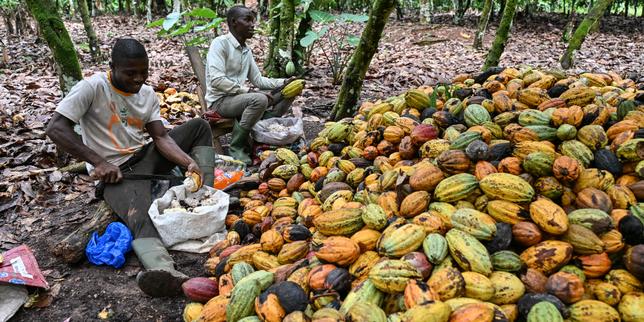
The global chocolate industry is currently eating its own future. For decades, the Ivory Coast has served as the engine of the world’s confectionery appetite, producing nearly 40% of the globe’s cocoa beans. Yet, in a move that signals a profound systemic failure, the Ivorian government recently slashed the guaranteed farmgate price paid to its farmers. This isn't just a market fluctuation. It is a calculated admission that the current model of commodity pricing is broken beyond immediate repair. While consumers in London and New York pay record premiums for "artisanal" bars, the people actually growing the crop are being forced to absorb the shocks of a volatile global market they didn't create and cannot control.
The decision by the Conseil Café-Cacao (CCC) to reduce the purchase price is a desperate attempt to stabilize a domestic economy reeling from under-production and climate instability. By lowering the price, the state aims to protect its marketing body from insolvency, but it does so by pushing the Ivorian farmer further below the poverty line.
The Mechanics of a Managed Collapse
To understand why the price is falling while your chocolate bar gets more expensive, you have to look at how the Ivory Coast manages its wealth. Unlike free-market producers, Ivorian cocoa is sold through a forward-selling system. The CCC sells the vast majority of the expected harvest months in advance to secure a stable price. This worked for years. It provided a floor that protected farmers when prices dipped.
But the system has a fatal flaw. When global prices spike due to shortages—as they did recently when the London and New York exchanges saw prices hit historic highs above $10,000 per ton—the Ivorian farmer doesn't see a dime of that upside. Their price was locked in a year ago when the market was trading at a fraction of that value. Now, with a harvest ravaged by the swollen shoot virus and erratic rainfall, there aren't enough beans to fulfill those old, cheap contracts. The government is essentially paying for yesterday’s mistakes with today’s meager harvest.
The state is trapped. If they raise the farmgate price to match the current "spot" market, they risk a total fiscal meltdown if the market corrects itself next month. So, they play it safe. They keep the price low to build a reserve, effectively taxing the poorest people in the supply chain to insure the state against future volatility. It is a brutal form of macro-economic survival.
Climate Change is Not a Theoretical Threat
We often speak of environmental shifts as something looming on the horizon. In the cocoa belt of West Africa, the horizon arrived two years ago. The Harmattan winds, which blow dust from the Sahara, have become more intense and unpredictable. The rainy seasons, once as reliable as a Swiss watch, are now characterized by "false starts" that trick cocoa trees into flowering early, only for the buds to wither in a subsequent drought.
The Swollen Shoot Epidemic
It isn't just the weather. The cocoa swollen shoot virus (CSSV) is tearing through plantations. There is no cure. The only solution is to cut down the infected tree, treat the soil, and wait five years for a new seedling to reach maturity. For a farmer living on less than $1.50 a day, cutting down their source of income is a death sentence.
When the government reduces the farmgate price, they are removing the only capital these farmers have to fight the virus. Without money for fertilizers or specialized treatments to bolster tree immunity, the farmers watch their groves die. This creates a vicious cycle. Lower yields lead to lower national revenue, which leads to lower farmgate prices, which ensures that the next year’s yield will be even worse.
The Myth of the Living Income Differential
A few years ago, the Ivory Coast and Ghana teamed up to create the Living Income Differential (LID), a $400-per-ton premium intended to go directly to farmers. It was hailed as a victory for labor rights. In reality, it has become a shell game.
Large multinational chocolate companies publicly support the LID in their ESG reports. Privately, their buying agents often negotiate "origin differentials" down to offset the cost. If the LID adds $400, but the market discount for Ivorian beans increases by $300, the farmer has gained almost nothing. The recent price cut at the national level effectively erases any benefit the LID was supposed to provide.
The industry is structured to prioritize "price discovery" on trading floors in the Global North rather than "cost of production" in the Global South. As long as a trader in Chicago has more influence over the price of a bean than the woman who harvested it in Soubré, the crisis will persist.
Corporate Responsibility or Sophisticated PR
The major players in the chocolate industry—the processors and the brand owners—are currently reporting record revenues. They have successfully passed on increased raw material costs to the consumer. They cite "inflation" and "supply chain disruptions" as the reasons for the $8 chocolate bar.
What they rarely mention is that their profit margins are being defended at the expense of the Ivorian agricultural sector. The "sustainability" programs touted by these firms often focus on teaching farmers how to be more efficient. But you cannot "efficient" your way out of a price that is fundamentally below the cost of living.
The current situation reveals a stark truth. The chocolate industry does not want high cocoa prices; it wants stable, low prices. High prices, even if they reflect a fair wage for farmers, create volatility that shareholders hate. By staying silent while the Ivorian government slashes prices, the industry is complicit in a system that ensures the next generation of West Africans will want nothing to do with cocoa farming.
The Flight From the Land
Go to the cocoa-growing regions today and you will see a demographic shift that should terrify every chocolate executive. The average cocoa farmer is over 50 years old. Their children are moving to Abidjan or attempting the dangerous journey to Europe. They have seen their parents work 12-hour days in grueling heat only to have their income slashed by a government decree.
If the Ivory Coast continues to squeeze the producer to save the state treasury, there will eventually be no producers left. Farmers are already diversifying into rubber or palm oil—crops that require less intensive labor and offer more predictable returns. Some are even selling their land to "galamsey" (illegal gold miners), a move that provides a one-time windfall but permanently destroys the soil for agriculture.
The reduction in the purchase price is more than a budget adjustment. It is a signal to the youth of West Africa that cocoa is a dead-end path.
Rebuilding the Value Chain
Fixing this requires more than just a higher price point. It requires a fundamental restructuring of how cocoa is traded.
- Transparency in the Forward-Selling System: The CCC operates in a "black box." Farmers have no visibility into how many beans have been sold or at what price. True reform starts with an open ledger.
- Local Processing: The Ivory Coast must stop exporting raw beans and start exporting value-added products. By grinding their own cocoa into butter and powder, they can capture a larger share of the profit margin and reduce their dependence on the whims of the London exchange.
- Direct-to-Farmer Contracts: Small-scale chocolate makers are already doing this. They bypass the state-run auctions and pay farmers directly based on quality and labor standards. Scaling this to a national level is difficult, but necessary.
The Ivory Coast's decision to slash prices is a short-term survival tactic that guarantees long-term failure. You cannot build a multi-billion dollar luxury industry on a foundation of desperate poverty. Every time a farmer is told they must accept less so that a system can survive, the system itself moves one step closer to its inevitable end.
The next time you look at a chocolate bar, understand that its price is an illusion. You aren't paying for the cocoa. You are paying for the marketing, the packaging, and the massive corporate overhead of firms that have outsourced their primary risk to the poorest people on earth.
Demand a breakdown of the farmgate price on every premium label you buy.