Heineken is pulling the plug on the Democratic Republic of Congo. After nearly a century of navigating coups, hyperinflation, and civil wars, the world’s second-largest brewer has decided that the Congolese market is no longer worth the headache. While the official narrative points to a "strategic review" and "challenging macro-economics," the reality is far more brutal. Heineken isn't just leaving because of a bad quarter; they are fleeing a perfect storm of crumbling infrastructure, predatory taxation, and a consumer base that can no longer afford a cold beer.
The exit marks the end of an era for Bralima, the historic Congolese subsidiary that once served as the gold standard for industrial success in Central Africa. For decades, if you wanted to see how a multinational could thrive in a "frontier market," you looked at Bralima. They built roads to get their trucks through, they ran their own power grids, and they managed a supply chain that defied logic. But even the most seasoned corporate giants have a breaking point. When the cost of simply existing exceeds the potential for long-term profit, the sentiment of "history" becomes a liability on the balance sheet.
The Logistics of a Failed State
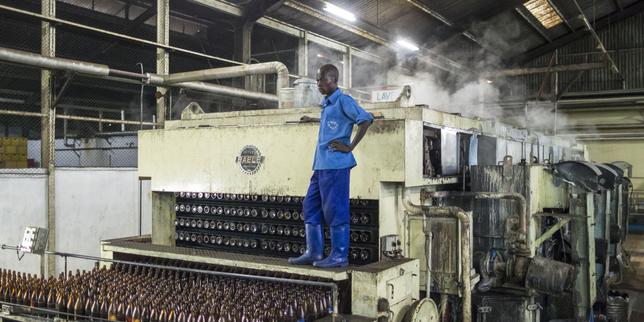
Operating in the DRC is an exercise in masochism. To sell a bottle of Primus in Goma or Bukavu, Heineken had to overcome obstacles that would bankrupt a lesser company in weeks. The national power grid is a ghost. In many regions, the "grid" is nothing more than a collection of rusted wires and wishful thinking. This meant Heineken had to operate as its own utility company, burning millions of liters of diesel every year just to keep the fermentation tanks at the right temperature.
Then there is the physical movement of goods. The DRC is a country the size of Western Europe with fewer paved roads than a small American county. To get product from the breweries to the kiosks, the company relied on a crumbling network of river barges and ancient trucks that frequently spent weeks bogged down in equatorial mud. As the security situation in the east deteriorated over the last year, those routes became not just expensive, but deadly. Rebel groups and various militias began taxing the supply lines more effectively than the central government.
Taxing a Ghost
Kinshasa is hungry for revenue, and they have a habit of squeezing the few formal entities that actually keep records. Heineken, as one of the largest taxpayers in the country, became an easy target. The Congolese government has a history of imposing "extraordinary" levies and retroactive tax adjustments that make financial planning impossible.
When a government faces a budget shortfall, they don't look for new industries to tax—they look at who is still standing. Bralima was still standing. The constant shifting of the tax burden, combined with the volatility of the Congolese Franc, turned a high-volume, low-margin business into a consistent loser. Multinational corporations are willing to tolerate high risk if the reward is proportional. In the DRC, the risk kept climbing while the rewards evaporated into a haze of currency devaluation.
The Rise of the Informal Competitor
While Heineken was busy complying with labor laws and environmental standards, a massive informal market began to eat their lunch. Small-scale, unregulated spirit production and cheap imports from neighboring countries flooded the market. These products don't pay VAT. They don't pay excise duties. They don't worry about carbon footprints.
The average Congolese consumer is currently facing a cost-of-living crisis that makes a premium lager a luxury beyond reach. When the price of basic maize flour doubles, the "affordable" beer becomes the first thing to go. Heineken tried to pivot to lower-cost brands and different packaging, but they couldn't compete with the price point of moonshine or smuggled goods. You cannot win a price war against a competitor that doesn't exist on paper.
A Pattern of African Retreat
This isn't an isolated incident. We are seeing a broader trend where Western multinationals are quietly scaling back their African ambitions. Diageo, another beverage titan, recently sold its controlling stake in Guinness Nigeria. The "Africa Rising" narrative of the early 2010s has been replaced by a cold, hard look at the "Ease of Doing Business" rankings.
Companies are realizing that the middle class they were promised hasn't materialized at the scale required to support massive industrial footprints. Instead of a billion consumers, they found a billion people struggling under the weight of systemic corruption and failing currencies. Heineken's departure from the DRC is a signal to the rest of the world. If the most resilient player in the game decides to walk away, the locker room is officially on fire.
The Human Cost of Corporate Exit
When a giant like Bralima shuts down or scales back to a mere shell, the ripple effect is devastating. Thousands of direct employees lose stable, middle-class wages. Tens of thousands of distributors, bar owners, and transport contractors lose their primary source of income.
The Congolese government loses one of its most reliable sources of hard currency and tax revenue. It is a feedback loop of decline. As the big players leave, the tax base shrinks, leading the government to squeeze the remaining players even harder, which in turn accelerates their departure. Heineken didn't just sell beer; they provided a rare island of corporate structure in a sea of informality.
Strategic Realignment or Total Defeat
Heineken will frame this as a move to focus on higher-growth markets like Brazil or Mexico. They will talk about "capital allocation" and "portfolio optimization." But make no mistake: this is a retreat. They are abandoning a territory they held through the darkest days of the Mobutu era and the Great African War.
The decision-makers in Amsterdam have looked at the projections and decided that the DRC is no longer a "growth market"—it is a "sinkhole." For the Congolese people, it is a sign that the international community is losing faith in the country's ability to provide a stable environment for investment. When the beer stops flowing, it’s usually because the foundations of the economy have already crumbled.
The departure of Heineken is a clear warning that the era of the "frontier market" darling is over. Investors are no longer interested in potential; they are interested in protection. If a country cannot protect the basic infrastructure and legal certainty required to brew and sell a bottle of beer, it cannot expect to participate in the global economy. Heineken is moving on. The DRC is left with the hangover.