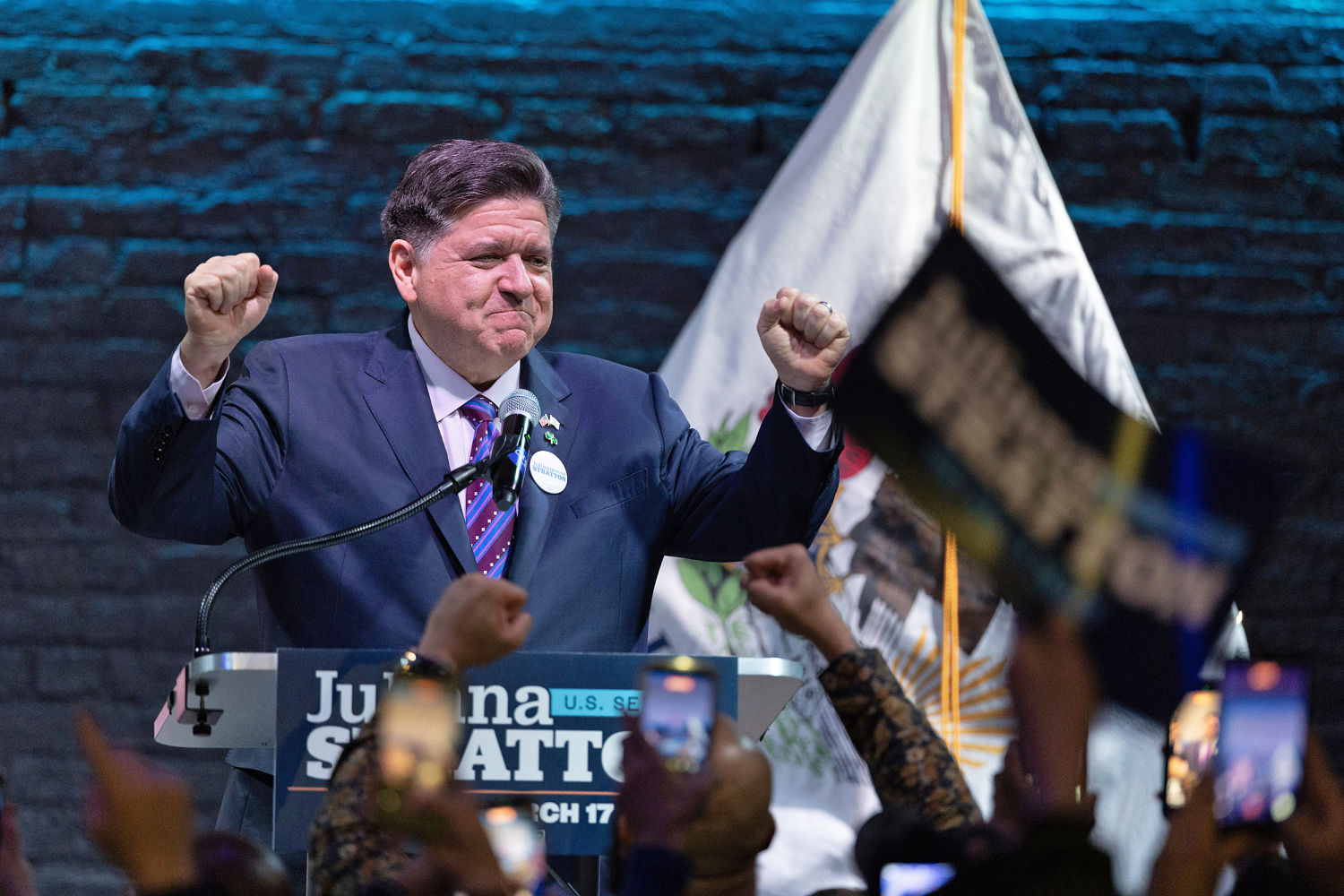
The air in Chicago during a primary election cycle doesn't smell like democracy. It smells like damp asphalt, ventra cards, and the metallic tang of the ‘L’ train screeching over rusted iron. In the high-ceilinged war rooms of the Gold Coast, the air is different. It’s filtered, pressurized, and silent. This is where JB Pritzker lives—not just in a physical mansion, but in the rarefied strata of the American elite. Yet, if you watched him walk into a diner in Peoria, you’d see a man who has painstakingly mastered the art of looking like he actually enjoys the lukewarm coffee.
That is the Pritzker paradox. He is an heir to the Hyatt Hotel fortune, a man whose surname is etched onto architectural prizes and hospital wings. By all rights, he should be an easy target—a caricature of the out-of-touch plutocrat. Instead, he has become the most formidable kinetic force in Midwestern politics. The recent Illinois election results didn't just provide a win for his party; they served as a proof of concept. He has built a political machine that functions with the cold, calculated efficiency of a private equity firm, but it speaks with the voice of a neighbor.
The Architecture of a Quiet Takeover
Politics in the Land of Lincoln used to be a game of backrooms and cigars. It was tribal. It was messy. When Pritzker arrived, he didn't just join the system; he bought the hardware and updated the operating system. Think of it as a hostile takeover where the shareholders—the voters—were promised a dividend of stability after years of budgetary chaos.
Consider the hypothetical case of a school board member in a small town like Effingham. For decades, that person operated in a vacuum, perhaps influenced by local grievances or state-level crumbs. Today, that person is part of a data-mapped ecosystem funded by Pritzker’s personal wealth and directed by a central command. The Governor doesn't just win his own seat. He seeds the ground. He funds the down-ballot races that no one notices until a decade later when those people are running for Congress.
He has transformed the Illinois Democratic Party from a loose confederation of warring fiefdoms into a "powerhouse" that looks increasingly like a national blueprint. The money is the fuel, but the data is the GPS. He isn't just throwing cash at the wall. He is buying the wall, the paint, and the person holding the brush.
The Ghost of 2016
To understand why Pritzker is eyeing the white columns of 1600 Pennsylvania Avenue, you have to look at the trauma of the 2016 election. For the Democratic establishment, that year was a structural collapse. They realized that being "right" on policy didn't matter if you couldn't speak to a worker in a shuttered factory without sounding like you were reading a white paper.
Pritzker watched this. He learned. He realized that in the Midwest, people don't want a philosopher; they want a builder. They want someone who can balance a ledger, even if that person uses a golden pen to do it. He leaned into his billionaire status rather than apologizing for it. He framed his wealth as an immunity shield—he couldn't be bought because he already owned the store.
This resonated. In a world of flickering loyalties, there is something oddly comforting about a man who has enough "f-you" money to actually say it to the people the voters hate.
The Invisible Stakes of the Blue Wall
We often talk about the "Blue Wall" as a geographic abstraction. It’s Pennsylvania, Michigan, and Wisconsin. But Illinois is the foundation of that wall. It is the laboratory. Every policy Pritzker pushes through—protected reproductive rights, a higher minimum wage, aggressive climate targets—is a trial balloon for a national platform.
He is betting that the country is tired of the performative chaos of the modern right and the hand-wringing indecision of the traditional left. He offers a third way: Professionalized Progressivism. It is progressivism with a polished, corporate finish. It is efficient. It is expensive. And it is winning.
The primary results were a bloodbath for his detractors. He didn't just defeat his opponents; he erased their path to relevance. By funneling millions into specific races, he ensured that the Illinois GOP remains fractured and focused on internal purity tests while he builds a highway to the 2028 horizon.
The Weight of the Crown
There is a specific kind of loneliness that comes with this level of dominance. When you own the party, you own its failures too. The critics point to the exodus of residents moving to Florida or Texas, citing high taxes and a cost of living that feels like a slow-motion heist. They see the gleaming skyscrapers of Chicago and the decaying Main Streets of the southern counties and see two different worlds held together by a single man's checkbook.
Pritzker has to bridge that. He has to convince the farmer in Carbondale that a billionaire from the North Shore actually cares about the price of diesel. He does this by focusing on the "human element" of infrastructure—the literal bridges and roads that his capital bills are funding.
He knows that people don't care about "bipartisan cooperation" as much as they care about their commute being five minutes shorter. He is a master of the tangible.
The National Shadow
Is he running? Every move he makes suggests the answer is a resounding, calculated "yes." He is traveling to swing states. He is building a national donor network that supplements his own deep pockets. He is positioning himself as the adult in the room, the one who can fight the culture wars without losing his cool.
But the national stage is different from the Illinois pond. In Illinois, he is the sun around which everything orbits. In a presidential primary, he is just another star in a crowded galaxy. The very wealth that makes him untouchable in Chicago might make him an easy "elitist" target in a general election.
Yet, there is a grit to him that people underestimate. You don't build a hotel empire by being soft. You don't take over a state’s political machinery by being a fluke. He is a man who understands leverage. He knows that in politics, as in business, you don't wait for an opening—you create one.
The Dinner Table Reality
Imagine a family in a Chicago suburb. They aren't thinking about Pritzker's "powerhouse" status. They are thinking about the property tax bill on the kitchen table. They are thinking about whether their daughter will have the same rights their grandmother had.
Pritzker has managed to insert himself into those kitchen-table conversations as a protector. He has successfully framed the opposition not just as political rivals, but as threats to the "Illinois way of life." It is a brilliant, if ruthless, bit of branding. He has made himself synonymous with the state's stability.
The results of the primary weren't just a victory for a candidate. They were a coronation of a method. The "Pritzker Way" is now the gold standard for how a modern Democrat can hold a state in a death grip while smiling for the cameras.
He is no longer just a governor. He is a prototype.
As the sun sets over the lake, casting long, orange shadows across the skyline he helped shape, the Governor isn't looking at the past. He is looking at the map. He sees the red and blue lines blurring into a path that leads East. The machine is humming. The tank is full. The only question left is whether the rest of the country is ready for the kind of cold, billionaire-funded efficiency that Illinois has already accepted as its fate.
The coffee in that Peoria diner might be lukewarm, but the fire in the engine room is white-hot.