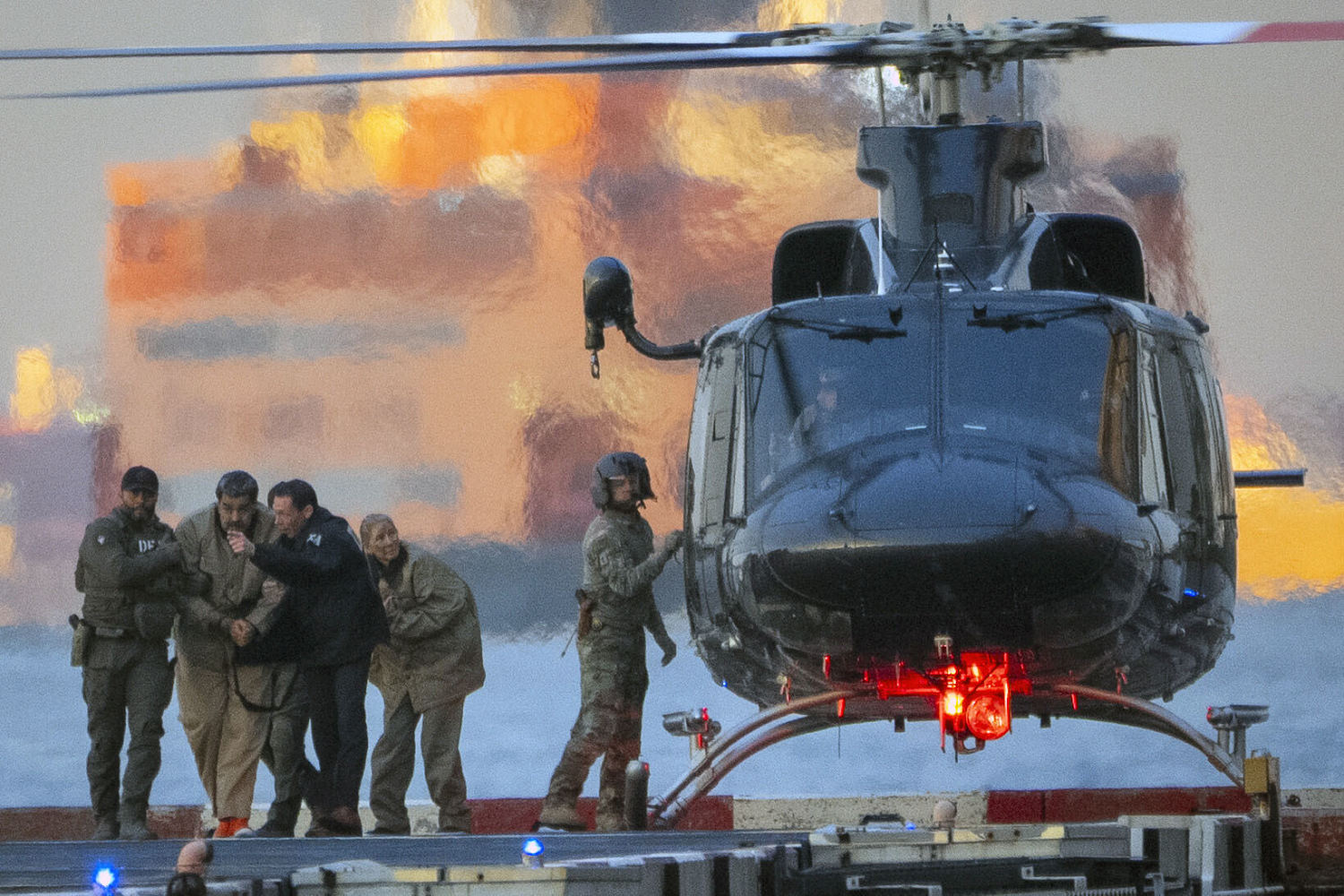
The media is currently obsessed with the "scandal" of a U.S. soldier allegedly placing bets on the ouster of Venezuelan leader Nicolás Maduro. They treat it like a moral failing or a bizarre gambling addiction. They are missing the point entirely. This isn't a story about a rogue soldier with a gambling problem. This is the first visible crack in a decaying wall between private capital and state-run regime change.
Mainstream outlets are framing this through the lens of military discipline. They want to talk about "values" and "oaths." Let's talk about math and markets instead. We are entering an era where prediction markets provide more accurate intelligence than the CIA, and where a soldier's digital footprint is a more honest indicator of foreign policy than a State Department press briefing.
The Intelligence Community is Losing its Monopoly
For decades, the monopoly on "knowing what happens next" belonged to three-letter agencies. They spent billions on SIGINT and HUMINT to guess when a dictator might fall. Today, platforms like Polymarket and Kalshi are doing it for free, fueled by the collective greed of thousands.
When a soldier bets on a coup, he isn't just gambling. He is engaging in a decentralized intelligence gathering exercise. If that soldier has boots on the ground or access to logistics schedules, his bet is "insider trading" on history. The Pentagon isn't mad because he broke a rule; they are terrified because he’s proving that the "secret" business of empire-building can be priced in real-time by anyone with a crypto wallet.
The "lazy consensus" says that military personnel shouldn't bet on the outcomes of their missions because it creates a conflict of interest. That’s a quaint, 20th-century view. The conflict of interest already exists. The military-industrial complex is a massive bet on perpetual instability. Why is it acceptable for Raytheon’s stock price to jump when a conflict escalates, but "unethical" for a Sergeant to put fifty bucks on the inevitable collapse of a failed state?
Prediction Markets are the Only Honest Brokers Left
Traditional news sources spent years telling us Maduro was "weeks away" from toppling. They were wrong because they were selling a narrative. Prediction markets were often more skeptical because they involve skin in the game. You can lie in an op-ed; you can't lie to the blockchain without losing your shirt.
If you want to know if a coup will succeed, don't look at the New York Times. Look at the liquidity in the "Maduro out by year-end" contract.
Imagine a scenario where the U.S. military fully embraces this. Instead of classified briefings that are filtered through three layers of political bias, commanders look at the weighted probability of an event as determined by thousands of independent actors. This is the "nuance" the competitor article skipped: the soldier didn't "allegedly" bet on an ouster; he participated in a more efficient form of data aggregation than his own superiors use.
The Myth of the Neutral Soldier
The military pretends its members are blank slates, devoid of personal stakes in the geopolitical chess match. This is a lie. Every deployment, every shift in policy, and every "intervention" affects the life and wealth of the individual soldier.
By criminalizing the act of betting on these outcomes, the Army is trying to stop the inevitable: the financialization of warfare. We already have private military contractors (PMCs) like Blackwater (now Constellis) that operate based on profit margins. We have "consultants" who make millions advising foreign governments.
The soldier in question is simply the "retail" version of this reality. He is the guy at the bottom of the food chain trying to get a piece of the action that the generals and defense lobbyists have been feasting on for years.
Why the Pentagon is Actually Scrambling
The real threat here isn't a breach of ethics. It’s a breach of data.
If enough soldiers start betting on prediction markets, those markets become the most powerful signal in the world for tracking U.S. troop movements and intentions. If you see a sudden, massive spike in "Yes" bets for a coup in a specific country, and those bets are traced back to IP addresses near Fort Bragg, you don't need a spy satellite to know what’s coming.
The military isn't protecting the integrity of the mission. They are protecting their "metadata silence." They realize that the "wisdom of the crowd" becomes a "leak of the century" when the crowd is wearing a uniform.
The Inevitability of Wagering on War
Stop trying to fix the "gambling problem" in the ranks. You can't. As long as we have global connectivity and liquid markets, people will bet on the most high-stakes events on earth: war and revolution.
- Market Efficiency: Prediction markets have historically outperformed experts in almost every field, from elections to movie openings.
- Incentive Alignment: A soldier who bets on a mission success might actually be more motivated than one who is just following orders. (Though the inverse—betting on failure—is the nightmare scenario the brass won't mention).
- Transparency: Every bet on a public ledger is a data point. The military should be analyzing this data, not banning the activity.
The New Rules of the Game
We need to stop pretending that the world of finance and the world of kinetic warfare are separate. They are the same system. The U.S. dollar is backed by the U.S. military. Every movement of a carrier strike group is a massive financial event.
The soldier who bet on Maduro's ouster was just ahead of the curve. He recognized that "geopolitics" is just a fancy word for "macro-economic volatility with guns."
I have seen the defense sector spend millions on "forecasting software" that produces garbage reports. Meanwhile, a 22-year-old with a phone and a hunch is hitting the mark because he has something the analysts don't: a direct connection to the reality of the situation and a personal stake in the outcome.
The military will try to crush this. They will court-martial the outliers. They will update the Uniform Code of Military Justice (UCMJ) to include "speculative wagering on state stability." But they’ve already lost. The cat is out of the bag, and the bag was sold on an exchange three months ago.
War is the ultimate high-stakes market. It’s time we stopped acting surprised when the people fighting it decide to check the odds.
The soldier isn't the problem. The fact that his bet was probably more accurate than the Pentagon's internal projections is the problem. If the Army wants to stop its soldiers from betting against the house, it needs to start winning more consistently. Until then, the smart money is on the blockchain, not the briefing room.
Betting on the fall of a regime isn't "alleged misconduct." It’s the only honest way to participate in modern foreign policy.