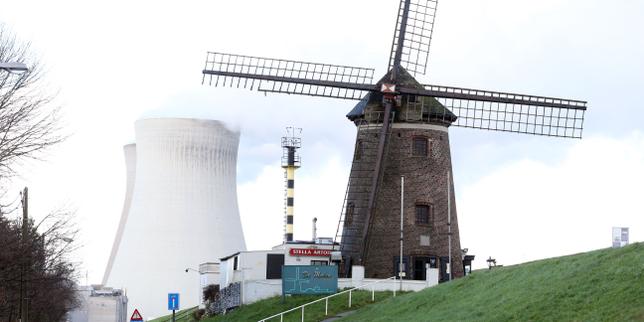
Belgium is currently staring down a massive energy dilemma that could change who owns the light switches in every household across the country. The federal government is seriously weighing the possibility of buying back its nuclear reactors from Engie. It's a move that would've seemed unthinkable a decade ago when the "nuclear exit" was the gold standard of Belgian political discourse. Now, the reality of high prices and shaky energy security has forced a total rethink.
If you're wondering why this is happening now, it's pretty simple. The Belgian state wants more control. Relying on a French multinational like Engie to manage the country’s most vital power sources has become a point of friction. By taking an ownership stake, or even a full buyout, the government isn't just buying old hardware. They're buying a seat at the table for the next twenty years of energy pricing.
The sudden shift in Belgian energy policy
For years, the plan was to shut everything down. The law of 2003 mandated a total nuclear phase-out. But then reality hit. Russia invaded Ukraine, gas prices went through the roof, and suddenly, those aging reactors at Doel and Tihange looked less like liabilities and more like lifeboats.
The government already struck a deal with Engie to extend the Doel 4 and Tihange 3 reactors for another ten years. But that was just the beginning. Now, the conversation has shifted toward the state actually owning these assets. It's about sovereignty. When a private company owns your base load power, their primary duty is to their shareholders, not your monthly utility bill. The Belgian state thinks it can do a better job of balancing the books for the public good.
Why Engie might actually want to sell
You might think Engie would fight to keep these plants, but the truth is more complicated. Nuclear power is expensive to run and even more expensive to decommission. By selling a stake to the Belgian state, Engie offloads some of the massive financial risk associated with nuclear waste management.
The costs for dismantling these plants are astronomical. We're talking about billions of euros. Engie has been negotiating for a cap on these liabilities for years. If the state steps in as an owner, that risk gets shared. It's a win for Engie's balance sheet and a massive gamble for the Belgian taxpayer.
What this means for your electricity bill
Don't expect your rates to drop tomorrow. That’s not how this works. Nuclear energy provides a "baseload"—a steady, reliable stream of power that doesn't depend on whether the sun is shining or the wind is blowing. When the state owns that baseload, it has more leverage to stabilize prices during a crisis.
However, the cost of the buyout itself is a factor. If the government overpays for these reactors, that debt has to be serviced somehow. Most likely, it'll come out of taxes or be baked into the grid fees. But in the long run, having a state-controlled energy provider can prevent the kind of wild price swings we saw in 2022. It gives the government a "nuclear lever" to pull when the market gets crazy.
The waste problem nobody wants to solve
We can't talk about buying reactors without talking about the trash they leave behind. This is the biggest sticking point in the negotiations. Radioactive waste stays dangerous for thousands of years. Currently, the plan involves deep geological disposal—basically burying it in clay layers deep underground.
If the Belgian state takes over, it becomes the primary guardian of this waste. That's a responsibility that lasts longer than any political party or even the country itself in its current form. Critics argue that the government is essentially "nationalizing the losses" while Engie already "privatized the profits" during the golden years of nuclear production. It's a fair point.
[Image of nuclear waste storage containers]
Breaking down the Doel and Tihange extensions
The current plan focuses on the two youngest reactors.
- Doel 4: Located near Antwerp, this is a powerhouse for the industrial north.
- Tihange 3: Situated near Liège, it’s critical for the southern grid.
These two units alone provide a huge chunk of Belgium's carbon-free electricity. Keeping them running until 2035—or even 2045 if the buy-back leads to further extensions—is the only way Belgium meets its climate goals. You can't replace that much power with wind turbines overnight. It’s just not physically possible given the current grid infrastructure.
Sovereignty in an uncertain Europe
Belgium isn't alone in this. Across Europe, there’s a massive trend toward "energy nationalism." France has already fully re-nationalized EDF. Germany is struggling with its own exit strategy. The idea that the "market" will solve everything is dying.
When the Belgian state envisages buying these reactors, they’re looking at what happened when they didn’t have control. They’re looking at the vulnerability of being at the mercy of international markets. Ownership means the power to decide. It means being able to tell industries that the lights will stay on, which is vital for keeping big manufacturers from fleeing to countries with cheaper, more stable energy.
The political minefield ahead
This isn't a done deal. The Belgian government is a complex coalition, and not everyone is on board. The Greens have historically been the biggest opponents of nuclear power. For them, buying the reactors is like buying a ticket on a sinking ship. They'd rather see that money go into offshore wind and hydrogen.
On the other side, the liberals and conservatives see it as common sense. They argue that you don't throw away a working engine when you're in the middle of a storm. The debate in the coming months will be fierce. It's going to come down to the valuation. What is a forty-year-old nuclear reactor actually worth in 2026?
The price tag of independence
Estimating the cost of a buy-back is a nightmare for accountants. You have to factor in:
- The remaining life of the hardware.
- The projected price of electricity over the next two decades.
- The cost of the specialized workforce needed to run the plants.
- The legal fees to untangle decades of contracts with Engie.
If the government moves forward, they'll likely create a "bad bank" style entity to handle the liabilities while a separate operational entity runs the plants. It's a complex financial shell game designed to protect the national budget from sudden shocks.
Why you should care about the 2026 deadline
We’re at a crossroads. The decisions made this year will lock Belgium into an energy path for the next quarter-century. If the state buys in, we are a nuclear nation for the foreseeable future. If they back out and Engie decides the risk is too high to continue, we could face a supply gap that leads to rolling blackouts or even higher dependence on imported gas.
Neither option is perfect. It's a choice between two different types of risk. But the move toward a state-owned model suggests that Belgium has finally realized that energy is too important to be left entirely to the private sector.
Keep an eye on the official government announcements over the next few months. If you're a business owner or a homeowner, the outcome of these talks will dictate your overhead costs for years. The "nuclear exit" is effectively dead; now we're just arguing over who owns the remains and who pays to clean up the mess.
Start looking at your own energy consumption now. Regardless of who owns the reactors, the era of cheap, thoughtless energy use is over. Transitioning your home to heat pumps or improving insulation is still the smartest move you can make, because even a state-owned reactor won't give away power for free.