The transition of atmospheric potential energy into localized rotational kinetic energy during the recent Michigan tornadic events reveals a critical mismatch between current civil engineering tolerances and shifting meteorological baselines. While media reports focus on the immediate casualty count—four fatalities and at least 12 injuries—a structural analysis identifies the specific failure points in regional emergency management and the physical limitations of mid-tier residential shielding. This event was not a statistical anomaly but a demonstration of the escalating intensity-duration frequency (IDF) curves that define modern severe weather risks.
The Mechanics of Tornadic Genesis in the Great Lakes Basin
The Michigan event originated from a classic supercell structure, yet its lethality was amplified by high boundary-layer moisture and significant vertical wind shear. Understanding the casualty rate requires deconstructing the physical forces at play. A tornado’s damage potential is a function of its pressure deficit and the debris-loading of its winds.
The primary drivers of this specific disaster include:
- Low-Level Helicity: The presence of extreme "spin" in the lower atmosphere (0-1 km layer) allowed for rapid tornadic development, often outpacing the standard lead time provided by NEXRAD Doppler radar scans.
- Thermal Inversion Erosion: As the cap on the atmosphere broke, the stored convective available potential energy (CAPE) surged, providing the fuel for sustained, violent updrafts.
- Surface Friction Anomalies: Michigan’s unique topography, characterized by a mix of dense forestation and urban sprawl, creates varied surface roughness. This causes turbulent fluctuations in a tornado's path, making its exact trajectory nearly impossible to predict at the street level.
The Casualty Correlation Framework
Casualties in tornadic events are rarely the result of wind speed alone; they are the product of the Hazard-Vulnerability-Exposure Triad.
- The Hazard: The EF-scale rating of the Michigan tornadoes determined the baseline energy.
- The Exposure: The density of the population in the path during the nocturnal hours.
- The Vulnerability: The structural integrity of the housing stock, particularly older wood-frame residential units and mobile home communities.
In this instance, the four fatalities represent a failure in the protective envelope of the primary structures. When wind speeds exceed 110 mph, standard residential roofs experience uplift forces that exceed the load-bearing capacity of toe-nailed rafters. Once the roof is compromised, the internal pressure of the building changes instantaneously, leading to total wall collapse. This structural "unzipping" is the primary mechanism for trauma-related injuries and deaths during these events.
Grid Fragility and Cascading System Failures
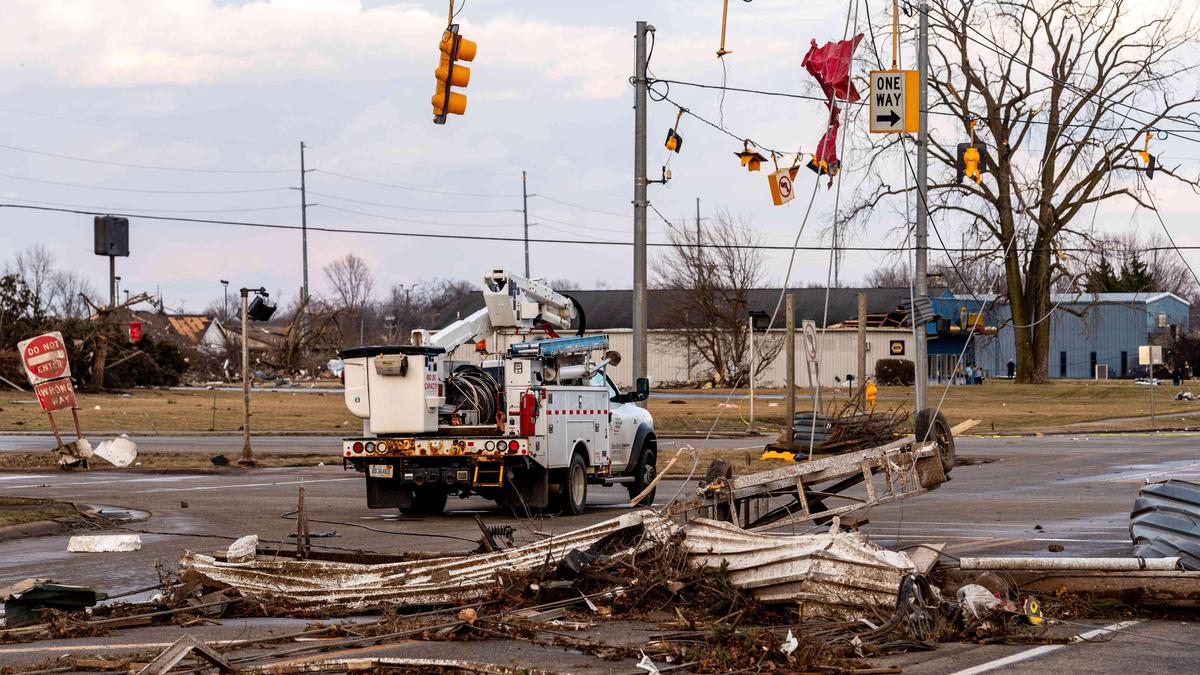
The injury count of 12 is a trailing indicator of a much larger systemic collapse: the regional power grid. In Michigan, the utility infrastructure relies heavily on overhead distribution lines. A tornado strike initiates a chain reaction:
- Mechanical Failure: High winds and flying debris sever lines.
- Electrical Faulting: Short circuits trigger automated reclosers, which can lead to localized fires or explosions if the gas infrastructure is also compromised.
- Telecommunications Blackout: As power fails, cellular towers rely on battery backups or localized generators. If these are damaged by the storm, the "Information Gap" widens, preventing survivors from calling for medical assistance or receiving secondary weather alerts.
The 12 reported injuries likely do not account for the secondary health impacts, such as carbon monoxide poisoning from improperly ventilated generators or injuries sustained during the "recovery phase" (debris removal).
The False Security of Current Building Codes
Michigan’s building codes are largely designed for snow loads and moderate wind speeds, not the extreme pressure differentials found in a tornadic vortex. There is a quantifiable gap between "code-compliant" and "storm-resilient."
The Bernoulli principle dictates that as air velocity increases over a roof, pressure decreases. The high-pressure air inside the house then pushes upward. Without hurricane straps or anchor bolts—which are not universally mandated in non-coastal Michigan—the house is effectively a pressurized box waiting to explode.
Structural Hardening Deficits
The 12 injuries reported illustrate the limits of the "interior room" strategy. While moving to a basement or a windowless interior room increases survival probability, it does not mitigate the risk of "crush injuries" from a second-story collapse. The lack of reinforced "Safe Rooms" (FEMA P-361 standards) in the Midwest housing market creates a persistent vulnerability that cannot be solved by better radar alone.
Operational Limitations of Early Warning Systems
The lead time for the Michigan tornadoes varied significantly across the state. The bottleneck in the warning system is not just meteorological but sociological.
- Warning Fatigue: Frequent low-probability alerts can desensitize a population, leading to delayed action when a high-impact event occurs.
- Nocturnal Vulnerability: A significant portion of the Michigan events occurred or intensified after dark. Human response time is significantly degraded during sleep, and visual confirmation of the threat is impossible.
- The "Last Mile" Problem: The National Weather Service (NWS) can issue a warning with 99% accuracy, but if the local siren system fails or a resident’s phone is on "Do Not Disturb," the system has failed.
The Economic Shadow of Sub-EF5 Events
While EF4 and EF5 tornadoes receive the most national attention, the Michigan events—likely in the EF1 to EF3 range—account for a higher cumulative economic loss over time. These "moderate" events are frequent enough to strain the local insurance markets.
The cost function of these storms includes:
- Direct Asset Loss: Destruction of vehicles, homes, and commercial property.
- Business Interruption: Loss of revenue due to power outages and workforce displacement.
- Public Infrastructure Repair: Replacing transformers, clearing roads, and restoring water treatment facilities.
Strategic Shift in Emergency Mitigation
To reduce the mortality and morbidity rates of future Michigan tornadic sequences, the strategy must shift from Response-Centric to Resilience-Centric.
The state must incentivize the retrofitting of existing residential structures with high-wind connectors (hurricane straps) and prioritize the burial of critical electrical distribution lines in high-risk corridors. Relying on current warning systems is a strategy of diminishing returns; the physical hardening of the "built environment" is the only variable that can fundamentally decouple extreme weather from human casualties.
Emergency management agencies should pivot toward "Hyper-Local Warning Redundancy," utilizing mesh networks that do not rely on centralized cellular towers. Simultaneously, civil engineering firms must recalibrate the "Design Basis Wind Speed" for the Great Lakes region to reflect the increasing frequency of high-shear environments. The four lives lost are a data point indicating that the current safety margins are too narrow for the atmospheric reality of 2026.
Integrate high-resolution topographical data into automated emergency dispatch systems to predict "debris traps"—areas where wind patterns will likely deposit lethal levels of structural remnants—to optimize search and rescue routes immediately following a strike.