The arrest and conviction of Asif Merchant, a Pakistani national with alleged ties to Iranian intelligence, reveals a shift from spontaneous extremist violence to a structured, state-sponsored kinetic operation targeting high-level U.S. officials. This plot functions as a case study in asymmetric attrition, where a foreign adversary utilizes a third-party intermediary to bypass traditional counterintelligence triggers. By deconstructing the operational layers—recruitment, logistics, and target selection—we can identify the specific failure points in international security protocols and the evolving "deniability" framework used by the Iranian IRGC (Islamic Revolutionary Guard Corps).
The Three Pillars of the Operational Framework
To understand how a plot of this magnitude reaches the execution phase, it must be viewed through a tripartite lens of operational security (OPSEC). State actors do not rely on lone-wolf fervor; they build a supply chain of violence.
1. The Proxy Insulation Layer
The use of a Pakistani national serves a dual purpose. First, it avoids the immediate scrutiny applied to Iranian citizens by U.S. Customs and Border Protection. Second, it provides "plausible deniability." If the plot succeeds, the state achieves its objective; if it fails, the state characterizes the actor as a rogue element or a mercenary acting independently. Merchant’s role was not to pull the trigger himself but to act as a talent scout and logistical hub, attempting to recruit "hitmen" within the United States. This indicates a shift toward a franchised model of assassination where the state provides the capital, and the local criminal element provides the lethality.
2. Capital Liquidity and Incentive Structures
The Department of Justice noted that Merchant sought to pay $5,000 as a down payment for the assassination services, with much larger sums promised upon completion. In geopolitical intelligence, this is known as the Low-Cost High-Impact (LCHI) model. The financial risk to the sponsoring state is negligible—effectively a rounding error in a covert operations budget—while the potential return is the total decapitation of a political movement and the destabilization of the American executive branch.
3. Tactical Diversion and "The Fingerprint"
A critical component of this plot involved organized protests. Merchant’s instructions included a requirement to organize "protest actions" to serve as a distraction during the actual hit. This demonstrates a sophisticated understanding of Police Resource Saturation. By forcing local law enforcement and Secret Service details to manage a volatile crowd, the operational window for a sniper or a close-quarters assassin widens significantly.
The Cost Function of Sovereign Retaliation
The motivation behind the plot is rooted in a specific historical grievance: the 2020 drone strike on Qasem Soleimani. From a strategic consulting perspective, Iran is operating on a "Reciprocal Deterrence" logic. They perceive the assassination of their top military commander not as a closed chapter, but as an unpaid debt that must be settled to restore their internal and external prestige.
The logic follows a cold mathematical progression:
- Action ($A$): US kills Soleimani.
- Perceived Loss ($L$): Degradation of IRGC regional influence + Loss of Face.
- Required Equilibrium ($E$): $E = L + P$ (where $P$ is a "Premium" for the delay).
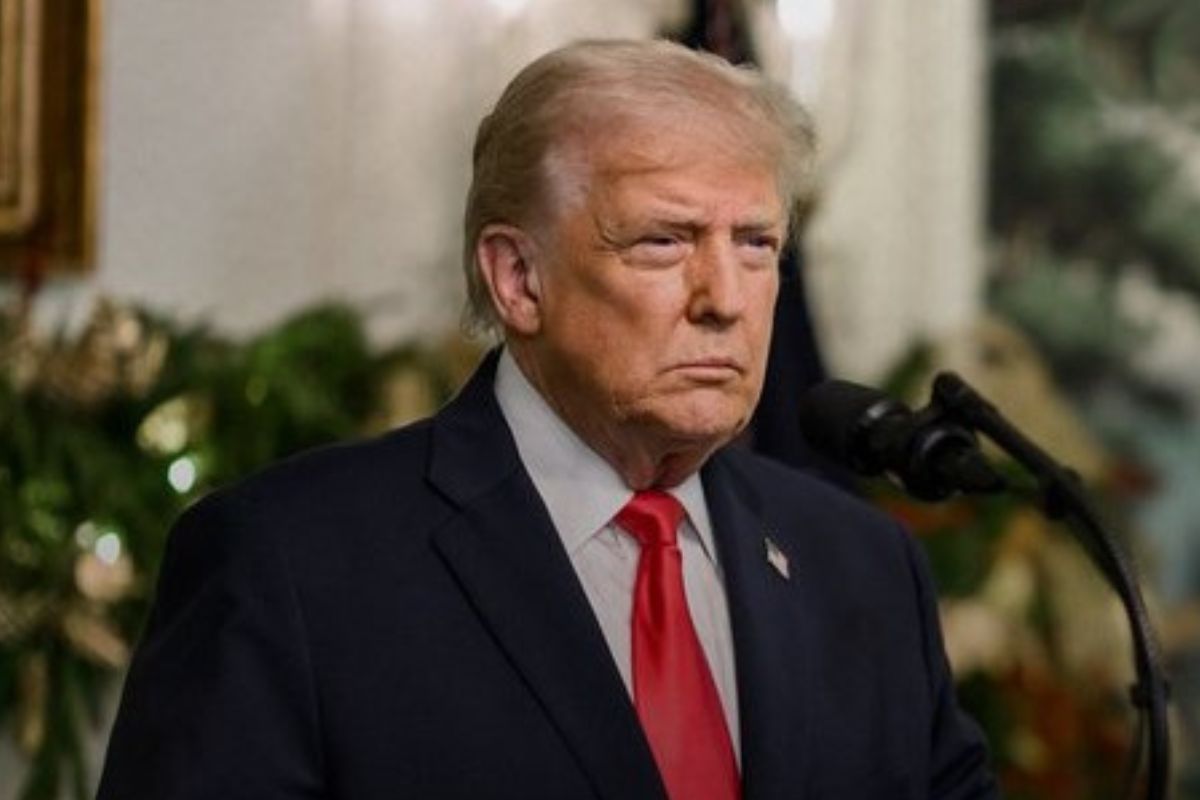
Because Iran cannot win a conventional kinetic war against the United States, they pivot to Non-Linear Warfare. They target individuals rather than institutions. By focusing on Donald Trump, they are not just attacking a former president; they are targeting a candidate, thereby injecting maximum volatility into the U.S. electoral process.
Structural Weaknesses in Domestic Counter-Intelligence
The fact that Merchant was able to enter the U.S. and begin the recruitment process highlights a bottleneck in the vetting of "Third-Country Nationals" (TCNs) with extensive travel histories to sanctioned nations.
The Identification Gap
Merchant had spent significant time in Iran before arriving in the U.S. While travel to Iran is a "red flag," the sheer volume of global travel makes it difficult for agencies like the FBI to monitor every individual who transits through Tehran. The bottleneck is not data collection; it is data synthesis. The system failed to correlate his travel patterns with his financial movements quickly enough to prevent his entry.
The Informant Dependency
The failure of the plot was not due to a technical intercept or a satellite sweep; it was due to a "Confidential Human Source" (CHS). This exposes a vulnerability in the IRGC's methodology. When a state actor attempts to recruit from the "underground" in a foreign country, they are forced to engage with the criminal element. In the United States, the criminal element is heavily compromised by federal informants. The Criminal-Intelligence Overlap is the primary reason these plots fail. The IRGC’s reliance on local muscle is their greatest tactical weakness.
Quantifying the Geopolitical Fallout
The conviction of a state-linked operative creates a series of cascading effects on international relations that go beyond a simple criminal verdict.
- Sanction Ratcheting: Evidence of a direct assassination plot provides the legal and political "floor" for a new round of secondary sanctions. This affects global oil markets as the U.S. pressures allies to further reduce Iranian imports.
- The Security Perimeter Expansion: The Secret Service's "Protectee Scope" has been fundamentally altered. The cost of protecting a former president has now reached levels typically reserved for sitting monarchs or heads of state in active war zones. We are seeing a permanent transition from "Executive Protection" to "Area Denial."
- Diplomatic Stasis: Any potential for a "New Nuclear Deal" or a "Grand Bargain" is functionally dead. No administration can negotiate with a regime that is actively attempting to liquidate its predecessor.
The Strategic Play: Counter-Proxy Neutralization
To mitigate this specific brand of state-sponsored threat, the United States must move beyond reactive arrests and toward a Proactive Disruption Framework.
The first step is the implementation of a "High-Risk Transit" biometric registry. Any individual who has spent more than 30 days in a state-sponsor of terrorism within the last 24 months should be subject to mandatory financial disclosure upon entry to the U.S. This addresses the "Capital Liquidity" pillar by making it impossible to move the "kill fee" without triggering a Treasury Department alert.
The second step involves "Incentivized Counter-Recruitment." The FBI must saturate the specific immigrant communities and criminal circles that these state actors target with high-value rewards for reporting "Talent Scouts." If the "bounty" for reporting an operative is higher than the "fee" for the assassination, the market for state-sponsored hits collapses due to internal distrust.
Finally, the U.S. must establish a "Cost-Certainty" doctrine. The Iranian leadership currently views these plots as high-reward/low-risk because the consequences of a failed plot are merely the loss of a single operative (Merchant). To change the behavior, the U.S. must tie the discovery of such plots to tangible, non-kinetic losses for the state—such as the seizure of specific sovereign assets or the targeted cyber-disruption of the IRGC’s internal financial networks.
The Merchant case is not an outlier; it is a prototype. The defense must evolve from guarding a person to dismantling the network that makes the person a target.
Would you like me to develop a detailed risk-profile comparison between this state-sponsored model and the traditional lone-wolf threat to identify further gaps in Secret Service perimeter protocols?