The steel of a supertanker does not feel like a political instrument when you are standing on its deck. It feels like a mountain. It is cold, unyielding, and smells faintly of salt and industrial grease. But in the narrow, turquoise neck of the Strait of Hormuz, these floating mountains are the pulse of the world. If that pulse stops, the lights go out in cities thousands of miles away.
For weeks, that pulse has been erratic. The air in the Persian Gulf has been thick with the kind of tension that precedes a desert storm—dry, electric, and heavy. Tehran had signaled a tightening of the noose, a closure of the most vital artery in the global energy trade. Washington responded with the usual heavy-metal diplomacy of carrier strike groups. Then, with a stroke of a pen from the Oval Office, the pressure valve turned just a quarter-inch.
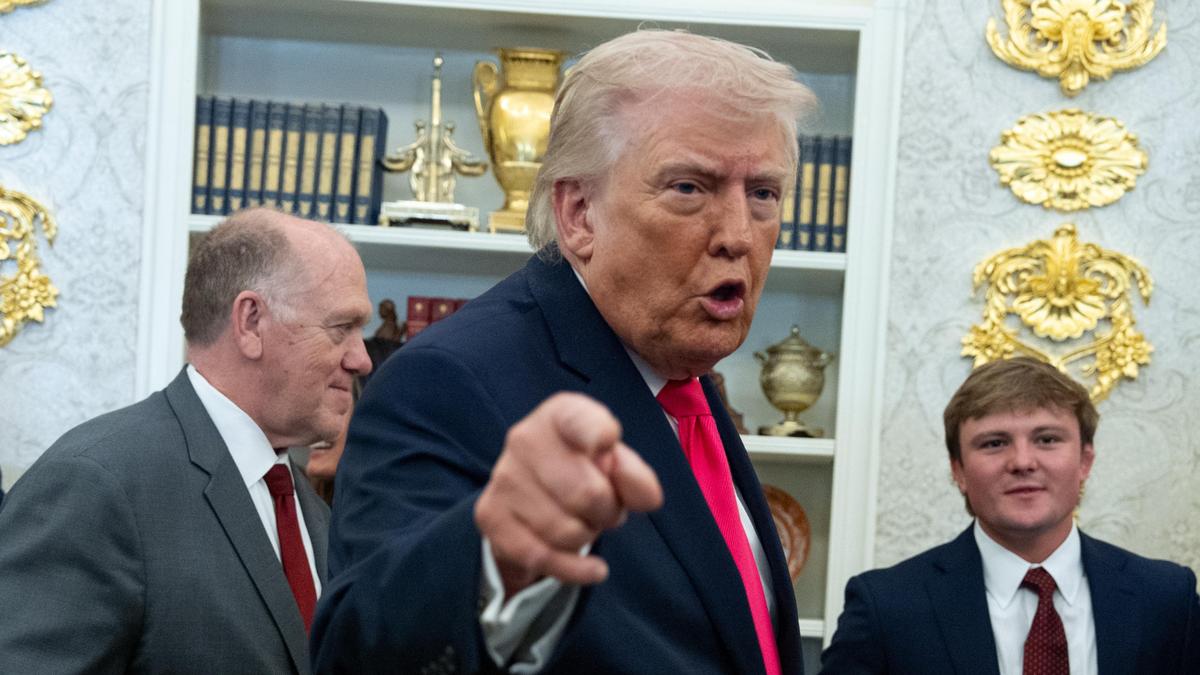
President Trump has moved the finish line. The deadline for Iran to ensure the Strait remains open to the free flow of commerce has been pushed to April 6.
It is a reprieve, but it is not a peace.
The Twenty-One Mile Chokehold
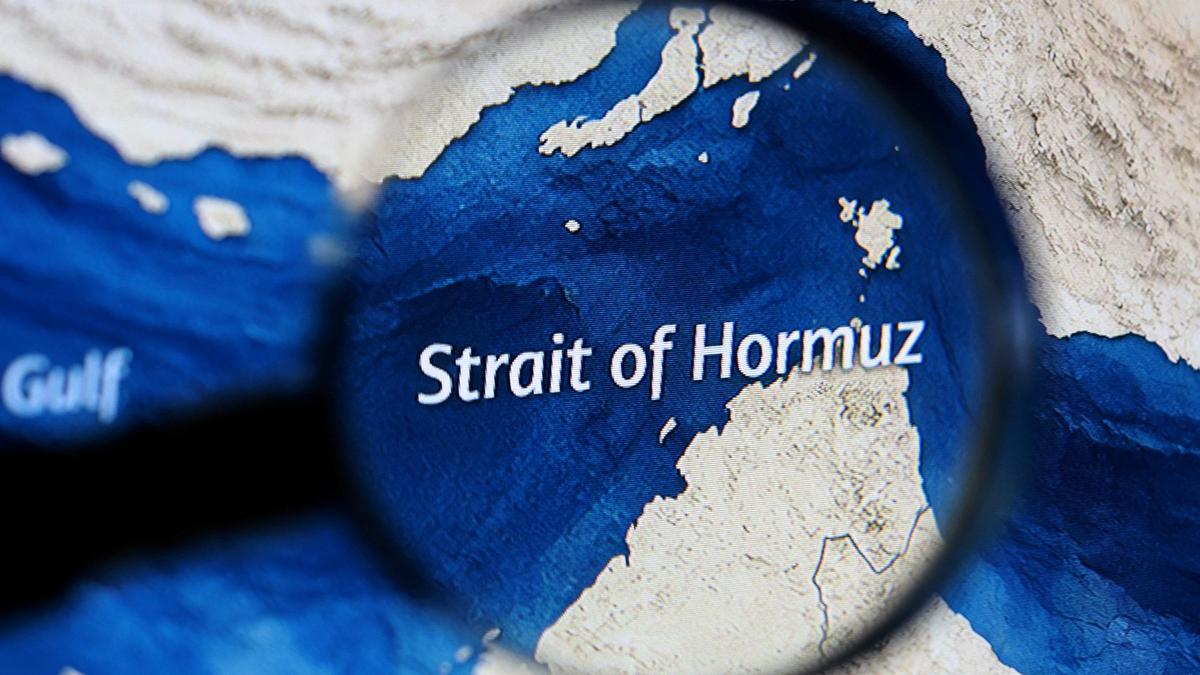
To understand why a date on a calendar in D.C. matters to a commuter in Ohio or a factory manager in Shenzhen, you have to look at the map. The Strait of Hormuz is a geographic fluke. At its narrowest point, the shipping lanes are only two miles wide. Into this bottleneck, the world pours a fifth of its daily oil consumption.
Imagine a hypothetical tanker captain named Elias. He has spent thirty years navigating these waters. To him, the Strait isn't a "geopolitical flashpoint." It is a gauntlet. When news of the April 6 extension reaches his bridge via satellite, he doesn't celebrate. He merely recalculates. He knows that every day of delay is a day of insurance premiums spiking and crew members eyeing the horizon for the fast-attack craft of the Islamic Revolutionary Guard Corps.
The extension to April 6 is a gamble on the psychology of the long game. By shifting the date, the administration is attempting to buy time for back-channel negotiations or, perhaps more likely, to see if the internal economic pressures within Iran force a blink.
The Invisible Mathematics of Risk
When a deadline moves, the markets do not react with joy. They react with volatility. Uncertainty is a more expensive commodity than oil itself.
Logistics firms are currently playing a high-stakes game of musical chairs. If the Strait closes, the "Plan B" is a nightmare of overland pipelines that lack the capacity to meet demand and treacherous routes around the Cape of Good Hope that add weeks to a journey.
Consider the sheer scale of the cargo at risk. A single Very Large Crude Carrier (VLCC) can hold two million barrels of oil. That is roughly $150 million worth of energy sitting in a single hull. When Trump extends a deadline, he isn't just moving a date; he is altering the risk-assessment algorithms of every major bank on Wall Street.
The logic behind the April 6 date remains guarded. Why then? Why not May? Some analysts suggest it aligns with the end of specific seasonal demand cycles. Others whisper about intelligence reports regarding Iranian domestic morale. The truth is often simpler and more cynical: deadlines are tools of leverage. If you keep the target moving, the opponent can never fully brace for the impact.
Life on the Edge of the Horizon
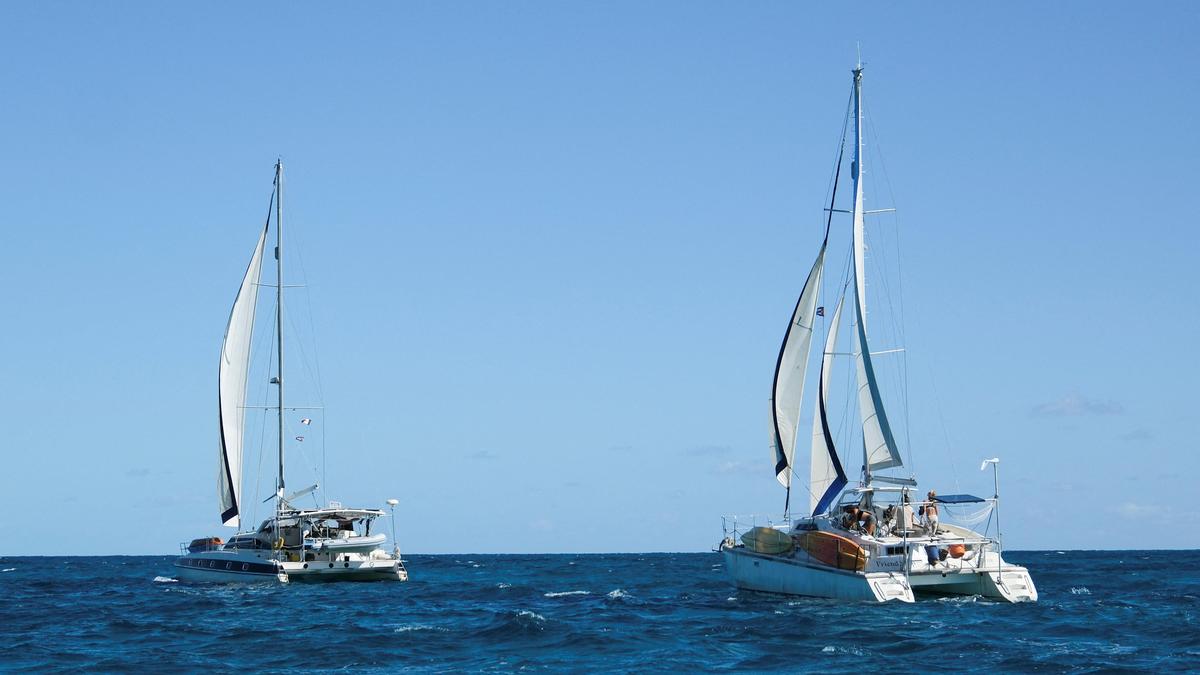
Back on the water, the reality is less about "leverage" and more about the hum of the engines. For the sailors manned on these vessels, the geopolitical chess match is a backdrop to the mundane reality of maintenance and fatigue.
The sailors represent a dozen nationalities—Filipino deckhands, Indian engineers, British officers. They are the collateral of a conflict they did not start. For them, April 6 is not a policy shift. It is a date they hope to be past, clear of the Musandam Peninsula and out into the open safety of the Arabian Sea.
There is a specific kind of silence that happens on a ship when the radar shows a blip that shouldn't be there. It is a silence that swallows the sound of the waves. In that moment, the "maximum pressure" campaign of the United States and the "strategic patience" of Iran cease to be abstract concepts. They become a question of whether the hull will remain intact.
The Price of a Second Chance
Critics of the extension argue that it signals weakness, a crack in the resolve of the White House. They claim that Iran only understands the language of the hard stop. Proponents, however, see it as a masterclass in keeping the adversary off-balance. By refusing to let the situation come to a head today, the U.S. forces Tehran to maintain a state of high alert that is both exhausting and expensive.
The Iranian economy is already gasping. Inflation has turned the rial into a ghost of a currency. The streets of Tehran are not filled with people debating the Strait of Hormuz; they are filled with people wondering if the price of eggs will double by Tuesday.
By extending the deadline to April 6, the U.S. is betting that the internal clock of the Iranian people is ticking faster than the political clock in Washington. It is a waiting game played with the lives of millions.
The Shadow of the Deadline
We often think of history as a series of explosions. Big events. Declarations of war. Treaties signed with gold pens. But history is more often made of these quiet stretches of time—the weeks between a threat and a deadline where everything hangs in the balance.
The April 6 extension is a vacuum. It is a space where anything can happen, but nothing is certain. It is the breath held before a scream.
For the global economy, the stakes are binary. If April 6 passes and the Strait remains a neutral, busy highway, the world exhales. If it becomes a graveyard of charred steel and oil slicks, the shockwave will be felt in every gas station, every grocery store, and every home on the planet.
We are living in the "in-between."
Elias, our hypothetical captain, looks at his charts. He sees the waypoints, the depths, and the narrow turn at the "Big Quoin" island. He knows the currents. He knows the wind. But he cannot see the future. He can only see the date on the screen, glowing in the dim light of the bridge.
April 6.
The mountain of steel moves forward, cutting through the dark water of the Gulf, carrying its heavy burden toward a deadline that keeps moving just out of reach. The world watches the clock, but the water doesn't care about dates. It only knows the weight of the ships and the silence of the depths.