The relationship between a state’s economic equilibrium and its federal legislative seniority is governed by a predictable capital allocation mechanism. When a small-population state holds the gavel of the Senate Appropriations Committee, it captures a disproportionate share of discretionary federal spending—a phenomenon known as the seniority premium. For Maine, a state with structural demographic headwinds and an economy heavily reliant on federal defense contracts, biomedical research grants, and healthcare subsidies, the political survival of Senator Susan Collins is directly tied to the state’s fiscal baseline.
Evaluating the financial impact of removing an incumbent Appropriations Chair requires a rigorous analysis of capital flow dynamics, committee assignment mechanics, and the structural dependency of rural economies on federal outlays. The core problem is not one of partisan preference; it is an optimization problem regarding the velocity and volume of federal capital inflows.
The Seniority Premium and the Appropriations Formula
The federal budget process operates on a system of structural asymmetric influence. While every state receives baseline formulaic funding for mandatory programs like Medicare and Social Security, the allocation of discretionary capital—specifically via earmarks, congressionally directed spending, and agency-level grant prioritization—is heavily skewed toward leadership.
The fiscal value of a Senate seat can be modeled as a function of two primary variables: tenure (seniority) and committee assignment.
$$V = f(S, C)$$
Where $V$ represents the volume of discretionary capital directed to the home state, $S$ represents the senator's consecutive years in office, and $C$ represents the relative spending power of their committee assignments.
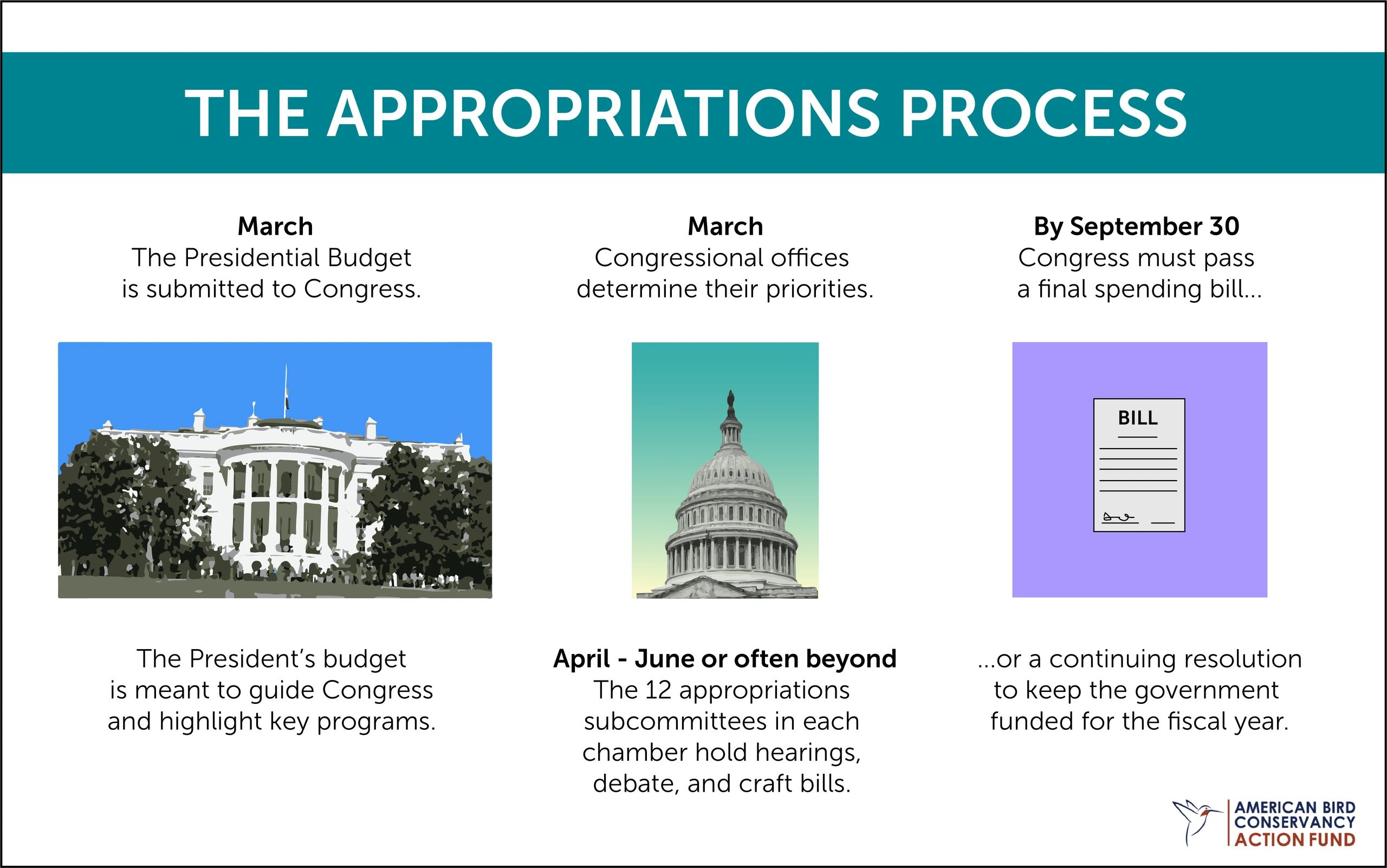
When a legislator achieves the rank of Chair or Ranking Member of the Senate Appropriations Committee, the value of $C$ reaches its absolute maximum. This position grants unilateral gatekeeping authority over the twelve annual appropriations bills that dictate discretionary federal spending.
For a low-population state like Maine, this creates an extreme mathematical advantage. Because federal discretionary spending is allocated by project rather than strictly per capita, an Appropriations Chair from a small state can secure infrastructure, defense, and research capital that represents a massive percentage of that state's Gross State Product (GSP).
The removal of an incumbent at the peak of this seniority curve resets the state’s legislative tenure to year zero. A freshman senator entering the chamber sits at the bottom of the committee assignment hierarchy, effectively shifting the state from a capital-exporter model (leveraging federal tax dollars back into the local economy) to a passive recipient of standard formulaic outlays.
The Three Pillars of Maine’s Federal Dependency
The structural composition of Maine's economy creates a high vulnerability to shifts in federal capital distribution. The potential loss of senior representation threatens three specific pillars of the state's economic infrastructure.
1. The Defense Industrial Base and Procurement Volatility
Maine’s manufacturing sector is anchored by defense procurement, most notably the Bath Iron Works (BIW) naval shipyard. BIW is one of the state's largest private employers, sustaining a complex supply chain of sub-contractors throughout the region.
- The Mechanism: Naval procurement bills are highly sensitive to committee intervention. Funding for the procurement of Arleigh Burke-class destroyers—the primary output of BIW—is subject to intense competition from shipyards in states with larger congressional delegations, such as Mississippi and Virginia.
- The Downstream Effect: Without an Appropriations Chair capable of inserting specific line-item funding or defensive language into defense spending bills, procurement volumes face structural downside risk. A reduction of even one hull over a five-year budget cycle threatens thousands of high-wage manufacturing jobs, causing a contraction in regional retail and real estate markets.
2. The Biomedical Research and Innovation Ecosystem
Over the past two decades, Maine has cultivated a specialized biomedical research cluster, driven by institutions like the Jackson Laboratory and the MDI Biological Laboratory. This ecosystem relies directly on discretionary grants from the National Institutes of Health (NIH).
- The Mechanism: While NIH grants are technically peer-reviewed and competitive, the total pool of funding available for specific disease research (e.g., Alzheimer’s, diabetes, and tick-borne illnesses) is directed by the Senate Appropriations Subcommittee on Labor, Health and Human Services, and Education.
- The Downstream Effect: Seniority ensures that regional research priorities remain funded within the master appropriations frameworks. A loss of influence leads to a degradation of the capital stack supporting these laboratories, risking a flight of scientific talent and intellectual property to better-funded outlays in Massachusetts or California.
3. Rural Healthcare Infrastructure and Medicaid Capital Stability
Maine features the oldest median population in the United States, alongside a highly dispersed rural population. This demographic profile makes its rural hospital network highly sensitive to federal reimbursement rates and direct infrastructure grants.
- The Mechanism: Rural hospitals operate on razor-thin margins, frequently relying on federal critical access designations and targeted appropriations to offset the losses incurred from high uncompensated care rates.
- The Downstream Effect: When federal spending caps or budget reconciliations restrict health system outlays, senior appropriators possess the leverage required to insert carve-outs or protective minimums for rural facilities. Freshman representatives lack the political capital required to execute these micro-targeted legislative fixes, exposing rural health networks to service contractions or outright closures.
The Friction of Budgetary Impoundment and Institutional Shifts
The contemporary macroeconomic environment introduces an additional layer of complexity: the structural tension between congressional spending authority and executive branch enforcement. The rise of institutional initiatives aimed at capping or freezing federal spending—such as the executive branch frameworks advanced by the Department of Government Efficiency (DOGE)—creates a direct threat to congressionally directed spending.
An Appropriations Chair acts as a critical institutional firewall against executive overreach. When an administration attempts to impound funds, freeze hiring at federal agencies, or close regional offices (such as agricultural extensions or environmental research stations), the Appropriations Committee holds the ultimate counter-lever: the power of the purse. The Chair can withhold funding for executive priorities, insert binding statutory language into must-pass omnibuses, or force negotiations via the budget reconciliation process.
The strategic risk for Maine is twofold. If the incumbent is replaced by a freshman of the opposing party, the state loses all defensive leverage within a committee controlled by the majority. If replaced by a freshman of the same party, that individual still lacks the seniority required to buck leadership or executive mandates when party orthodoxy demands spending reductions that disproportionately harm rural, lower-income constituencies.
Quantifying the Transition Cost
To evaluate the net economic impact of a transition in representation, analysts must calculate the delta between senior-directed capital inflows and baseline formulaic funding.
| Variable Factor | Senior Incumbent Profile (Appropriations Chair) | Freshman Successor Profile (Year 1-3) |
|---|---|---|
| Earmark / Congressionally Directed Spending Cap | High capacity to insert localized line-items across all 12 subcommittees. | Limited to standard party allocations; low probability of survival in final conference bills. |
| Agency Responsiveness | Federal agencies prioritize inquiries and grant reviews to appease the committee holding their budget. | Standard bureaucratic processing times; minimal leverage to expedite stalled regional projects. |
| Defense Procurement Leverage | Ability to alter line-item quantities for major capital assets (e.g., naval destroyers). | Zero structural influence over major defense acquisition programs. |
| Crisis Allocation Speed | Rapid insertion of supplemental funding during regional disasters or economic shocks. | Reliance on standard federal emergency frameworks with no customization. |
This institutional reality demonstrates that the capital loss is front-loaded. Even if a freshman successor is highly competent, the Senate rules engine requires a multi-decade horizon to regain equivalent gatekeeping authority. The economic cost to the state is the compounded value of lost discretionary capital over that intermediate period.
The Strategic Play for Maine's Economic Baseline
The state’s economic stakeholders—ranging from defense executives to hospital administrators—cannot rely on political alignments or ideological rhetoric to protect their capital allocations. The data indicates that a reduction in legislative seniority correlates with a measurable decline in discretionary federal inward investment.
To mitigate this structural vulnerability, regional economic entities must pivot from a defensive posture reliant on single-point political leverage to an institutionalized model of economic resilience. This requires diversification of funding streams away from pure federal discretionary outlays:
- Industrial Conversion: Defense contractors must accelerate dual-use technology development, reducing their revenue dependence on volatile federal procurement cycles by expanding into commercial aerospace and marine applications.
- Private Capital Matching: Biomedical institutions must expand philanthropic endowments and venture capital partnerships to insulate their research pipelines from the shifts of federal grant allocations.
- Regional Healthcare Consolidation: Rural health networks must optimize operational efficiencies through telemedicine integration and cross-border alliances with larger New England healthcare systems, reducing their exposure to federal critical access subsidy fluctuations.
Ultimately, the capital allocation advantages provided by the seniority premium cannot be permanently sustained. Whether due to electoral volatility, retirement, or structural changes in the rules of the Senate, the period of maximum fiscal leverage inevitably concludes. The long-term economic stability of the state depends entirely on its capacity to convert temporary federal capital windfalls into self-sustaining private and commercial infrastructure before the seniority curve resets.