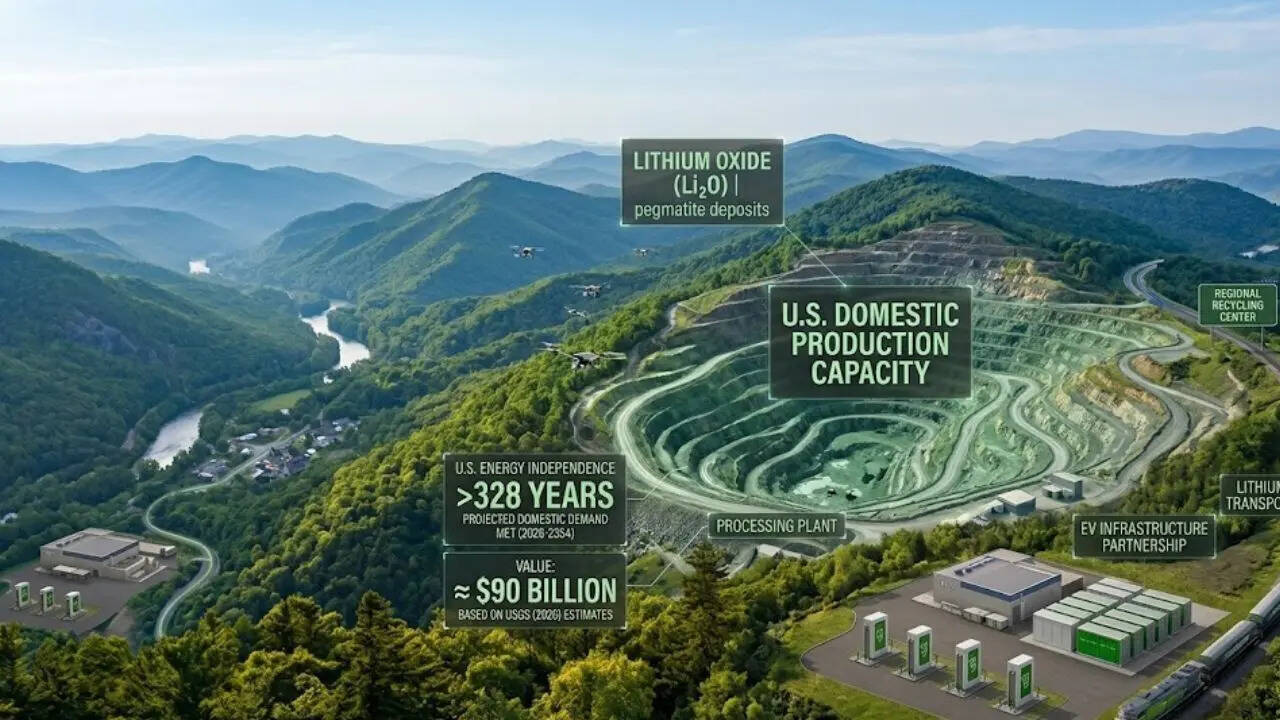
Geologists recently confirmed that a massive lithium deposit sits trapped within the wastewater of Pennsylvania's gas wells. This find represents roughly 40% of the United States’ current demand. For a nation desperate to break its dependence on overseas supply chains, the prospect of 2.3 million metric tons of battery-grade material buried in the Rust Belt sounds like a miracle. But the distance between a scientific breakthrough and a functioning industrial supply chain is measured in years, billions of dollars, and a series of technical hurdles that most headlines are happy to ignore.
The data comes from a study at West Virginia University, focusing on the Marcellus Shale. Researchers found that the "produced water"—the salty, mineral-rich fluid that comes back to the surface during hydraulic fracturing—is teeming with lithium. If the industry can extract this silver-white metal effectively, the Appalachian basin could theoretically transform into the backbone of the American electric vehicle market.
This isn't just about finding a new mine. It is about an entirely new way of thinking about waste.
The Chemistry of a Underground Fortune
To understand why this discovery matters, you have to look at how we currently get lithium. Most of the world’s supply comes from massive evaporation ponds in South America or hard-rock mining in Australia. Both methods are slow, water-intensive, and environmentally taxing. The Appalachian discovery suggests a different path through Direct Lithium Extraction (DLE).
DLE works like a chemical magnet. Instead of waiting years for water to evaporate in a desert, technicians pump wastewater through a specialized sorbent material that pulls out the lithium ions while letting the rest of the brine pass through. In Pennsylvania, the infrastructure is already half-built. The gas wells are drilled. The water is already being pumped to the surface as a byproduct of natural gas production.
The industry currently treats this water as a toxic liability. It is filtered, recycled, or injected deep underground at a significant cost to operators. Turning that liability into a revenue stream would change the economics of the entire region. However, the concentration of lithium in the Marcellus brine varies wildly from one well to the next. Consistency is the enemy of industrial scaling. A processing plant needs a steady, predictable feed of raw material to operate at peak efficiency. If the brine from one county is rich in lithium and the next is barren, the business model starts to crack.
The Infrastructure Gap
Wall Street loves a resource estimate, but engineers care about flow rates. Even if the 2.3 million metric ton figure is accurate, getting it out of the ground requires a massive build-out of midstream processing facilities. We are talking about hundreds of DLE units scattered across the mountain range, tied into a logistical network that doesn't exist yet.
Building this network requires more than just steel and concrete. It requires a regulatory framework that can handle a hybrid industry. Is a lithium extraction site a mine or a gas well? The answer determines which taxes apply, which environmental standards must be met, and who owns the mineral rights. In many parts of Appalachia, property laws are a tangled web of "severed estates," where one person owns the surface, another owns the gas, and a third might claim the minerals dissolved in the water.
Lawyers will likely make as much money from this discovery as the miners will. Until the legal status of "brine minerals" is settled in state courts, large-scale investment will remain on the sidelines. Capital is a coward; it flees from ambiguity.
Environmental Paradoxes and Local Pushback
There is a certain irony in using the byproduct of fossil fuel extraction to power the "green" revolution. Environmental advocates are torn. On one hand, sourcing lithium domestically reduces the carbon footprint of shipping minerals across the globe. On the other, it tethers the future of the EV industry to the continued expansion of fracking.
If gas prices drop and drilling slows down, the lithium supply dries up. This creates a strange dependency. The US cannot have its clean-energy cake and eat it too if that cake is baked in a gas oven. Furthermore, DLE is not "impact-free." The process requires significant amounts of fresh water and electricity. In a region already scarred by a century of coal mining and chemical leaks, the "trust us" approach from industrial giants no longer carries weight.
Local communities in Pennsylvania and West Virginia are rightfully skeptical. They have seen "boom" cycles before. They saw timber leave, then coal, then steel. Each time, the wealth was exported while the environmental degradation stayed behind. For this lithium rush to be different, the economic benefits must be tied to the local workforce, not just the balance sheets of multinational energy firms.
The Geopolitical Clock is Ticking
While the US debates the finer points of brine ownership, China continues to tighten its grip on the global battery market. They aren't just mining; they are refining. Even if Pennsylvania produces thousands of tons of lithium carbonate tomorrow, the US currently lacks the domestic refinery capacity to turn that powder into high-purity battery components.
Most of the lithium mined in the Americas still takes a boat ride to Asia for processing. Creating a "closed loop" in Appalachia would mean building refineries alongside the extraction sites. This increases the complexity of the project ten-fold. You need specialized chemicals, a highly trained workforce, and a permit process that doesn't take a decade to complete.
The federal government has signaled its support through the Inflation Reduction Act, offering tax credits for domestic mineral production. But government checks can’t override the laws of physics or the slow grind of local bureaucracy. We are in a race where the other contestants have a twenty-year head start.
The High Cost of Purity
Battery manufacturers are notoriously picky. They don't just want lithium; they want ultra-high-purity lithium hydroxide. Any contamination—magnesium, calcium, or boron—can ruin a battery's performance or, worse, cause it to catch fire.
The brine in the Marcellus Shale is notoriously "dirty." It is filled with various salts and organic compounds that make the extraction process a nightmare for chemists. Every well has a unique chemical signature. Designing a DLE system that can handle this variability without skyrocketing the cost per ton is the single greatest technical challenge facing the project.
If the cost of extracting Appalachian lithium is $15,000 per ton, but the market price is $12,000, the 2.3 million tons will stay exactly where they are: buried in the mud. The "power the US for centuries" claim assumes that every gram is economically viable to recover. History suggests otherwise. We never pump the last drop of oil or mine the last ounce of gold because the cost of doing so eventually exceeds the value of the resource.
Redefining the Rust Belt
The real story here isn't just about batteries. It is about the potential for a technological renaissance in a part of the country that has felt forgotten by the modern economy. If Appalachia can bridge the gap between extraction and manufacturing, it moves from being a "resource colony" to a high-tech hub.
This requires a level of coordination between state governments, private industry, and universities that we rarely see. It means training coal miners to be chemical technicians. It means upgrading power grids to handle the load of massive refineries. It means being honest about the environmental trade-offs instead of hiding behind PR slogans about "clean energy."
The lithium is there. The science says it can be caught. But until the first commercial-scale plant starts shipping battery-grade material to a domestic gigafactory, the Appalachian lithium rush remains a very expensive "maybe." The mountains don't give up their secrets easily, and they certainly don't give up their wealth without a fight.
Success depends on whether we treat this as a quick payday or a generational investment in industrial sovereignty.