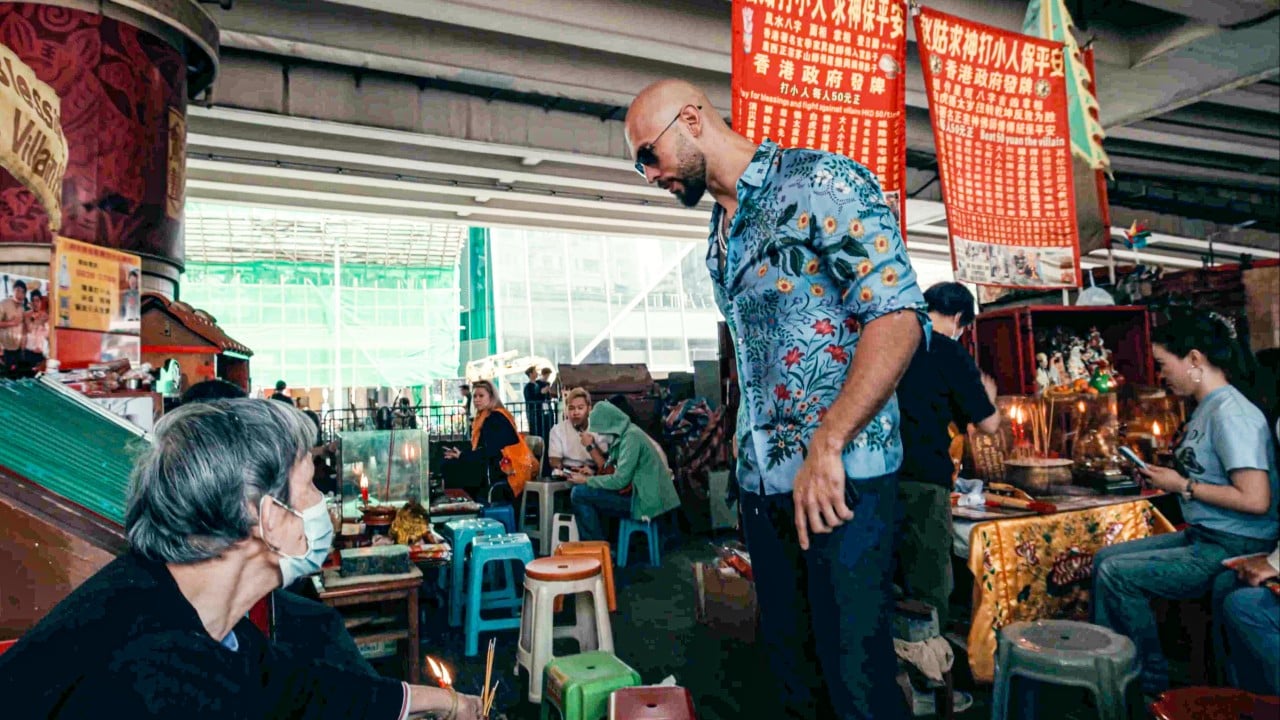
The arrival of Andrew Tate and his brother Tristan in Hong Kong has triggered a visceral reaction from local advocacy groups, specifically the Hong Kong Women’s Coalition on Equal Opportunities. Their condemnation isn’t just about a distaste for "toxic masculinity." It is a calculated alarm bell regarding the city’s inability to regulate digital-to-physical extremist pipelines. While the coalition cites immediate safety concerns for women and girls, the deeper issue lies in the collision between Hong Kong’s traditional legal framework and a modern, decentralized brand of influence that treats borders as mere suggestions.
Hong Kong remains a city defined by its "rule of law" branding. However, when an individual facing human trafficking and rape charges in one jurisdiction—Romania—and warrants in another—the United Kingdom—can move freely into a global financial hub for "business meetings," it exposes a massive gap in how modern security risks are assessed. The women’s groups aren’t just asking for Tate to be banned; they are questioning why the current immigration and public order ordinances seem toothless against high-profile figures who monetize the subversion of social stability.
The Business of Friction
To understand why the Tates chose Hong Kong, you have to look past the neon lights and the harbor. You have to look at the money. Andrew Tate isn't a tourist. He is a corporate entity built on a subscription model. His "Hustler’s University"—rebranded and fragmented across various platforms—relies on a global network of affiliates who flood social media with aggressive, often misogynistic content to drive traffic.
Hong Kong serves as a strategic node for this kind of operation. The city’s low tax environment and sophisticated banking infrastructure are magnets for the "new money" influencer class. By establishing a physical presence here, Tate isn't just vacationing; he is signaling to his Asian fan base that his brand of aggressive wealth acquisition is compatible with the region’s capitalist ethos. This is the "how" that the coalition is fighting. They recognize that his presence acts as a recruitment drive for a mindset that views women as assets rather than individuals.
The threat isn't a single event or a protest. It is the slow, quiet erosion of the social fabric. When young men in Hong Kong—a city already grappling with intense academic and economic pressure—see a man flaunting "escape from the matrix" while facing serious criminal allegations, the message is clear: laws are for the poor and the un-influential.
The Legal Vacuum and Public Safety
The Women’s Coalition focused heavily on "safety and equality," but in the context of Hong Kong law, these are difficult metrics to enforce at the border. Unlike some jurisdictions that allow for the denial of entry based on "character grounds" or "public interest," Hong Kong’s Immigration Department typically operates on a more binary system. If you have a valid passport and no active local warrant, the red carpet usually stays rolled out.
This creates a paradox. The city has spent years tightening its grip on political dissent under the guise of maintaining social harmony. Yet, when a figure arrives whose entire brand is built on provoking social friction and advocating for the subjugation of half the population, the mechanisms of "social harmony" are nowhere to be found. The coalition is pointing out this hypocrisy. If the government can bar activists for "safety reasons," why is a man under indictment for organized crime and human trafficking given a pass?
The Ripple Effect on Local Youth
Educators in Hong Kong have already begun reporting an uptick in "Tate-speak" within secondary schools. This isn't unique to the city, but the local context adds a layer of volatility. In a culture that still prizes patriarchal hierarchies in many traditional households, Tate’s rhetoric doesn't sound like a radical departure; it sounds like a modernized, high-definition version of old prejudices.
- Algorithmic Radicalization: Local social media feeds are being inundated with localized clips.
- The Gender Gap: As women in Hong Kong increasingly outpace men in higher education, the resentment Tate taps into finds a fertile, frustrated audience.
- Economic Desperation: The promise of "easy wealth" through Tate’s methods appeals to those priced out of the world's most expensive property market.
Beyond the Protest
The coalition’s statement is a defensive crouch, but a defense cannot hold forever. There is a tangible fear that the Tates’ entry is a precursor to a more permanent "hub" in East Asia. For years, the Tates operated out of Eastern Europe, citing a lack of "woke" interference and a more "flexible" legal environment. As Western European nations and the U.S. become increasingly hostile to their presence—and as their legal battles in Romania intensify—the pivot to Asia is a logical move for survival.
Hong Kong's authorities have remained largely silent on the matter. This silence is being interpreted as tacit approval, or at the very least, bureaucratic indifference. But indifference has a cost. The cost is measured in the safety of women who now face a fan base emboldened by their idol's physical proximity. It is measured in the work of NGOs that have spent decades trying to dismantle the very domestic violence and human trafficking structures that Tate is accused of facilitating.
The Failure of Digital Borders
We are witnessing the birth of a new kind of geopolitical problem. A person can be "canceled" by every major tech corporation—Meta, YouTube, TikTok—and still maintain a multi-million dollar empire that allows them to fly private jets into the world’s most secure cities. The coalition’s condemnation is an admission that the digital bans have failed.
If the goal was to de-platform the ideology, the result has been the opposite. It has turned the ideology into a cult of martyrdom. Every time a group like the Women’s Coalition speaks out, Tate’s followers frame it as "the system" trying to suppress the truth. This creates a feedback loop that is nearly impossible to break using traditional PR or protest methods.
The reality is that Hong Kong’s current legislative toolkit is designed for a world that no longer exists. It is designed for physical threats, for visible contraband, and for clearly defined political enemies. It is not designed for a "thought leader" who arrives with a suitcase full of crypto-keys and a following of millions who view his every movement as a blueprint for their own lives.
A Structural Re-evaluation
What the women’s groups are actually demanding is a re-evaluation of what constitutes a "threat" to the SAR (Special Administrative Region). Does a threat have to carry a weapon, or can a threat be a set of ideas that actively encourages the violation of human rights?
The Tates represent a test case for Hong Kong’s post-2020 identity. If the city is truly committed to the safety and equality it frequently touts in its international marketing, it cannot remain a playground for those who view those values as obstacles to be overcome. The coalition isn't just fighting Andrew Tate; they are fighting the idea that Hong Kong is a place where accountability goes to die.
The solution isn't just a border ban. That would be a band-aid on a gunshot wound. The solution involves a coordinated effort between the Education Bureau, the Social Welfare Department, and the Security Bureau to address the root causes of why this brand of influence is finding such a foothold in the city. Until that happens, the Tates are not the problem; they are merely the most visible symptom of a systemic vulnerability.
Watch the policy changes over the next six months. If the government continues to ignore the calls from these advocacy groups, it sends a definitive message to the international community: in the new Hong Kong, "stability" applies to political structures, but social safety is a secondary concern. The city must decide if its borders are open to anyone with a high net worth, regardless of the wreckage they leave in their wake.
Pressure the Immigration Department to clarify the specific criteria used for "public interest" denials in high-profile criminal cases.