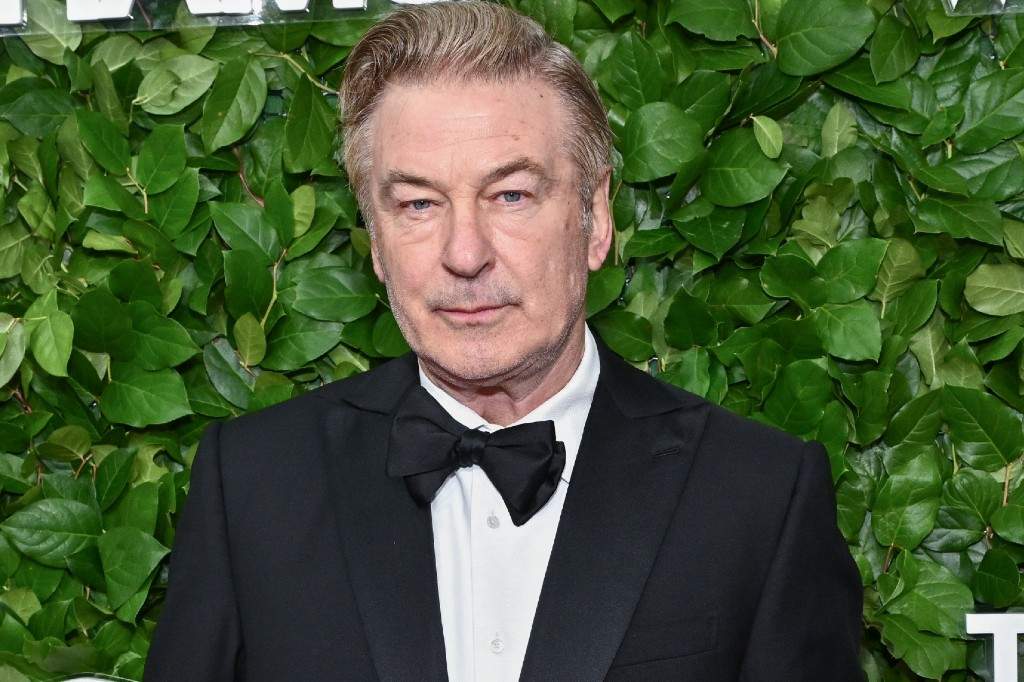
The machinery of Hollywood is designed to forget. It is a system built on the next project, the next deal, and the next red carpet. But for Alec Baldwin, the gears have ground to a definitive, agonizing halt. The actor has made it clear that the specter of the Rust shooting—a tragedy that claimed the life of cinematographer Halyna Hutchins and injured director Joel Souza—has fundamentally broken his desire to remain in front of the camera. He wants to retire. This is not the standard "actor's sabbatical" often announced during a press tour to drum up interest. It is the sound of a man recognizing that his public persona has been permanently eclipsed by a single, horrific moment in the New Mexico desert.
Baldwin’s career was defined by a specific kind of urban magnetism. He was the quintessential leading man who aged into a formidable character actor, capable of pivoting from the cold-blooded sales trainer in Glengarry Glen Ross to the comedic vanity of Jack Donaghy on 30 Rock. Now, that versatility is gone. When an audience looks at Baldwin, they no longer see the character; they see the headlines, the court appearances, and the grainy footage of a rehearsal gone wrong. The trauma is twofold: there is the personal weight of being the one holding the gun, and there is the professional reality that he has become "uncastable" in the traditional sense.
The Industry Pariah Effect
Hollywood operates on a risk-reward ratio that rarely favors those surrounded by legal complexity and public grief. While Baldwin was cleared of involuntary manslaughter charges after a judge dismissed his case with prejudice in July 2024, the "court of public opinion" does not follow the same rules of evidence. Production companies are insured entities. When an actor becomes a focal point for a fatal safety failure, the cost of insuring a set with them attached skyrockets. It is a cold, mathematical calculation that often precedes a forced retirement.
The Insurance Barrier
Independent films, the kind Baldwin frequently gravitated toward in recent years, rely on thin margins. If a lead actor brings a PR storm that requires extra security, crisis management, or simply makes completion bond companies nervous, the project often dies in pre-production. Baldwin’s desire to retire may be as much a concession to this logistical wall as it is a personal choice. He is an actor who knows how the business works. He understands that the "creative spark" cannot survive in an environment where every interview becomes a deposition and every set becomes a potential site for renewed scrutiny.
The Psychological Toll of the Prop Gun Tragedy
We have seen this before, albeit rarely. When Brandon Lee died on the set of The Crow, the industry went through a brief period of soul-searching, but the film was finished and released. The Rust incident was different. It occurred in an era of 24-hour digital cycles and hyper-polarized social media. Baldwin didn't just experience a workplace accident; he became a lightning rod for debates on gun control, set safety, and "elite" accountability.
The psychological burden of being the face of such a tragedy is immense. Baldwin has described the "trauma" as something that doesn't just fade—it reshapes the architecture of one's daily life. For a performer, whose job is to be open and vulnerable to the camera, this kind of internal scarring is a professional death sentence. You cannot play a light-hearted father in a rom-com when you are carrying the gravity of a real-world fatality. The cognitive dissonance for the audience is too great, and the emotional drain on the actor is unsustainable.
Set Safety and the Crumbling of the Old Guard
The Rust shooting exposed a terrifying lack of oversight in modern film production. As budgets are squeezed and schedules are compressed, safety protocols that were once considered ironclad began to fray. Baldwin, as both a lead actor and a producer on the project, was positioned at the center of this systemic collapse. The industry’s shift toward "leaner" crews often means that the roles of armorer and assistant prop master are blurred, or that inexperienced personnel are hired to save costs.
Baldwin’s exit from the industry marks the end of an era for a certain type of old-school performer. These were actors who trusted the "system" to protect them. They walked onto a set, were handed a tool, and were told it was safe. That trust has been shattered. The veteran journalist sees this not just as one man’s retirement, but as a warning shot to the entire production landscape. If a star of Baldwin’s stature can be brought down by a failure in basic on-set mechanics, no one is safe.
The Producer Responsibility Gap
There is a significant difference between an actor who is simply "talent" and an actor who holds a producer credit. The legal battles surrounding Rust hinged heavily on how much Baldwin knew—or should have known—about the conditions on set. While the criminal case collapsed, the civil implications and the reputational damage remain. Being a producer is no longer just a way to get a larger backend check; it is a role that carries literal life-and-death liability. This realization has sent a chill through the industry, leading many veteran stars to reconsider their involvement in indie productions where safety standards might be compromised for the sake of the "vision."
Rebuilding or Retreating
Baldwin’s talk of retirement suggests a man who is exhausted by the fight. He has spent years defending his name, his actions, and his memory of that day. The legal victory in New Mexico provided a reprieve, but it did not provide a reset. There is no "back to normal" after a tragedy of this magnitude.
Some suggest he might move into theater or voice-over work—mediums where his physical presence and the baggage it carries are less of a distraction. But even there, the shadow of Halyna Hutchins remains. The "retirement" Baldwin speaks of is likely an attempt to reclaim some semblance of a private life, away from the paparazzi who have tracked his every move since 2021. It is an admission that the spotlight, once his greatest ally, has become a scorching heat he can no longer endure.
The Finality of the Exit
Retirement for a celebrity is rarely a clean break. It is usually a slow fade. However, Baldwin’s situation is unique because the exit is being dictated by external trauma rather than a lack of ambition. He is a man who loves the craft, who studied the greats, and who wanted to be part of the cinematic canon. To have that legacy rewritten as a footnote to a tragedy is a bitter pill to swallow.
The industry will move on. New safety regulations will be drafted, digital muzzle flashes will replace blanks in many productions, and a new generation of actors will take the stage. But Alec Baldwin will remain a permanent reminder of what happens when the fantasy of filmmaking collides with the brutal reality of negligence. His retirement isn't just a career move; it is a surrender to the fact that some stories can't be rewritten.
The public's appetite for a "comeback story" is usually high, but there are certain lines that, once crossed, make a return impossible. When the art you create is forever linked to the loss of a life, the joy of creation vanishes. Baldwin is looking for the exit because the stage has become a graveyard of his own making, and the applause has long since turned into a deafening silence.