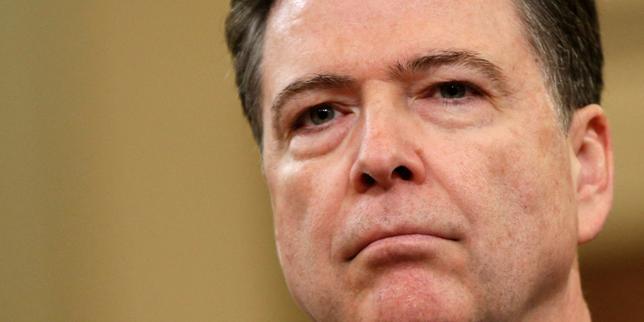
The legal system is currently being tested by a case that feels less like a courtroom drama and more like a fever dream of the internet age. James Comey, the former FBI Director who once navigated the highest stakes of national security, now finds himself entangled in a lawsuit over a photograph of seashells. Specifically, a group of individuals claims that a seemingly mundane image of empty shells on a beach, posted by Comey, constitutes a coded death threat against them. It is a collision of political animosity, the paranoid style of digital subcultures, and a legal framework that is struggling to filter out the noise of the modern world.
The core of the complaint hinges on the idea that these shells are not just calcium carbonate left behind by mollusks, but "coquilles"—a word that, in certain contexts, can refer to bullet casings or shells. The plaintiffs argue that Comey, a man trained in the nuances of intelligence and signaling, used the image to send a message to his "deep state" allies or to intimidate his detractors. They see a smoking gun where most people see a vacation photo.
The Anatomy of a Digital Delusion
To understand how a photo of a beach could end up in a legal filing, one must look at the way information is consumed in polarized echo chambers. For a certain segment of the population, James Comey is not just a former government official; he is a central villain in a sprawling conspiracy narrative. In this worldview, nothing is accidental. Every tweet, every book cover, and every Instagram post is a cipher waiting to be cracked.
When Comey posted the photo, the machinery of online speculation went into overdrive. Analysts of the obscure pointed out that "shell" is a homonym. They looked at the arrangement of the objects, searching for geometric patterns or hidden numbers. This is the hallmark of apophenia—the human tendency to perceive meaningful connections between unrelated things. In the hands of a skilled litigator representing aggrieved parties, this psychological quirk becomes a legal argument.
The plaintiffs aren't just claiming they were offended. They are claiming they were targeted. They argue that the "threat" was palpable enough to cause genuine distress and fear for their safety. This raises a difficult question for the judiciary: At what point does a subjective interpretation of a symbol become an objective threat under the law?
Why the Legal Threshold Matters
Usually, a "true threat" requires a showing that the speaker intended to communicate a serious expression of an intent to commit an act of unlawful violence. The Supreme Court has set a high bar for this to protect free speech. If the courts begin to allow lawsuits based on the metaphorical or pun-based interpretations of everyday objects, the floodgates for frivolous litigation will swing wide open.
Imagine a world where a chef posting a picture of a knife is sued by a rival, or a gardener posting a photo of a "deadheaded" flower is accused of signaling a hit. It sounds ridiculous because it is. Yet, the Comey shell case persists because it is fueled by the intense heat of the current political climate. The legal system is being used as a theatre for grievance, a place to continue battles that began on social media platforms.
The "how" of this case is simple: a lawyer willing to sign the filing and a fee-paying client. The "why" is more complex. It is about the deconstruction of shared reality. When we can no longer agree that a shell is just a shell, the very foundation of communication starts to crumble.
The Burden of Being a Public Figure
James Comey occupies a strange space in the American psyche. To some, he is a martyr for institutional integrity; to others, he is the architect of a bureaucratic coup. This polarization makes him an easy target for "lawfare"—the use of legal proceedings to harass or intimate an opponent.
Because Comey has been a high-ranking official, his words and actions are scrutinized with a magnifying glass. He knows this. His critics know this. The shell photo might have been a bit of "trolling," a subtle nod to the language used by his detractors, or it might have just been a nice day at the beach. Even if it was the former, the distance between a snarky pun and a death threat is vast.
The danger here is not just for Comey. It is for anyone with a public profile who might find their aesthetic choices weaponized against them. We are moving toward a standard where the "reasonable person" test is being replaced by the "most paranoid observer" test. If the law starts to prioritize the latter, public discourse will become a minefield of unintended meanings.
The Linguistics of Fear
Language is slippery. The word "shell" has dozens of meanings depending on the industry. In construction, it’s a frame. In finance, it’s a company without assets. In the military, it’s ordnance. By picking the most violent definition and projecting it onto a natural object, the plaintiffs are attempting a linguistic heist. They are trying to steal the context of the image and replace it with their own narrative.
This isn't just about shells. It's about the power to define reality. If a court acknowledges that a photo of nature can be a "threat" based solely on the viewer's idiosyncratic translation, it cedes the power of definition to the most sensitive—or most cynical—among us.
The Failure of Modern Discourse
This case is a symptom of a larger rot. We have become a society that prefers the exciting lie to the boring truth. A photo of shells is boring. A coded message from a former FBI director to a secret cabal is exciting. It provides a sense of belonging to those who "know" the truth. It turns a mundane existence into a high-stakes thriller.
The lawyers involved in these types of suits often rely on the fact that the process itself is the punishment. Even if the case is eventually dismissed, the target has to spend time and money defending themselves. The headlines are written, the "threat" is discussed as if it were a proven fact, and the cycle of misinformation continues.
We are seeing a total breakdown in the ability to distinguish between a prank, a metaphor, and a crime. This lack of nuance is being exported from message boards into our hallowed halls of justice. It is a waste of judicial resources and a mockery of the serious nature of actual threats.
Identifying the Real Victim
In this scenario, the real victim isn't James Comey, nor is it the people who claim to be terrified by a mollusk's discarded home. The victim is the clarity of the law. Every time a judge has to spend an afternoon deciding if a seashell is a bullet, the dignity of the court takes a hit.
The legal system was designed to resolve disputes based on evidence and reason. It was not built to adjudicate the subtext of Instagram filters. If we continue down this path, we risk turning our courtrooms into extensions of the comment section.
The plaintiffs in this case are essentially asking the court to validate their conspiracy theories. They want a judge to agree that the world is a series of hidden signals meant only for them. To grant that request is to abandon the concept of objective reality. It is an invitation to chaos.
The Strategy of Satire and Signal
There is a possibility that Comey was indeed being cheeky. He has a history of posting cryptic messages that his fans enjoy and his enemies despise. But there is a fundamental difference between a public figure "owning the libs" or "tweaking the MAGA crowd" and a criminal act.
If Comey was signaling, he was signaling his disdain, not a desire for violence. Confusing the two is a deliberate tactic used to silence opponents. It is a way of saying, "If you mock us, we will find a way to make it a crime."
This is the ultimate irony of the "threat" claim. The people bringing the lawsuit are often the same ones who complain about "cancel culture" and the "softening" of society. Yet, here they are, claiming that a picture of the beach has caused them such profound harm that they need the intervention of the state.
The Economic Incentive of Outrage
Follow the money. These lawsuits often serve as fundraising vehicles. They allow plaintiffs to go back to their followers and say, "Look, we are taking the fight to the enemy." It doesn't matter if they win. The goal is the conflict itself.
The legal fees are paid by donors who believe they are supporting a righteous cause. The lawyers get their names in the press. The media gets a bizarre story that generates clicks. Everyone wins except for the truth and the taxpayer who funds the court's time.
A Necessary Correction
The judiciary needs to get better at spotting these "narrative lawsuits" early and dismissing them with prejudice. There should be consequences for filing claims that are based on nothing more than a willful misinterpretation of common words and images. Without a strong gatekeeping function, the system will be choked by the sheer volume of digital grievances.
We must protect the right to be weird, the right to post boring photos, and even the right to be a bit of an insufferable punster on the internet. If a seashell can be a death threat, then everything is a threat, and when everything is a threat, nothing is.
The case against Comey over his beach photography is a farce, but it is a dangerous one. it represents the encroachment of digital psychosis into the physical world. We are watching the trial of a metaphor, and the verdict will tell us a lot about whether our institutions are still grounded in the real world or if they have finally been pulled into the upside-down.
Stop looking for the hidden meaning in the sand and start looking at the very clear meaning of the people trying to litigate it. The shells are empty. The lawsuit should be too.