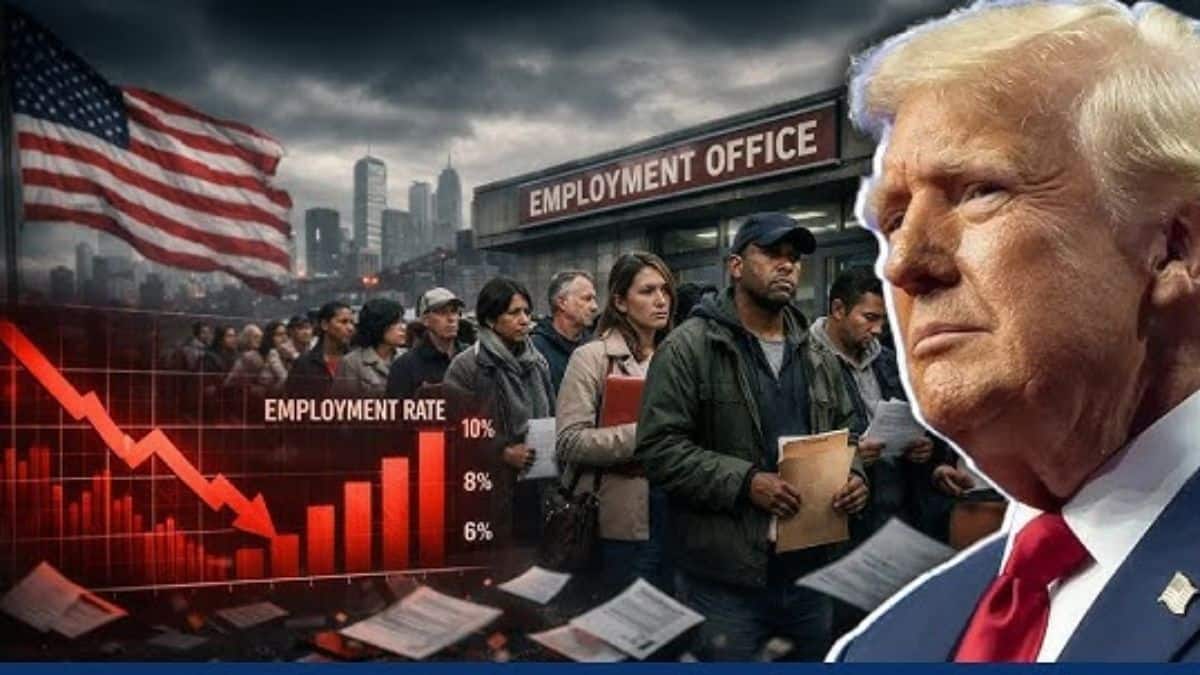
You’ve heard the boast. Maybe you saw the social media posts about the "Golden Age" arriving or watched the State of the Union where the economy was "roaring like never before." But if you’ve filled up your tank this week or looked at the latest hiring data, that roar is sounding an awful lot like a whimper. The disconnect between White House rhetoric and the actual receipts in your wallet has become impossible to ignore.
Honestly, the numbers are jarring. After a January that looked decent on paper, the floor just fell out. We aren’t just seeing a "cooldown"—we’re seeing a reversal.
The Jobs Mirage and the February Freeze
Last Friday’s employment report was a gut punch. The U.S. economy shed 92,000 jobs in February. Think about that. We went from adding 130,000 in January to a total freefall. It’s not just a one-month fluke, either. The December and January numbers were revised downward, proving that the weakness has been simmering under the surface for months.
If you strip away the healthcare sector, which is basically the only thing keeping the lights on, the economy has actually lost about 202,000 jobs since the current administration took over in early 2025. That’s a staggering figure for a president who promised a manufacturing renaissance.
Instead of factories rushing back to the Rust Belt, we’re seeing a blue-collar slide. The unemployment rate for U.S.-born workers—the very people Trump promised to protect with his immigration crackdowns—has climbed to 4.7%. It turns out that slapping tariffs on everything that moves doesn’t automatically create a local hiring boom. It mostly just makes it more expensive for businesses to exist.
Why Gas Prices Are Decimating the Narrative
You’ve probably noticed the price on the sign at your local gas station jumping every time you drive by. National averages for regular gas have spiked 19% in just the last month. We’re sitting at a national average of $3.45 a gallon right now. In places like California and Washington, you’re looking at $4.50 or higher.
The administration loves to talk about energy independence, but the war with Iran has exposed how fragile that "independence" really is. When the U.S. and Israel began strikes on February 28, the "low gas prices" narrative died instantly.
Oil prices have cleared $100 per barrel for the first time since 2022. The White House says this is a "short-term" problem, but Goldman Sachs is already warning that if these prices stick, inflation will march right back up to 3% by the end of the year. You can’t tell people the economy is "roaring" when it costs them $70 just to get to work.
Tariffs and the Cost of Everything Else
It’s not just the pump. The trade war is finally hitting the grocery aisle and the hardware store. Let’s look at the actual damage from the tariff-heavy strategy of 2025.
- Clothing is up 14%.
- Household furnishings are up 8%.
- Coffee has spiked nearly 20%.
The Yale Budget Lab estimates these tariffs are costing the average household about $1,700 a year. That’s a massive hidden tax. Businesses aren’t eating those costs. They’re passing them to you. The administration’s gamble was that tariffs would force companies to move production back to the U.S. instead of offshoring. In reality, companies are just raising prices and, in many cases, slowing down hiring because their supply chains are in shambles.
The Productivity Trap
There’s one win the White House keeps pointing to: productivity. It’s true, the economy is technically more productive, generating more value per hour of work. Usually, that’s great news. But there’s a catch.
That value isn't going into your paycheck. Labor’s share of national income just hit its lowest level on record. Basically, the machines and the software are doing more, and the owners are getting richer, but the people on the floor are seeing their real wages stall while their expenses skyrocket.
The stock market—once the president’s favorite scoreboard—is feeling the heat too. The Dow Jones Industrial Average has dropped 5% in the last month. The "Dow 50,000" bragging rights don't feel like much of a win when the index is sliding and your 401(k) is bleeding.
What You Should Do Now
The "roaring" economy is currently a collection of contradictory headlines and expensive gas. Don't let the political spin dictate your financial moves.
- Buffer your energy costs: If you can, lock in any heating or utility rates now before the summer surge.
- Review your debt: With inflation threatening to stay sticky, the Fed isn't going to drop interest rates as fast as everyone hoped. If you have variable-rate debt, look into fixed options before the next "pause" ends.
- Ignore the "Golden Age" hype: Base your spending on your actual job security and local prices, not the rosy projections coming out of Washington.
The disconnect between the White House and the real world is at an all-time high. It's time to stop listening to the roar and start looking at the receipts.



