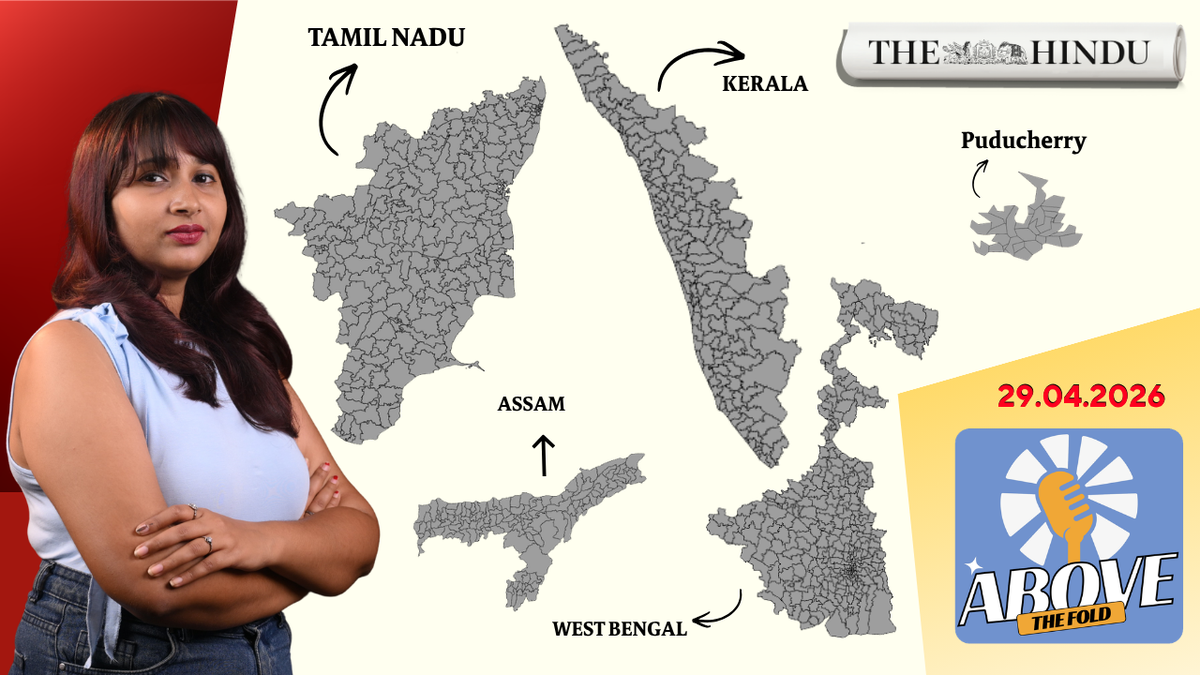
The 2026 exit polls signal a systemic collapse of traditional binary competition in India’s key regional theaters. Beyond the surface-level projections of incumbency or turnover, the data reveals a fundamental shift in the cost of political entry and the erosion of established vote-banks. This analysis moves past the "who won" narrative to quantify the structural mechanics of a three-cornered reality in Tamil Nadu, the termination of the anti-incumbency cycle in Assam, and the restoration of a corrected equilibrium in Kerala.
The Tamil Nadu Disruption: The TVK Friction Coefficient
The emergence of Vijay’s Tamilaga Vettri Kazhagam (TVK) has introduced a high-friction variable into the DMK-AIADMK duopoly. Historically, the Tamil Nadu electoral machine operated on a swing-vote mechanism where a 3-5% shift in vote share resulted in a disproportionate seat landslide. The 2026 data suggests this mechanism is broken.
The Cannibalization of the Opposition
While the DMK alliance maintains a narrow lead—projected between 125 and 160 seats—the real story is the AIADMK’s inability to capture anti-incumbency sentiment. TVK’s projected capture of 13 to 26 seats (and up to 98 in outlier scenarios like Axis My India) is not an organic growth of new voters but a direct extraction from the AIADMK’s traditional base.
- The Zero-Sum Vote Transfer: Every percentage point gained by TVK correlates with a decline in the AIADMK’s efficiency in the northern and urban belts.
- The Chennai Anomaly: In the Chennai region, TVK’s 35% projected vote share matches the DMK, effectively relegating the AIADMK to a distant third and creating a "deadlock zone" where the winner is decided by sub-1000 vote margins.
The Assam Continuity: The Orunodoi Effect and Identity Consolidation
In Assam, the incumbent Himanta Biswa Sarma administration has effectively decoupled governance from traditional anti-incumbency through a two-pillar strategy: financial direct benefit transfers (DBT) and aggressive identity-based delimitation.
The Welfare-Identity Matrix
The BJP’s projected 88-100 seats represent the successful scaling of the "Orunodoi" model. By providing monthly financial assistance to 2.5 million households, the government has created a loyalist "beneficiary class" that transcends traditional caste and ethnic lines.
- Delimitation as a Tactical Shield: The 2023 redrawing of boundaries has successfully neutralized the demographic weight of specific voter blocs, particularly in the Barak Valley and Lower Assam.
- The Leadership Premium: Approval ratings for the Chief Minister at 48% indicate that the BJP is no longer reliant on the "Modi Wave" alone but has developed a self-sustaining sub-national leadership model.
The Congress, led by Gaurav Gogoi, has failed to present an economic counter-narrative. Their strategy relied on highlighting inflation, yet the data shows that local-level welfare delivery effectively insulated the voter from macro-economic grievances.
The Kerala Correction: Returning to the Five-Year Pendulum
Kerala’s 2021 election was a statistical outlier where the LDF broke a 40-year pattern of alternating power. The 2026 exit polls, projecting the UDF to secure 75-85 seats, indicate a "reversion to the mean."
The Fatigue of the Continuous Incumbency
The LDF’s projected decline to 55-65 seats is the result of three specific causal factors:
- The Anti-Incumbency Accumulation: After 10 years of LDF rule, the administrative friction points—unemployment and corruption allegations—have reached a tipping point where welfare delivery no longer provides a sufficient buffer.
- The NDA’s Vote Share Trap: The BJP-led NDA, despite a high-visibility campaign, remains a "spoiler" force. In 30-40 key constituencies, the NDA’s 12-15% vote share acts as a drain on the LDF’s middle-class voter base, inadvertently facilitating UDF victories in tight contests.
- Youth Disillusionment: With 18-29 year-olds making up a significant portion of the electorate, the LDF’s failure to address the migration of skilled labor out of the state has alienated the most active demographic.
The Puducherry Micro-Trend
Puducherry continues to function as a bellwether for the broader NDA-Congress struggle. The AINRC-led NDA’s projected retention of power highlights the efficacy of regional-national partnerships over the Congress-DMK’s more decentralized approach in smaller territories.
Strategic Forecast and Decision Metrics
The final results on May 4 will likely confirm that the Indian regional voter is becoming more transactional and less ideological. The strategic takeaway for political operators is three-fold:
- For the DMK: The priority must be "consolidation via containment." The growth of TVK suggests that the DMK can no longer rely on a fractured opposition. They must now treat the third-front not as a nuisance, but as a primary threat to their vote share floor.
- For the AIADMK: The party faces an existential bottleneck. If the exit polls hold, the AIADMK must decide between a structural merger with smaller regional players or risk being permanently displaced as the primary alternative to the DMK.
- For the Congress: Kerala is their only viable path to national relevance. A victory here is not just about a state government; it is about securing the financial and organizational capital required for the 2029 national cycle.
The 2026 cycle proves that while welfare schemes win elections in the North, the South is entering a period of high-volatility "celebrity-led" disruption that threatens to dismantle the decades-old Dravidian and Left-Right binaries.