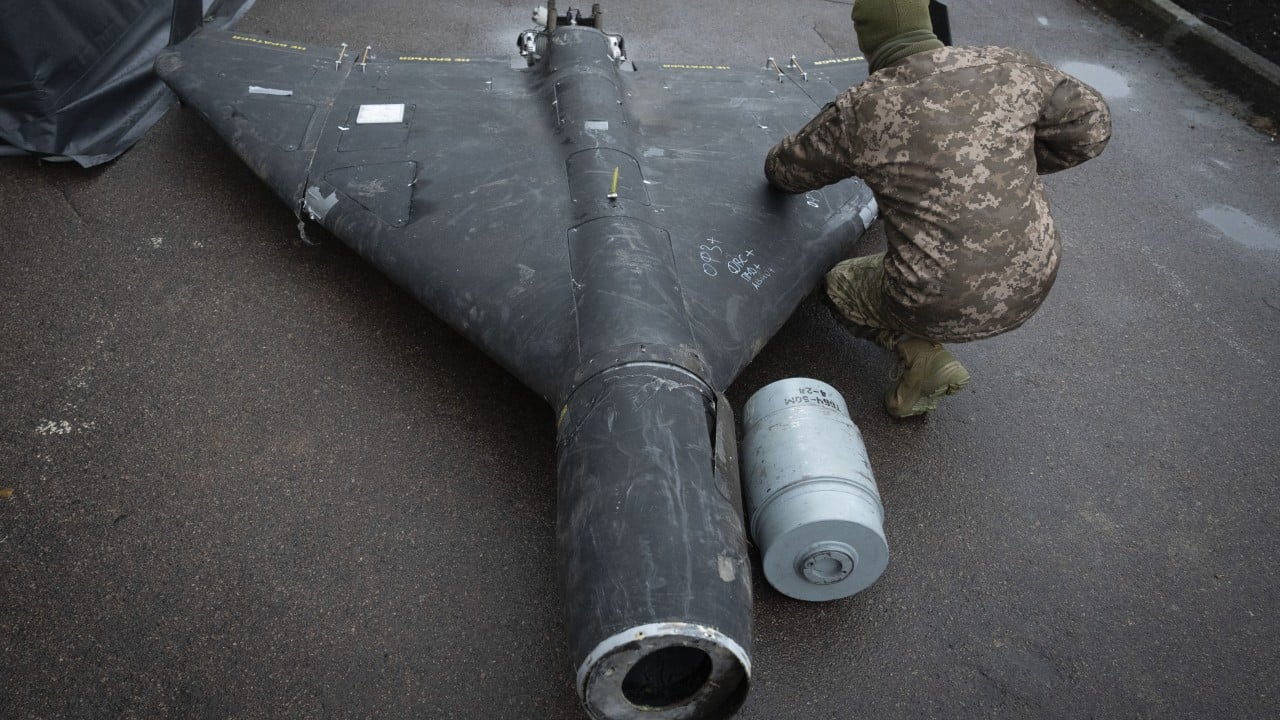
The Western defense establishment is currently obsessed with a fairytale. The narrative is comforting: Iran is "turning to" cheap drones because their "superior" missile launchers are being picked off by high-tech Israeli and American kinetic interceptions. It suggests a move of desperation. A retreat from sophisticated warfare into the realm of hobbyist RC planes.
That narrative is not just wrong; it is dangerously delusional.
Iran isn't using drones because they are losing the missile game. They are using drones because they have already won the math game. While we pat ourselves on the back for every successful "intercept" over the Red Sea or the Galilee, we are effectively celebrating the act of emptying our own bank accounts into a furnace.
We are witnessing the most lopsided economic asymmetric shift in the history of organized violence.
The Mathematical Collapse of Surface to Air Defense
Standard defense analysis focuses on "kill chains" and "interception rates." If a battery has a 90% success rate against incoming Shahed-136 OWA (One-Way Attack) UAVs, the generals call it a win.
I have spent years looking at the procurement ledgers that these generals ignore. In the real world, a 90% interception rate is a catastrophic strategic failure when the cost ratios are inverted.
Let’s look at the actual physics of the checkbook. A Shahed-136 costs roughly $20,000 to $30,000 to manufacture. It uses a moped engine, consumer-grade GPS, and a frame made of materials you could buy at a hardware store. To knock that "lawnmower with wings" out of the sky, the West typically employs a suite of interceptors—think the AIM-9X Sidewinder or the specialized Tamir missiles of the Iron Dome.
A single AIM-9X costs approximately $450,000. If you fire two to ensure a kill—standard doctrine—you have just spent nearly $1 million to destroy $25,000 of plastic and gasoline.
$40 \times \text{Cost of Drone} \approx \text{Cost of Interceptor}$
In what universe is that a sustainable defense? Iran isn't "turning" to drones. They are using them to perform a forced lobotomy on Western military budgets. Every time a $2 million Patriot missile (MIM-104) delete a drone that costs less than a used Honda Civic, the attacker gains strategic ground without firing a single shot of their own.
The Missile Launcher Misconception
The competitor's premise—that drones are a substitute for targeted missile launchers—betrays a fundamental misunderstanding of multi-domain saturation.
Missile launchers are not being replaced. They are being supplemented. The drone is the "chaff" of the 21st century, but with a lethal payload. In a modern strike package, you send fifty drones first. Not to hit the target, but to force the Aegis systems and the terrestrial batteries to "light up." You want the defender to exhaust their ready-to-fire canisters.
Once the magazine is empty and the radar is saturated, you send the precision-guided ballistic missiles. The drones are the sacrificial pawns used to checkmate the king. To suggest that Iran is moving to drones because their launchers are vulnerable is like saying a grandmaster is moving to pawns because his queen is under threat. No—he is using the pawns to strip your defense so the queen can end the game.
Why "Hard Kill" Systems Are Obsolete
We are obsessed with "Hard Kills"—physical impact. We love the video of the explosion in the night sky. It looks great in a briefing.
But Hard Kill systems are the most expensive way to solve the problem. The "lazy consensus" in DC and Tel Aviv is that we just need more interceptors. We need "Laser Iron Beam" technology to bring the cost-per-shot down to $3.
Here is the truth: Directed Energy Weapons (DEW) are not the silver bullet. They suffer from "dwell time" requirements and atmospheric degradation (fog, smoke, rain). While you are busy focusing a high-intensity beam on one drone for six seconds to melt its housing, three others have already bypassed your perimeter.
The industry insiders who actually build these systems know the dirty secret: we are trying to solve a software problem with hardware. The drone is a software-defined threat. It can change its flight path, its frequency, and its target mid-flight via mesh networking. Our defense systems are still largely "dumb" kinetic responses to "smart" digital swarms.
The Logistics of the "Cheap" Myth
People call these drones "cheap" as a pejorative. It’s a coping mechanism.
In warfare, "cheap" is a synonym for "persistent." If I have 10,000 units and you have 100 interceptors, I have 9,900 successful strikes. Quantity has a quality of its own, but in the drone age, quantity is the only quality that matters.
Iran has mastered the "IKEA-fication" of the cruise missile. They have bypassed the need for high-end microchips by using redundant, low-cost commercial components that are impossible to sanction effectively. You can’t sanction a spark plug. You can’t sanction a fiberglass mold.
While the US military-industrial complex is trapped in a cycle of 15-year development programs for a single aircraft, the drone manufacturing plants in Isfahan are iterating every six months. They are operating at the speed of Silicon Valley, while the Pentagon is operating at the speed of the DMV.
The Intelligence Failure of "Targeting Launchers"
The media loves stories about "targeting missile launchers." It implies we are hitting the source.
But you cannot "target" a decentralized manufacturing philosophy. Iran’s drone program isn't a single factory you can Tomahawk into oblivion. It is a distributed network of small workshops. They aren't launching from massive, static sites that show up on satellite imagery like a Cold War silo. They launch from the back of flatbed trucks that look like every other truck on the highway.
The "insider" truth is that we are hunting ghosts. We are using billion-dollar intelligence constellations to find $5,000 launch rails that can be rebuilt in an afternoon.
The Downside We Don't Talk About
If you think the solution is just "building our own drones," you’re missing the point. The West is culturally incapable of building "cheap" things. Our procurement process is designed to prevent failure, which means every bolt requires a paper trail and every sensor must be "mil-spec."
By the time the US Army procures a "low-cost" drone, it costs $200,000 and requires a specialized contractor to maintain the software. We have optimized ourselves out of the ability to compete in a high-attrition environment. We are built for a world where we have total air superiority and infinite money. That world ended the moment the first Shahed crossed the border into Ukraine and proved that a $20k drone can disable a multi-million dollar power grid node.
Stop Asking if the Intercept Worked
The wrong question: "Did we hit the drone?"
The right question: "How many millions did we lose by hitting it?"
If the answer to the second question is "more than the enemy lost by sending it," you are losing the war of attrition.
Iran isn't pivoting because they are weak. They are pivoting because they have realized that in the 21st century, the most effective weapon isn't the one that blows up the biggest building—it’s the one that makes the enemy's defense budget mathematically impossible.
Stop looking for the missile launchers. Start looking at the ledger. We are being outspent, out-iterated, and out-thought by a moped engine and a piece of Styrofoam.
Go ahead and celebrate the next "successful interception." The accountants in Tehran are certainly celebrating with you.