The White House just confirmed what every veteran diplomat in the Middle East has feared since the first missile crossed the Persian Gulf last month. President Donald Trump is preparing to send a bill to America’s Arab allies for the ongoing war against Iran. This is not a hypothetical diplomatic exercise; it is a fundamental shift in how the United States operates its global security umbrella. Press Secretary Karoline Leavitt admitted on Monday that Trump is "quite interested" in demanding that regional partners shoulder the financial burden of a conflict that is currently costing the U.S. Treasury between $1 billion and $2 billion every single day.
By day 30 of this conflict, the math has become inescapable. The Pentagon is already knocking on Congress’s door for an emergency $200 billion supplemental funding package. In Trump’s view, the era of the American "security blank check" is over. If the U.S. military is the one clearing the Strait of Hormuz and targeting Iranian desalination plants to force Tehran to the negotiating table, the nations whose literal survival depends on those waters—Saudi Arabia, the UAE, and Qatar—are expected to pay the tab.
The Cost of Staying Relevant
For decades, the unspoken deal in the Middle East was simple. The United States provided the muscle to keep the oil flowing, and in exchange, the Gulf monarchies provided the oil and stable pricing. That social contract is being shredded in real-time. Trump’s "business-first" foreign policy treats military intervention as a premium service.
Reliable sources within the administration suggest the White House is looking at a tiered contribution model. It isn't just about cash transfers. It is about "burden sharing" in its most literal sense: paying for the munitions, the fuel for the carrier groups, and the logistical tail that stretches from Diego Garcia to the Kharg Island coast.
The timing of this demand is surgically precise. Iran’s energy infrastructure is currently under the gun, with Trump warning that oil facilities and water plants could be "obliterated" if Tehran doesn't fold. By threatening to dismantle Iran’s economy while simultaneously asking the Gulf states to pay for the effort, the White House is effectively forcing Riyadh and Abu Dhabi to choose a side with their checkbooks. Neutrality is no longer an affordable luxury.
A Tale of Two Realities
There is a jarring disconnect between what is being said behind the heavy doors of the West Wing and what is being broadcast by Tehran. While the public rhetoric remains incendiary—with Iranian Foreign Minister Abbas Araghchi calling for the "ejection" of U.S. forces—the private channels tell a different story.
Leavitt hinted that "talks are continuing and going well" behind the scenes. This is the classic Trump maneuver: public maximum pressure coupled with a private "let's make a deal" posture. However, the risk of this strategy is the "four to six week" timeline the White House has publicly committed to. We are already at the one-month mark. If the war drags into a second or third month, the $200 billion request to Congress will look like a down payment.
The Iranian Counter-Lever
Tehran is not sitting idly by while the U.S. auctions off the cost of the war. Iranian military advisor Mohsen Rezaei has already laid out the regime's price for peace:
- Full compensation for all economic losses.
- The immediate removal of all sanctions.
- International legal guarantees against future U.S. interference.
These are non-starters for Washington, but they serve a purpose. They signal to the Arab nations that any "contribution" they make to the U.S. war effort will be viewed by Tehran as a direct act of aggression. It turns a financial transaction into a permanent security liability.
The Mercenary Doctrine
Critics of this approach argue that it turns the U.S. military into a mercenary force. If the Gulf states pay for the war, do they get to call the shots on the targets? The answer from this administration has been a resounding "no," but the optics are difficult to manage.
The strategy relies on the fact that the Gulf states have nowhere else to turn. While they have flirted with Chinese security guarantees and Russian arms deals, when the missiles start flying, only the U.S. Fifth Fleet has the capability to hold the line. Trump knows this. He is leveraging decades of dependency to balance the American books.
The sheer scale of the proposed "investments" is staggering. Saudi Arabia is already on the hook for a $600 billion investment plan in the U.S., and the UAE is looking at $1.4 trillion in AI and data center partnerships. Adding the direct costs of a hot war with Iran to this ledger is a massive gamble. It assumes that these monarchies can continue to fund their own ambitious domestic transformations while acting as the primary financiers of a regional conflagration.
Why the $200 Billion Matters Now
The request for $200 billion from Congress is the "why" behind the pressure on the Arab nations. The U.S. deficit cannot comfortably absorb a prolonged Middle Eastern war without significant political blowback at home. Trump’s base is famously wary of "forever wars," and the only way to sell a conflict with Iran to a skeptical American public is to prove that it isn't costing the American taxpayer a dime in the long run.
The Pentagon is already moving to "refill the cabinets," as Defense Secretary Pete Hegseth put it. The intensity of the air campaign has depleted stocks of precision-guided munitions at a rate that is forcing defense contractors into 24-hour shifts.
The Strait of Hormuz Bottleneck
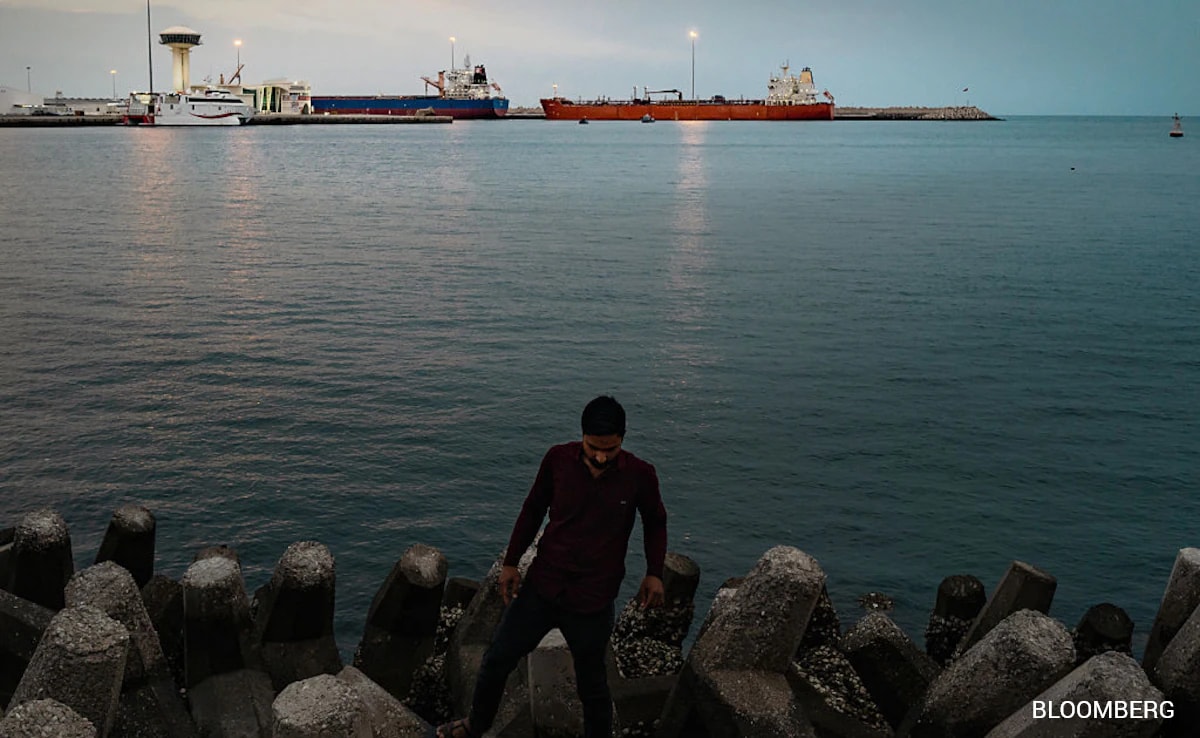
The primary objective remains the reopening of the Strait of Hormuz. It is the jugular vein of the global economy. If the U.S. can successfully bill the Gulf nations for the cost of keeping that vein open, it sets a precedent that will be applied to every other theater of operations, from the South China Sea to the borders of NATO.
The White House has declined to rule out "boots on the ground," which would escalate the costs exponentially. A naval and air campaign is expensive; an occupation or a limited ground incursion is a bottomless pit of spending. By floating the idea of Arab funding now, the administration is pre-emptively solving the financial crisis that would inevitably follow a ground war.
The Regional Reaction
The silence from Riyadh and Abu Dhabi following Leavitt’s comments is deafening. They are in an impossible position. If they pay, they become targets for Iranian proxies like the Houthis or various militias in Iraq. If they refuse, they risk losing the protection of the only superpower capable of deterring a total Iranian hegemony in the region.
There is also the matter of the $7 billion in weapons recently approved for the UAE. In the Trumpian worldview, these sales aren't just about defense; they are the price of admission to the "Peace through Strength" club. The administration expects these weapons to be used, and they expect the buyers to be grateful for the opportunity to buy them.
This isn't diplomacy in the traditional sense. It is a high-stakes debt collection. The U.S. is providing the kinetic force, and it expects the beneficiaries to provide the capital. It is a cold, transactional reality that ignores the nuances of "alliance" in favor of the clarity of a balance sheet.
The coming weeks will determine if this gamble pays off. If the Arab nations blink and begin transferring funds, the "Trump Doctrine" will be cemented for a generation. If they resist, the U.S. may find itself in the middle of a $2 billion-a-day war with no one to pay the bill and an increasingly restless Congress holding the purse strings. The invoice has been sent; now we wait to see if the check clears.