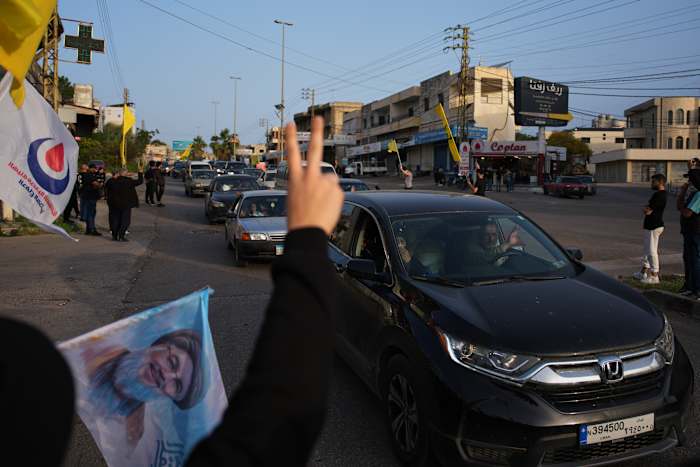
Ten days of silence is not peace. It is a logistical window.
The media is currently flooding the zone with breathless coverage of the "breakthrough" ceasefire in Lebanon. They frame it as a victory for diplomacy, a cooling of tensions, and a moment for humanitarian relief. They are wrong. By focusing on the absence of kinetic strikes, they miss the fundamental reality of modern asymmetric warfare: Quiet is often more dangerous than noise. If you enjoyed this piece, you might want to read: this related article.
In the world of high-stakes geopolitics, a ten-day pause is an eternity for a battered paramilitary force to regroup, rearm, and relocate. If you think this is a step toward stability, you are reading the wrong map.
The Myth of the Humanitarian Pause
Let’s dismantle the primary delusion first. The "humanitarian pause" is the favorite tool of international bodies that prioritize optical success over structural resolution. While aid trucks move in, so does the shadow inventory. For another angle on this development, refer to the recent update from BBC News.
When a conflict hits a ten-day standstill, the intelligence cycle does not stop; it accelerates. For an organization like Hezbollah, this isn't a "cooling off" period. It is a maintenance window. I have watched these cycles play out in conflict zones for decades. You don't use ten days to negotiate the finer points of border demarcation. You use them to:
- Rotate tired units out of the frontline bunkers.
- Siphon fuel and medical supplies meant for civilians into hardened military caches.
- Sanitize launch sites that were previously identified by enemy surveillance.
The competitor articles talk about "breathing room" for civilians. They fail to mention that this breathing room is exactly what a failing defense needs to prevent a total collapse. If you stop the momentum of a military operation 90% of the way through, you aren't saving lives in the long run. You are ensuring that when the fighting resumes—and it always does—it will be more lethal, more organized, and more prolonged.
The Fallacy of the 1701 Resolution
Every analyst worth their salt is currently citing UN Security Council Resolution 1701 as the "framework" for this ceasefire. This is intellectual laziness.
Resolution 1701 has been a documented failure since 2006. It mandates that the area south of the Litani River be free of any armed personnel and weapons other than those of the Lebanese government and UNIFIL. Look at any satellite feed from the last five years. The region is one of the most heavily fortified non-state military zones on the planet.
Claiming that a ten-day ceasefire "reaffirms" 1701 is like saying a band-aid reaffirms the integrity of a severed limb.
- UNIFIL’s Role: They are observers with no teeth.
- The Lebanese Armed Forces (LAF): They are chronically underfunded and, more importantly, politically hamstrung. They cannot and will not disarm the "resistance."
- The Reality: The ceasefire isn't about enforcing 1701; it’s about giving the international community a way to pretend the 1701 framework still exists.
Follow the Munitions, Not the Microphones
If you want to know if a ceasefire is real, stop listening to the diplomats in New York and start looking at the supply lines through the Bekaa Valley.
A genuine ceasefire requires a verifiable freeze on the movement of advanced weaponry. This agreement has no such mechanism. There are no surprise inspections of "commercial" convoys. There is no real-time monitoring of the Syrian-Lebanese border that carries any weight.
While the press celebrates "10 days of calm," the real work is happening in the tunnels. Imagine a scenario where a tactical unit is down to its last three batteries for its drone fleet. In a hot war, those batteries are intercepted. In a "humanitarian ceasefire," those batteries arrive in the back of a van marked with a red cross or a food pantry logo.
I’ve seen this play out in the Balkans, in Iraq, and in previous rounds of the Lebanon-Israel cycle. The party that benefits most from a short-term pause is the party that was losing its grip on the logistics chain.
The Diplomacy of Exhaustion
Diplomats love ceasefires because they are measurable KPIs. They can point to a chart and say, "Look, zero casualties today."
But this is the Diplomacy of Exhaustion, not the Diplomacy of Resolution.
The West is desperate for a win. Any win. They are willing to accept a temporary halt as a permanent solution because it fits the election cycle or the news cycle. However, this creates a perverse incentive. It teaches non-state actors that if they can hold out long enough and create enough "collateral" imagery, the West will force a pause just as the pressure becomes unbearable for the insurgents.
By forcing a ceasefire now, the international community has effectively hit the "reset" button on the tactical advantages gained by the Israeli Defense Forces (IDF). They have traded a potential long-term security shift for ten days of good PR.
Why "Stability" is the Enemy of Progress
This is the most counter-intuitive part: sometimes, stability is the worst thing that can happen.
In the Middle East, "stability" is often code for "maintaining a broken status quo." The status quo in Lebanon is a state-within-a-state that holds the sovereign government hostage. A ceasefire that does not address the fundamental issue of illegal arms is just a countdown to a bigger explosion.
People ask: "Isn't any day without bombing a good day?"
Brutally, the answer is often no. A day without bombing that allows a terror group to fix its command-and-control infrastructure is a day that guarantees five more years of intermittent war. You are buying a week of peace at the cost of a decade of security.
The "lazy consensus" says we must stop the bleeding. The industry insider knows that if you don't clean the wound, stopping the bleeding just lets the infection turn gangrenous.
The Technical Reality of "Disengagement"
Let’s talk about the physics of the front line.
Modern warfare relies on constant "lock" on targets. When you enter a ceasefire, the rules of engagement (ROE) typically shift. You can't fly recon drones as aggressively. You can't use active radar in the same way without being accused of "violating the spirit" of the deal.
During these ten days, Hezbollah will move their assets. They will shift their "center of gravity."
- Hardened Sensors: They will install new, passive sensors that were previously too risky to deploy under fire.
- Fiber Optics: They will repair damaged communication lines that bypass electronic jamming.
- Human Shields: They will encourage civilians to return to specific tactical areas, effectively turning those locations into "no-go" zones for the next round of strikes.
This isn't a theory. It is the standard operating procedure for any decentralized military force facing a technologically superior state actor. The ceasefire is a tactical deployment in itself.
The Cost of the "Success" Narrative
The biggest danger of this 10-day window is the narrative it builds. The US and French mediators are already taking victory laps. They are signaling to their domestic audiences that the "Lebanon problem" is being managed.
This creates a high political cost to resuming the conflict. If the IDF sees a massive weapons transfer on day eight, they are in a bind. If they strike, they are the "peace-breakers." If they don't, they allow a strategic threat to mature.
The ceasefire puts the defender in a catch-22. It weaponizes the international desire for peace against the operational necessity of defense.
Stop Asking the Wrong Question
The media asks: "Will the ceasefire hold?"
The better question is: "Who gains more from the silence?"
If the answer is a group that remains committed to the destruction of its neighbor and the subversion of its own host state's sovereignty, then the ceasefire is a failure of the highest order.
We have become a society that values the appearance of peace over the reality of it. We celebrate the absence of noise while the fuse is being shortened. This 10-day ceasefire isn't the beginning of the end of the war. It is the logistical preparation for its most violent chapter yet.
The "peace" you see on the news is a facade. Behind it, the machinery of war is getting its 10,000-mile service, courtesy of the international community's naivety.
Don't celebrate the pause. Prepare for the pivot.